




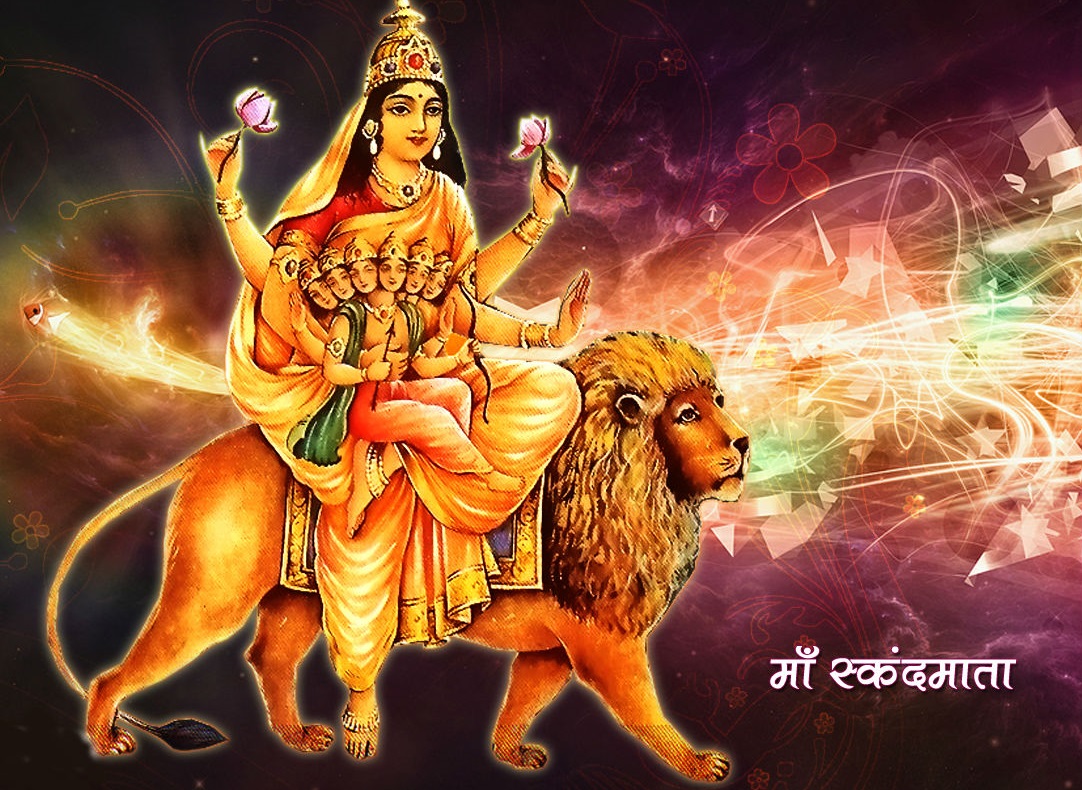
KATHMANDU: Skandamata, the fifth form of Goddess Durga, is being worshipped in Dashain Ghars and prayer rooms across the country today, marking the fifth day of Navratra during Bada Dashain.
Every year, Skandamata is worshipped with traditional rituals on the fifth day of Navratra, which falls on Ashwin Shukla Panchami during the fortnight dedicated to Goddess Durga.
The nine forms of Goddess Durga, collectively known as Nava Durga, are worshipped over the nine days of Navaratra. Shailaputri is worshipped on the first day, Brahmacharini on the second, Chandraghanta on the third, Kushmanda on the fourth, Skandamata on the fifth, Katyayani on the sixth, Kalaratri on the seventh, Mahagauri on the eighth and Siddhidatri on the ninth.
The name Skanda refers to Sanat Kumar, who is associated with the goddess in religious traditions. According to descriptions of Skanda Mata’s idol, she is depicted seated on a throne and holding lotus flowers in both hands.
During the nine days of Navaratri, devotees recite sacred Hindu scriptures and hymns, including the Durga Saptashati (Chandi), Shrimad Devi Bhagwat and other devotional prayers dedicated to the goddess at places where her shrine has been established.
According to religious belief, worshipping Goddess Durga during Navratra brings strength, prosperity and wisdom. Following this tradition, devotees of Vedic Sanatan Dharma worship Goddess Durga with special devotion from Ashwin Shukla Pratipada, the first day of the lunar fortnight, through Nawami, the ninth day.
The prasad offered to the goddess during the nine days of Navaratri is distributed from Bijaya Dashami until Kojagrat Purnima. In this way, Bada Dashain is traditionally celebrated in Nepal over a period of 15 days.
Religious legend associated with Skandamata
Various legends about Skandamata are described in Hindu religious texts. One such story recounts an encounter between Lord Shiva, Goddess Parbati and Sage Sanat Kumar.
According to the legend, Shiva and Parbati once attended an assembly of sages, where everyone stood up to welcome the divine couple. Sage Sanat Kumar, however, remained seated because he was deeply absorbed in meditation.
Parbati was displeased by the sage’s failure to rise and welcome them and cursed him to be reborn as a camel. The sage consequently assumed the form of a camel.
Shiva then explained to Parbati that a truly wise person remains immersed in the knowledge of Brahman, the ultimate reality, regardless of the physical form they inhabit. Even in the body of a camel, he said, the sage remained blissfully absorbed in spiritual knowledge.
The divine couple subsequently went to see Sanat Kumar in his camel form. Parbati asked the sage how he felt living in the body of a camel.
In response, the sage said that the experience had, in fact, been a blessing. He explained that whenever he felt hungry, he could chew on forest thorns while continuing to contemplate Brahman in peace, without experiencing any suffering.
Impressed by the sage’s wisdom and spiritual devotion, Parbati regretted having cursed him without understanding his greatness. She then expressed her desire to have him as her son.
According to the legend, Sanat Kumar accepted Parbati’s wish and was born from her, leading to his association with Skandamata.






Comment