



Nepal and India share multifaceted relations. Given the open border, our two countries are interconnected in almost every sphere, from employment and economic activities to security and cross-border crime.
There are two dimensions to our relationship that Nepal needs to address. First, there are longstanding issues that remain unresolved and require sustained dialogue and diplomatic engagement. These include the Eminent Persons Group (EPG) report, the 1950 Treaty of Peace and Friendship, border disputes and other bilateral concerns. These issues have not been neglected entirely, but they need to be discussed and gradually advanced through diplomatic channels, including what is commonly known as quiet diplomacy.
The issue of air routes, which has attracted considerable attention recently, also needs to be pursued through diplomatic engagement.
At the same time, we must recognise India’s growing economic significance. Its contribution to global economic growth is increasing, while China’s and the United States’ shares of global growth are projected to decline in relative terms. India also has a population of approximately 1.5 billion, and its expanding middle class is expected to create enormous opportunities for trade, investment and economic cooperation. Many countries are therefore placing greater emphasis on strengthening their economic partnerships with India.
We should also examine how to take advantage of emerging opportunities. This brings us to a third, particularly important issue: quality certification and accreditation.
Political partnerships and geopolitical considerations are also important, but the dynamics in these areas have fluctuated considerably over the past two to three years. Looking at the broader picture over the past four to five years, however, economic partnerships have been advancing rapidly.
In this context, Nepal should place economic cooperation at the foundation of its relationship with India and explore what more can be achieved on that basis. At the same time, we must continue to address political and diplomatic concerns through quiet diplomacy. This does not mean prioritising one track at the expense of the other. Both should move forward simultaneously.
Building on energy cooperation
Our energy partnership provides a good example of what can be achieved through sustained engagement. The 2022 vision document on energy cooperation set the stage for Nepal’s ambition to export 10,000 megawatts of electricity to India. Nepal has since begun exporting an estimated 1,200 megawatts, generating revenue, although we continue to import electricity during the winter months.
There are still several areas in which we need to make progress. We should also advance cooperation in other sectors where mutually beneficial opportunities exist.
Several projects and agreements could provide a foundation for further progress, including the National Police Academy, the Integrated Check Post (ICP) in Bhairahawa, the proposed ICP at Dodhara-Chandani near Banbasa, the bridge in Darchula, the Jhapa–Siliguri petroleum pipeline, the Lower Arun hydropower project, the Koshi transmission line and the release of water into the Tanakpur canal. There are also several other memorandums of understanding (MoUs) to pursue.
We can expect progress on some of these issues in November. Some agreements may be signed, while other projects could see groundbreaking ceremonies attended by the two prime ministers or formal inaugurations. The important thing is to maintain momentum and translate commitments into tangible outcomes.
This does not mean we should abandon our efforts to secure the EPG report. That issue remains important and should continue to be pursued. However, Nepal and India already have around 40 bilateral mechanisms through which they can discuss and resolve outstanding matters. Why should we not use these existing mechanisms to raise issues incrementally and seek practical solutions?
There are many areas in which progress is possible without waiting for the EPG report. We should make full use of the available diplomatic channels.
Addressing the treaty and border issues
The 1950 treaty should not be viewed as an insurmountable diplomatic obstacle. We need to explore different avenues for addressing it, including Track II diplomacy, which allows non-governmental experts and other stakeholders to contribute to dialogue and build mutual understanding.
Border issues also require sustained engagement. Meetings of the Border Working Group are currently taking place, with the objective of completing the remaining border-related work—reported to account for around 2 percent of the total—within three years. We should continue this process while gradually advancing dialogue on the more sensitive boundary issues.
Such matters are rarely resolved overnight. Even disputes between India and Sri Lanka have required years of engagement. Nepal should therefore adopt a patient, consistent and strategic approach, ensuring that discussions continue and that incremental progress is made wherever possible.
Expanding electricity trade beyond India
Considerable progress has been made in Nepal’s electricity trade, particularly over the past three years. We have moved from discussions about the possibility of exporting electricity to negotiating approvals and exporting power on a regular basis.
The next step is to enable direct electricity trading between private-sector entities in Nepal and India. This will take time and require further negotiations, regulatory clarity and institutional arrangements.
At present, Nepal has to renew electricity export approvals annually for individual projects. We should explore arrangements that allow approvals to be renewed automatically or remain valid for three to five years. Such changes would provide greater predictability for investors and help businesses plan their operations over the longer term.
There is also an opportunity to expand electricity exports to Bangladesh. However, relations between India and Bangladesh have been strained, particularly in areas relevant to regional energy cooperation, which could complicate progress. Available transmission capacity between the two countries has also been limited, reportedly to around 40–60 megawatts, a capacity Nepal has already used for exports.
If Nepal aims to increase electricity exports to Bangladesh to 5,000 megawatts, significant additional transmission infrastructure and long-term planning will be necessary. We must begin addressing these requirements now rather than waiting for all the diplomatic and commercial issues to be settled. Similar groundwork is needed if Nepal eventually seeks to export electricity to Sri Lanka.
Linking Nepal and India through digital finance
Another promising area is cross-border digital payments and money transfers. India’s digital payment infrastructure has advanced considerably, creating opportunities for Nepal to strengthen financial connectivity with its southern neighbour.
International development partners, including the World Bank and the Asian Development Bank, have been supporting digital financial initiatives in Nepal. Linking Nepal’s digital payment capabilities with India’s established systems could make cross-border transactions more efficient, reduce costs and facilitate trade, tourism and remittances.
This is an area where technical cooperation and institutional coordination could deliver tangible benefits relatively quickly.
Ultimately, Nepal needs a balanced and forward-looking approach to its relationship with India. Longstanding political and diplomatic concerns must remain on the agenda, but they should not prevent progress in energy, infrastructure, trade, investment and digital connectivity. By pursuing both tracks simultaneously, Nepal can protect its national interests while building a more productive and mutually beneficial partnership with India.
We have already been working with the World Bank, the International Monetary Fund (IMF) and the Asian Development Bank (ADB). If we can coordinate with India on these initiatives, an MoU could be signed during the prime minister’s visit. This is another area worth exploring.
The private sector is already doing considerable work, but the question is how we can further promote and strengthen its engagement. Cities such as Gurugram, Bengaluru and Hyderabad host around 200 of the world’s top 500 companies. Nepal needs to establish stronger connections with these companies and explore opportunities for collaboration.
Similarly, the idea of integrating Nepal’s supply chain with India’s may have political implications, but it also has significant economic value. At present, we are struggling to expand our export capacity to India. Meanwhile, companies from around the world are increasingly investing in India. We need to explore how Nepal can integrate into these expanding supply chains and benefit from the opportunities they offer.
When we engage with Indian businesspeople, they frequently raise concerns about trade facilitation. We need to address these issues by reviewing regulations that increase the cost of production inputs relative to outputs. Customs procedures and rules also need to be streamlined to make cross-border trade easier and more efficient.
Finally, there is the issue of air access and entry routes at the airport, which remains in a grey area. There is considerable scope for progress on this front as well, particularly when the new government takes office.
We should also examine how to take advantage of emerging opportunities. This brings us to a third, particularly important issue: quality certification and accreditation.
Although some progress has been made in addressing non-tariff barriers, it has been slow. In 2018, an MoU and agreement were signed between Nepal’s Department of Food Technology and Quality Control (DFTQC) and India’s Food Safety and Standards Authority of India (FSSAI). We need to build on that foundation and accelerate implementation.
India has also reached agreements with Bangladesh and the Maldives in this area. We should explore similar arrangements with India to ensure that essential exports can continue at a minimum level, even when export restrictions or bans are imposed. Such an arrangement should be achievable with the right diplomatic and technical engagement.
Last year, an investment commitment worth $400 billion was announced at an investment summit in Lucknow, Uttar Pradesh, accompanied by the signing of an MoU. If such initiatives can be undertaken in Lucknow, why can we not pursue comparable opportunities in our border regions? We should take Lucknow as a benchmark for developing logistics infrastructure and facilitating investment, and begin working towards that goal without delay.
Finally, there is the issue of air access and entry routes at the airport, which remains in a grey area. There is considerable scope for progress on this front as well, particularly when the new government takes office.
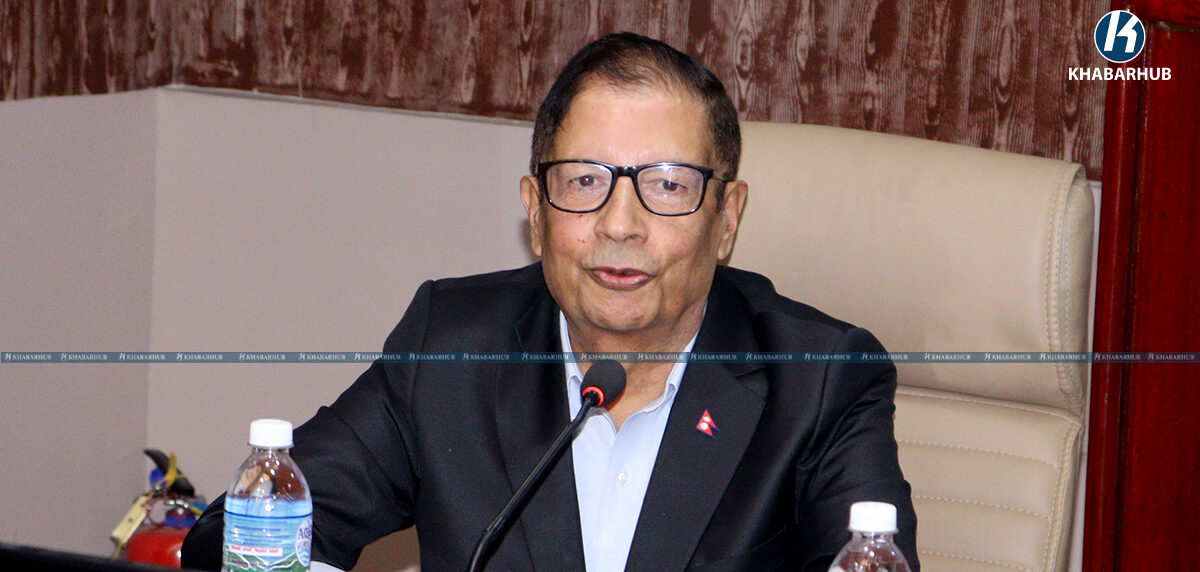
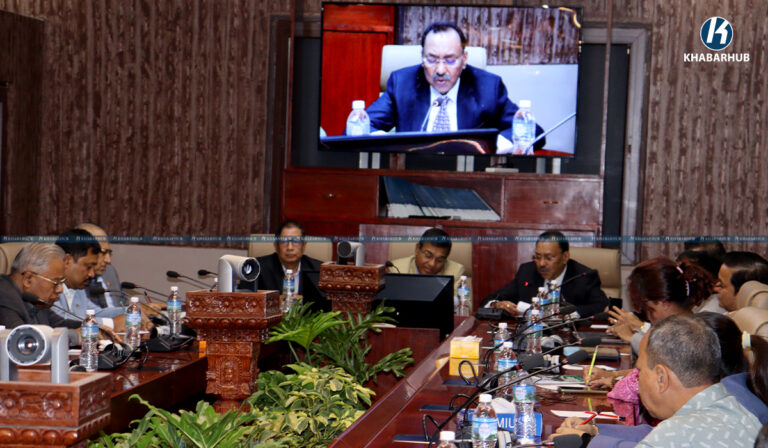
(Edited excerpt of remarks made by former Ambassador Sharma at a programme organised by the Institute for Strategic and Socio-Economic Research Center)






Comment