




India is Nepal’s largest trading partner, but Nepal’s private sector has yet to receive the transit facilities that a landlocked country should be entitled to. This issue should be raised during Prime Minister Balendra Shah’s upcoming visit to India.
Transit logistics has become an increasingly important issue in global trade. Nepali businesses currently spend around 18 to 22 percent of their required logistics costs on these services, with a significant portion going towards transit through India. We need to discuss how these processes can be simplified and made more efficient.
Nepal has already brought its integrated check posts (ICPs) into operation and books containers from international markets. However, at Indian ports such as Visakhapatnam and Kolkata, we have yet to receive the automated transshipment facilities available at ports in countries such as Sri Lanka, Malaysia and Singapore.
Every container arriving at an Indian port requires a complete set of documents, creating additional costs and delays for Nepali importers. Why can’t we adopt the streamlined procedures used elsewhere in the world? Why must Nepali traders continue to bear these additional burdens?
Although there have been repeated decisions and discussions to address this issue, they have yet to be effectively implemented. This matter must also be taken up for further discussion between the two countries.
We have raised this issue on several occasions. Although the charges may initially appear insignificant, documentation costs can range from INR 4,500 at the lower end in Kolkata to INR 60,000–70,000 per container. These expenses require closer examination and should be discussed with the Indian side.
Another concern is the disruption of transit arrangements between Nepal and India, which is affecting Nepal’s overall trade. We often discuss rising prices without adequately examining the logistical difficulties contributing to them. These challenges must be addressed directly.
Nepal should receive transit facilities comparable to those available to other landlocked countries. Achieving this will require not only technical discussions but also political engagement and high-level intervention.
We must also reassess the role of the South Asian Association for Regional Cooperation (SAARC) and the effectiveness of its trade arrangements in the current regional context. Nepal’s manufacturing sector has suffered a significant decline over the past 15 years. Manufacturing accounted for approximately 14–15 percent of Nepal’s gross domestic product (GDP) at the time, but its contribution has now fallen to below 5 percent.
If SAARC is not functioning effectively, we must question whether continuing to rely on its existing trade arrangements serves Nepal’s interests. Nepal should examine how the South Asian Free Trade Area (SAFTA) agreement operates in practice and whether its provisions are delivering balanced benefits. According to concerns raised by the private sector, a disproportionate share of the benefits from regional trade arrangements is accruing to a single country.
If Nepal wants to protect and revive its manufacturing sector, the sensitive lists under SAFTA and the broader agreement itself need to be reviewed. Such an assessment should identify the changes required to create a more balanced trading environment.
Facilitating trade has long been discussed at the political, diplomatic and private-sector levels. However, we need to ask a fundamental question: whose interests are being served by the push for easier trade? Are the arrangements equally beneficial to Nepal, or do they primarily facilitate Indian exports into the Nepali market?
Nepal’s private sector has not been able to develop its domestic production capacity to the extent necessary. Meanwhile, supply chains for Indian products, including both finished goods and raw materials, continue to expand in Nepal. This trend raises important questions about domestic industrial competitiveness, import dependence and the need for a more balanced trade policy.
The prime minister’s visit to India provides an opportunity to address these longstanding concerns, including double taxation, transit costs, customs procedures, trade imbalances and the protection of Nepal’s manufacturing sector. The discussions should lead to practical measures that reduce the burden on Nepali businesses and create a fairer environment for bilateral trade.
In many industries, finished goods are entering Nepal freely under the SAFTA provisions, while the customs duties on imported finished goods are lower than those on raw materials. This creates challenges for domestic industries that rely on imported raw materials for production.
Another important point concerns the border. In the two years following the COVID-19 pandemic, we witnessed increased market penetration by locally produced goods, along with a rise in government revenue.
We need to generate revenue, but various taxes and charges imposed on domestic production have increased costs. Due to the open border, many products are now significantly more expensive in Nepal than in India. However, if we are to protect our economy, domestic industries, and trade, we need to adopt policies to tighten border controls. The Nepal government has also introduced its own tax structure, which needs to be reviewed.
Another important issue is double taxation. Nepal and India cooperate on many matters, yet neither country fully recognizes the taxes paid in the other. As a result, double taxation persists. Although there have been repeated decisions and discussions to address this issue, they have yet to be effectively implemented. This matter must also be taken up for further discussion between the two countries.
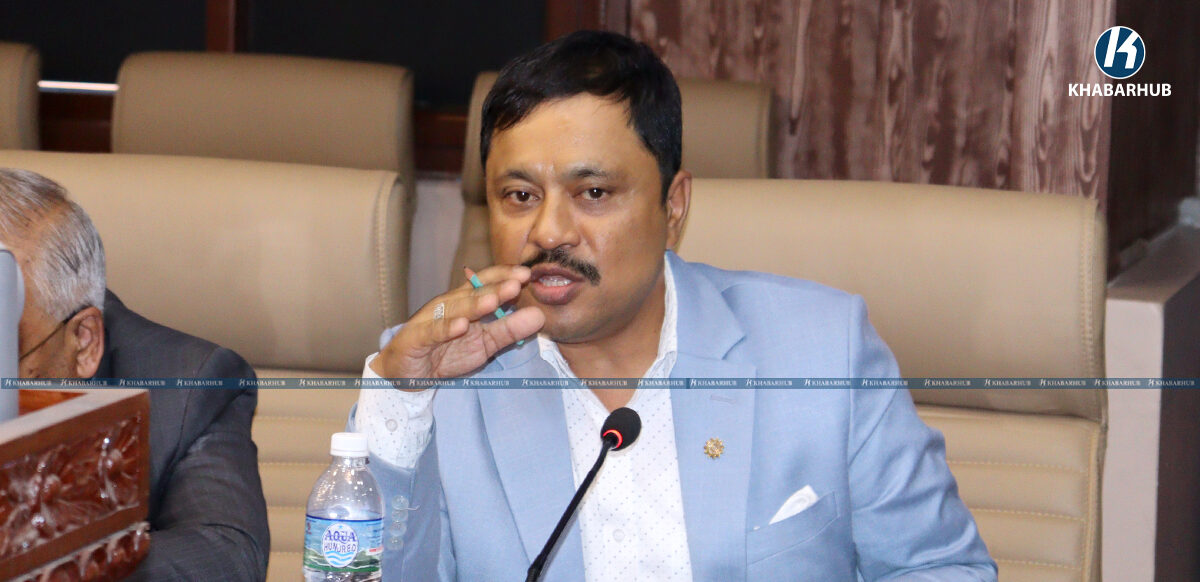
(Edited excerpt of remarks by Deepak Shrestha, Vice President of the Nepal Chamber of Commerce, at a program organized by the Institute for Strategic and Socio-Economic Research Center.)




Comment