



Nepal’s relationship with India cannot be discussed without acknowledging its complexities. Based on my experience, there is often a significant difference between the way bilateral issues are handled at the policy and diplomatic levels and how they are perceived publicly. My understanding is that Indian ministers serving in Prime Minister Narendra Modi’s cabinet genuinely want to improve relations with Nepal.
Take the Pancheshwar project, for example. The issue is closely linked to energy cooperation, yet it could remain unresolved for another decade if left entirely to the bureaucracy. When Nitin Gadkari was India’s transport minister and Sher Bahadur Deuba was Nepal’s prime minister, I had an interesting conversation with an Indian diplomat.
The diplomat suggested that Nepal did not necessarily need to use the entire volume of water available. Instead, Nepal could calculate its actual water requirements, use its share optimally and allow India to utilise the surplus. In return, India could make a larger contribution to the project’s investment costs.
His point was straightforward: if the political leadership first created an enabling environment, the issue could be resolved quickly. He suggested a 70:30 investment-sharing arrangement or, if that was not feasible, a 65:35 arrangement. Such an agreement could have been reached relatively easily at the policy level.
However, the moment such an arrangement is proposed in Nepal, opposition emerges. When I discussed the idea with several stakeholders here, their immediate concern was whether India would accept it.
At the policy level, there is considerable goodwill within the Indian government towards building more harmonious relations with Nepal. Nepal must reciprocate that goodwill with a clear vision, practical proposals, mutual trust and the political determination to implement agreements.
One advantage the current prime minister and government have is that they carry no historical baggage. They have an opportunity to approach bilateral relations with a fresh perspective.
When I was involved in policymaking, I returned to Nepal and shared what Prime Minister Modi had told me directly. He observed that both countries were trapped in a cycle of mutual accusations. Nepal’s bureaucracy, he said, often assumed that India would refuse to cooperate or would not allow certain initiatives to proceed. I, too, had repeatedly raised concerns about India’s reluctance to address Nepal’s issues.
Consider the trade disputes. Countervailing duties have been imposed on products such as jute and tea, while anti-dumping measures and other trade barriers have created additional difficulties. Several disputes have even ended up in court. These problems have often emerged from disagreements between private-sector stakeholders.
Whenever Nepal introduces a new policy, some Indian business interests may seek to influence its implementation in ways that favour their own investments. Nepal’s participation in such ventures is often relatively small, yet Nepali businesses struggle to gain access to the Indian market. If bilateral trade relations are genuinely improving, why do Nepal’s products continue to face such difficulties?
The two countries have repeatedly agreed to harmonise standards, resolve border-related concerns and address other regulatory issues. Yet implementation remains limited, partly because of resistance from business interests on the Indian side.
The private sector in Nepal must therefore build partnerships with reliable and established Indian business institutions. This applies to energy trading as much as to other forms of commerce.
Look at Indian industry and business. Whether during the COVID-19 pandemic, the Maoist conflict or periods of political instability, Indian businesses have continued to expand. One important reason is the level of trust they have established. In Nepal, we continue to face a serious deficit of trust.
There is also a substantial trust deficit between the bureaucracies of Nepal and India. How the prime minister and the current government address this challenge will determine whether the relationship can move in a new direction. The encouraging point is that there is interest on the Indian side as well.
One practical step would be to ensure regular communication between the relevant ministers. They could speak by telephone every month, every three months or whenever necessary to resolve outstanding issues. Modern technology makes such communication easier than ever.
If India has made a commitment that remains unfulfilled, our minister should raise it directly with the Indian counterpart. Likewise, if Nepal has failed to honour a commitment, our minister should explain the reasons to the Indian side. Such a mechanism could eliminate many unnecessary complications, yet we have not developed the habit of using it effectively.
India has expressed strong commitments to regional cooperation through platforms such as the BBIN initiative and BIMSTEC, including facilitating transmission-line access and expanding energy trade. The problem is that commitments are not always translated into action. As a result, Nepal struggles to realise the benefits of these arrangements.
The difficulties surrounding Bhairahawa and Pokhara international airports illustrate this problem. At Prime Minister Modi’s request, Nepal developed the international airport in Bhairahawa to serve Lumbini, an important destination for Buddhist pilgrims. Yet operating the airport effectively has proved difficult.
Had Nepal allowed an Indian company to operate it through a transparent and legally compliant arrangement, the company might have been able to organise the necessary commercial connections and operational support. Instead, we remain stuck in the present situation. Pokhara airport faces similar challenges.
We cannot ignore the geopolitical and geostrategic realities shaping the world today. Nepal must assess these circumstances in terms of its highest national interests. Once the national interest is clearly defined, unnecessary political interference in commercial decisions should be avoided.
The government does not need to manage every business arrangement itself. If the Indian government recommends a particular company for a project, Nepal can consider that proposal, provided the process remains transparent and complies with our laws and regulations. What matters is that decisions serve the national interest and follow due process.
I recall a conversation with Piyush Goyal when he was India’s power minister. His message was that Nepal should focus on generating electricity because investors would naturally be attracted to affordable power. In his view, investment would follow if Nepal developed its energy sector.
In Nepal, however, the discussion often centres on the obstacles investors face. The practical difficulties are sometimes far greater than the underlying economic challenges. Investors cannot be expected to wait indefinitely for projects that should be completed within a decade. They have other opportunities and will eventually take their capital elsewhere. Even Indian states compete vigorously with one another to attract investment.
If Nepal wants to transform its economic prospects, it needs political will and a clear long-term vision.
The progress India has made in infrastructure development under Gadkari offers useful lessons. Some projects have advanced rapidly through the build-operate-transfer (BOT) model, reducing the need for direct government investment.
Nepal, too, has considerable potential because of its geographical position. Imagine transforming the East-West Highway into a straight, eight-lane corridor and developing electric railway services along the route. Such infrastructure could attract substantial transit traffic from India, including traffic travelling between the eastern parts of the country, West Bengal and Uttarakhand. This could reshape Nepal’s economic landscape and create new opportunities for trade, transport and investment.
Unfortunately, we have not devoted sufficient attention to such transformative projects. Instead, we have often concentrated on short-term concerns and relatively minor issues.
That is why Nepal has an important opportunity today, and so does the prime minister. The current leadership has the advantage of approaching India without the accumulated baggage of previous disputes. Whether India responds positively remains to be seen, but the initiative must come from Nepal’s government and prime minister.
At the policy level, there is considerable goodwill within the Indian government towards building more harmonious relations with Nepal. Nepal must reciprocate that goodwill with a clear vision, practical proposals, mutual trust and the political determination to implement agreements.
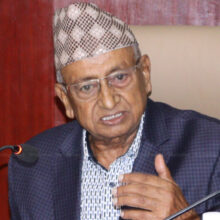
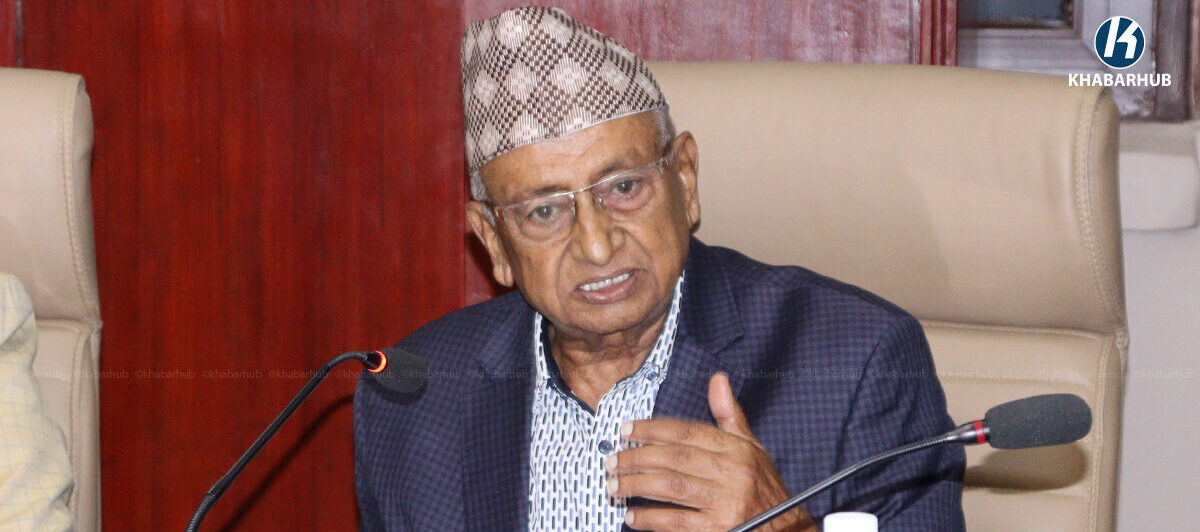
(Edited excerpt from remarks by former ambassador Upadhyay at a programme organised by the Institute for Strategic and Socio-Economic Research Center)





Comment