




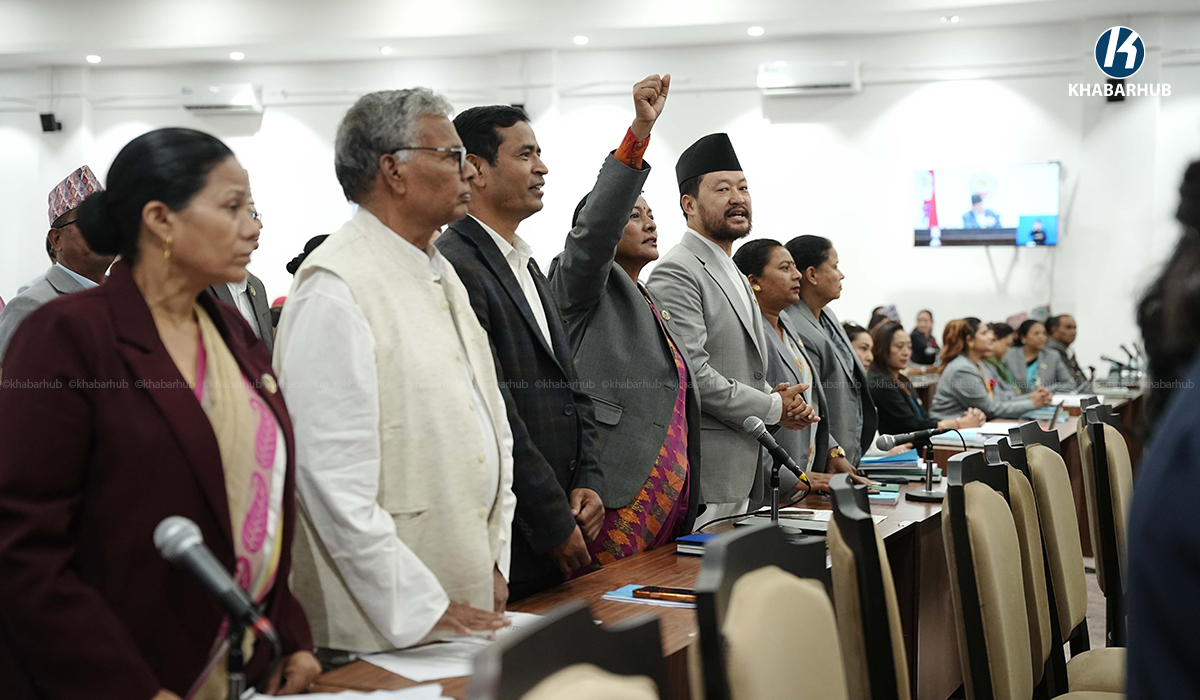
KATHMANDU: Opposition parties have been obstructing the House of Representatives, demanding the presence of Prime Minister Balen Shah during the parliamentary debate on the government’s policy and programme, even though such a requirement is not explicitly mentioned in the parliamentary rules.
The policy and program for the upcoming fiscal year was presented in Parliament on May 11 through the President’s address. While opposition leaders had expressed their views the following day, they later began obstructing parliamentary proceedings, insisting that the Prime Minister must be present to respond.
However, legal and procedural provisions suggest that the opposition’s demand does not align with the House rules.
The obstruction has prevented Parliament from proceeding with detailed discussions on the government’s policy and programme.
What does the House rules say?
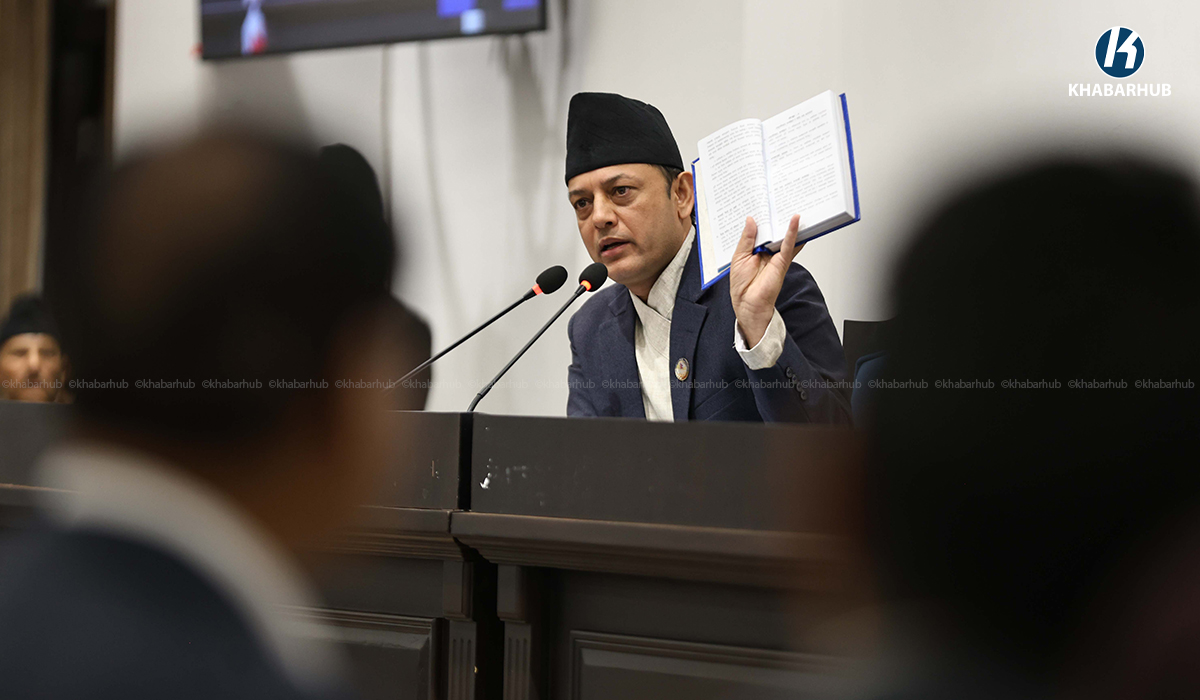
After the federal elections held on March 5, a new House of Representatives has not yet adopted updated rules, meaning the House is still functioning under the House of Representatives Rules.
Under Rule 38 of the existing regulations, procedures regarding the policy and programme are clearly defined.
Rule 38(1) states that after the motion of thanks on the President’s address is passed, the Speaker will, in consultation with the Prime Minister or a minister designated in his absence, fix a date and time for discussion on the policy and programme. The debate will then be conducted on a party representation basis.
Similarly, Rule 38(3) states that questions raised during the discussion shall be answered at the end by the Prime Minister or, in his absence, a minister designated by him.
The rules do not explicitly mandate the Prime Minister’s physical presence during the entire debate or response process, allowing flexibility for ministerial representation.
Despite this, opposition parties argue that the Prime Minister must be present in Parliament for the debate to proceed. Their continued protest has already disrupted multiple sessions, and they maintained the same stance on Thursday, suggesting the deadlock may continue.






Comment