




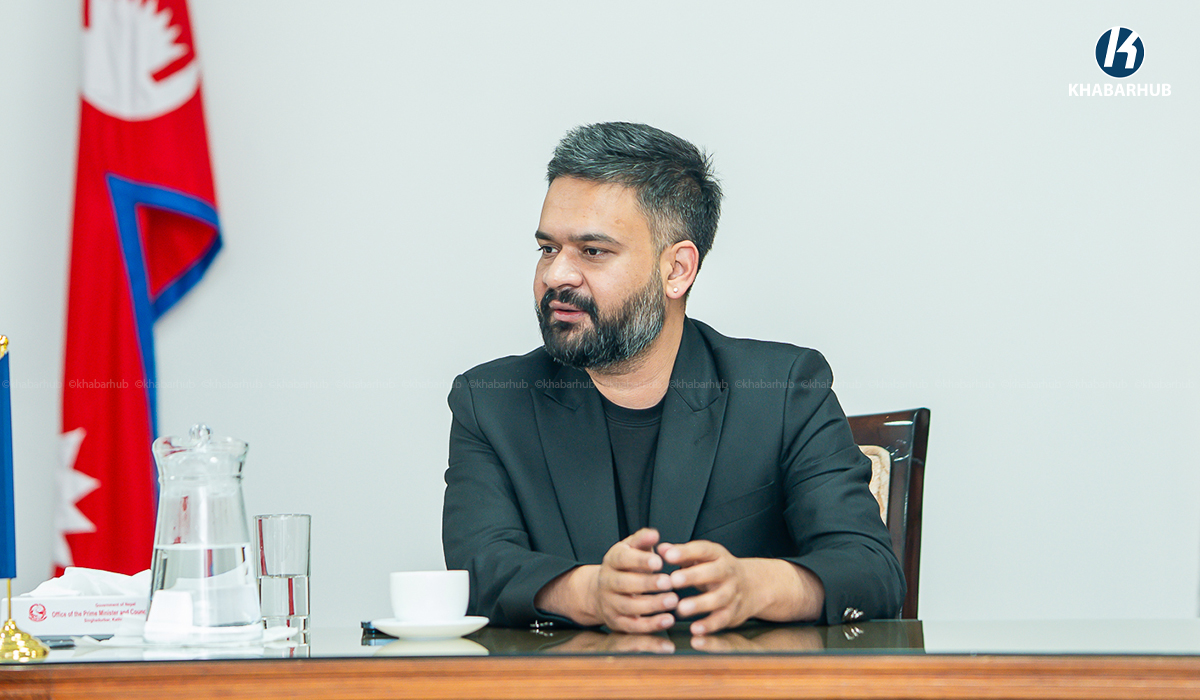
KATHMANDU: The government led by Prime Minister Balen Shah has introduced a draft of the ‘national commitment’ document incorporating the manifestos and pledges of six national parties represented in Parliament.
The draft, made public on Tuesday by the Office of the Prime Minister and Council of Ministers, will now be discussed with political parties represented in Parliament.
The single-party government of the Rastriya Swatantra Party has combined its 100-point governance reform agenda with the election pledges of other parties to formulate the draft, which sets ambitious economic targets.
According to the document, the government aims to upgrade Nepal to a respectable middle-income country within the next five years, with clear economic indicators outlined.
Key economic targets
The government has set a target of raising per capita income to 3,000 US dollars within five years. It also aims to expand the country’s gross domestic product to nearly 100 billion dollars.
The draft projects an average annual economic growth rate of 7 percent and plans to create 1.5 million new jobs during the same period.
Another key goal is to reduce the multidimensional poverty rate to 10 percent.
Strategy for economic transformation
The government has proposed positioning the private sector as the main engine for employment generation, production, and investment.
It has pledged to end rent-seeking practices, policy manipulation, and cartelization in order to create an industry-friendly environment. The draft also includes a legal guarantee to keep tax rates stable for 10 years and to simplify industrial registration and renewal processes through digital systems.
The government also plans to introduce investment-friendly laws to attract production-oriented foreign direct investment and to formalize the informal economy. It aims to strengthen domestic investment capacity while linking foreign investment with technology transfer and employment generation.
Agriculture, tourism, energy, infrastructure, and the digital economy have been identified as key sectors for generating 1.5 million jobs. The government also aims to promote quality employment within the country so that foreign employment becomes a voluntary choice rather than a necessity.
The document states that the country will utilize its youth demographic dividend to drive economic transformation and elevate Nepal to middle-income status, while making the private sector the primary vehicle for national prosperity.
The government plans to incorporate these commitments into the policies, programmes, and budget for the fiscal year 2026/27, with monitoring to be carried out by the Office of the Prime Minister and Council of Ministers.
Analysts say the commitments could bring notable changes to Nepal’s economy if implemented effectively, though achieving the targets would require concrete action plans, investment, and strong collaboration with the private sector.






Comment