




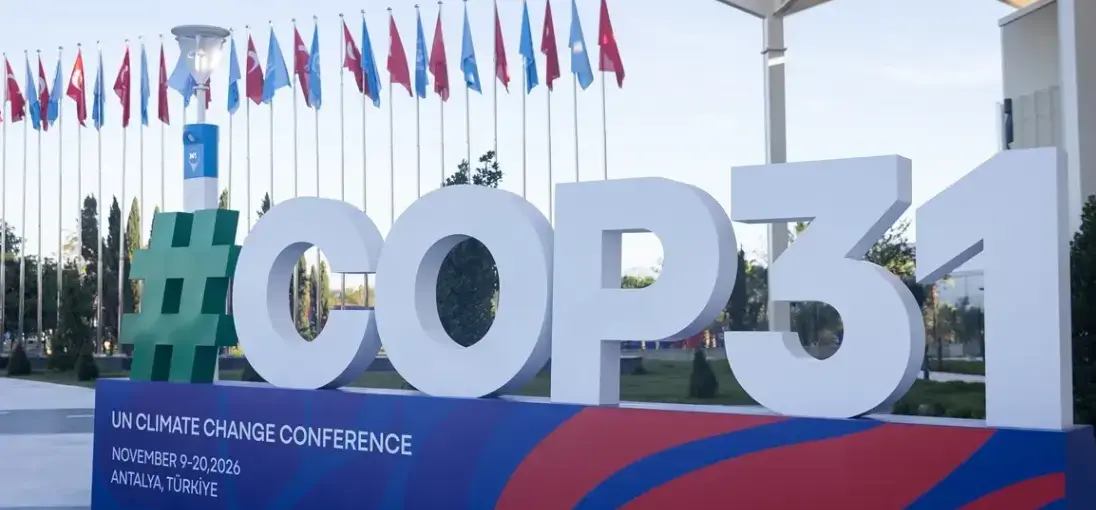
ANTALYA: Nepal has called for mountain-related issues and climate change to be established as permanent and institutionalized agenda items in negotiations under the United Nations Framework Convention on Climate Change (UNFCCC).
Nepal has emphasized the need for a dedicated action plan, regular dialogue and strong high-level political commitment to address the growing climate risks facing mountain regions, including glacial lake outburst floods (GLOFs), loss of lives and property, and damage to fragile ecosystems.
Presenting Nepal’s position at a high-level consultation on mountain regions and climate change organized on the sidelines of the 31st United Nations Climate Change Conference (COP31), Dr. Maheshwor Dhakal, Joint Secretary at the Ministry of Agriculture, Forests and Environment and Chief of the Climate Change Management Division, stressed that mountain-related concerns must move beyond discussions and translate into concrete action.
Presenting a joint position on behalf of Nepal and Bhutan, Dr. Dhakal said the call for a dedicated agenda on mountain regions and climate change was not merely a matter of principle but a response to the serious humanitarian and environmental challenges confronting mountain countries.
Referring to the devastating avalanches in Nepal’s Bhote Koshi region, he highlighted the extensive damage to human lives, livelihoods and physical infrastructure. He further warned that rising temperatures and the growing possibility of global warming exceeding the 1.5-degree Celsius threshold were intensifying the risks faced by mountain communities.
Dr. Dhakal noted that mountain-related concerns were not new to international climate negotiations. The first Global Stocktake, concluded at COP28, had provided a mandate for an expert dialogue on mountain regions, which was subsequently held in 2024. He added that the COP30 process had advanced discussions on convening another dialogue in 2026.
While acknowledging these initiatives as positive developments, he maintained that occasional dialogues alone would not adequately address the mounting challenges. He stressed the importance of establishing a structured, continuous and results-oriented institutional mechanism.
As part of its proposals, Nepal has called for a dedicated action plan on mountain regions and climate change covering mitigation, adaptation, loss and damage, and the means of implementation.
Nepal has also proposed an institutionalized annual dialogue to maintain momentum, ensure measurable progress and strengthen political attention and commitment to mountain-related concerns.
Emphasizing the importance of scientific evidence, Nepal has called for expanded research into the effects of climate change on mountain ecosystems. It has highlighted the need for further studies on rising temperatures, the extent and duration of global warming beyond the 1.5-degree Celsius threshold, and the resulting consequences for communities in both mountainous and low-lying regions.
Furthermore, Nepal has urged the international community to provide immediate and additional support to mountain countries highly vulnerable to climate change. Such assistance should include adequate financial resources, technology transfer, capacity development, early warning systems and effective mechanisms to address loss and damage.
Stressing that climate change impacts in mountain regions are no longer merely potential future threats but an increasingly visible reality, Dr. Dhakal warned that their consequences would extend beyond mountainous areas and affect other regions as well.
He argued that holding successive dialogues would not be sufficient while climate-related risks continued to escalate. Instead, an institutional framework was needed to translate scientific evidence and political commitments into timely action and tangible support for vulnerable communities.
Nepal has urged the COP31 presidency and all parties to the UNFCCC to deliver meaningful and concrete outcomes on mountain-related climate concerns through the conference negotiations.
The joint position presented by Nepal and Bhutan places particular emphasis on addressing climate vulnerabilities, meeting the financial needs of mountain countries and securing formal institutional recognition of mountain issues in international climate negotiations.






Comment