




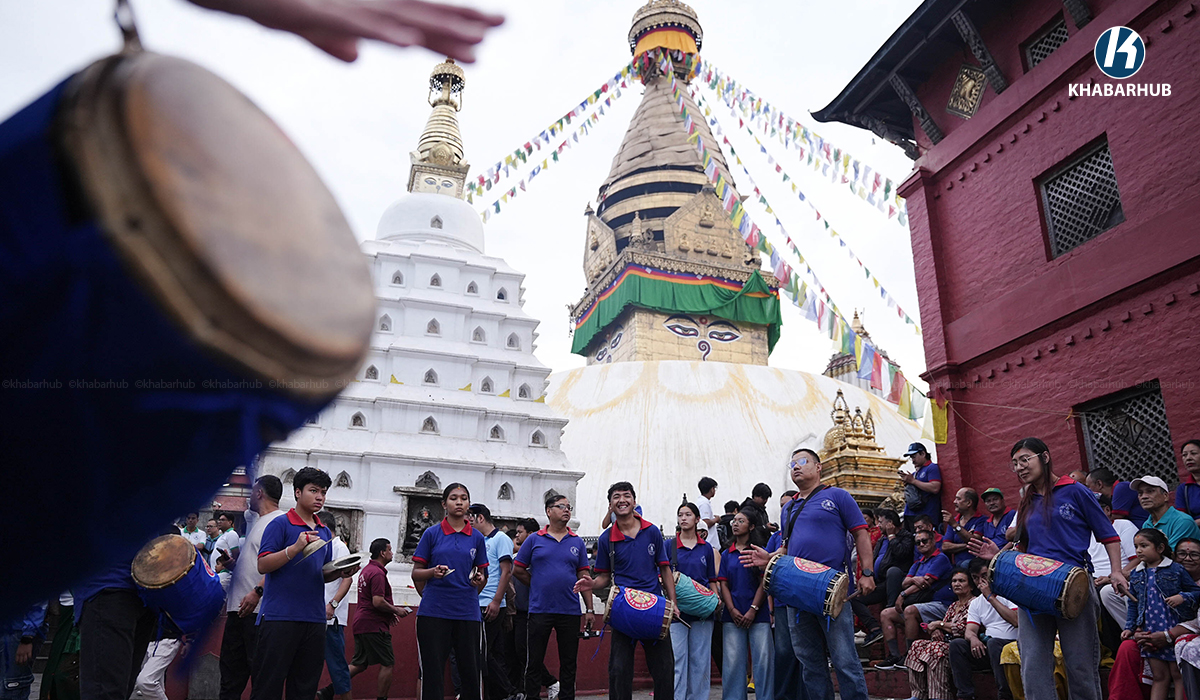
KATHMANDU: The month-long Gula Parva, celebrated by the Buddhist Newar community, began on Thursday with devotees visiting Buddhist chaityas across the Kathmandu Valley.
The festival is observed every year from Shrawan Shukla Pratipada to Bhadra Shukla Pratipada according to the lunar calendar, corresponding to Gulathwa Paru to Yalathwa Paru in Nepal Sambat.
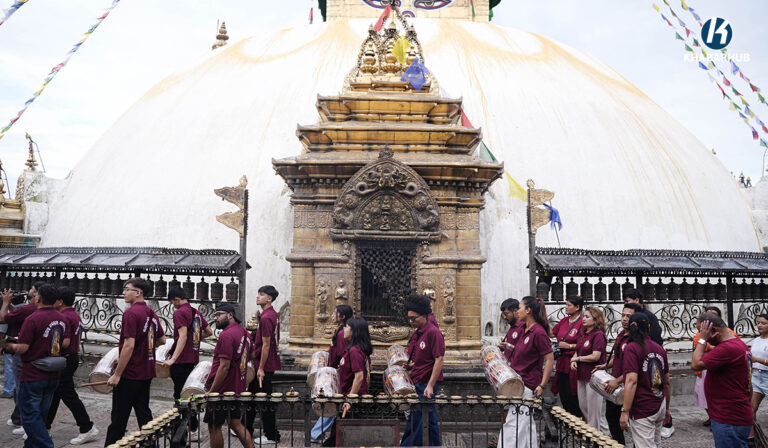
During the festival, devotees visit and circumambulate Buddhist chaityas while performing prayers and religious rituals accompanied by traditional musical instruments.
The word ‘Gula’ is derived from the Nepal Bhasa words ‘gu’, meaning nine, and ‘la’, meaning month. The festival is observed after nine months have passed since the beginning of Nepal Sambat and is traditionally divided into two phases known as Gulathwa and Gulaga.
Swayambhunath sees growing crowds
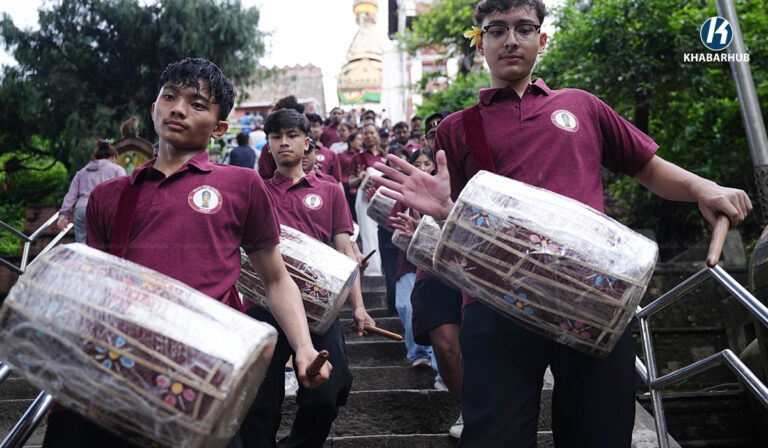
With the beginning of Gula Parva, the number of devotees visiting Swayambhunath Mahachaitya in Kathmandu has increased.
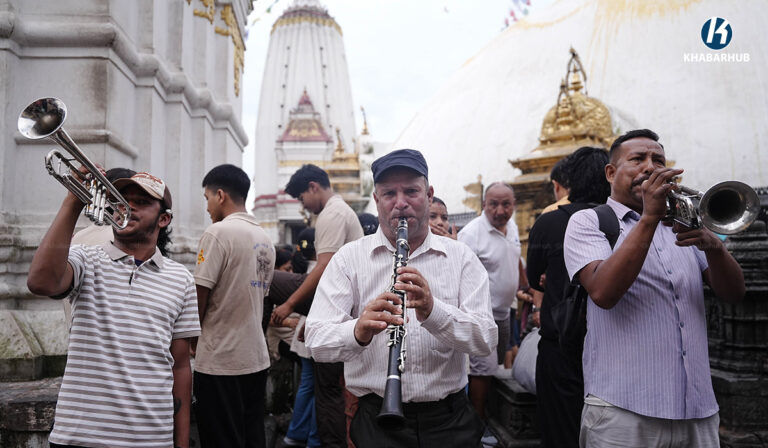
A major tradition of the festival is circumambulating Swayambhunath while playing traditional musical instruments.
Although Gula Parva is primarily a festival of the Buddhist community, people from other communities have also increasingly begun participating in the celebrations.
Devotees not only circumambulate Swayambhunath every day during the festival but also visit Boudhanath, Pulchowk in Lalitpur and other chaityas across the Kathmandu Valley.
Groups from different neighbourhoods also traditionally gather with musical instruments and visit local chaityas and temples dedicated to various deities.
Traditional instruments at heart of celebrations
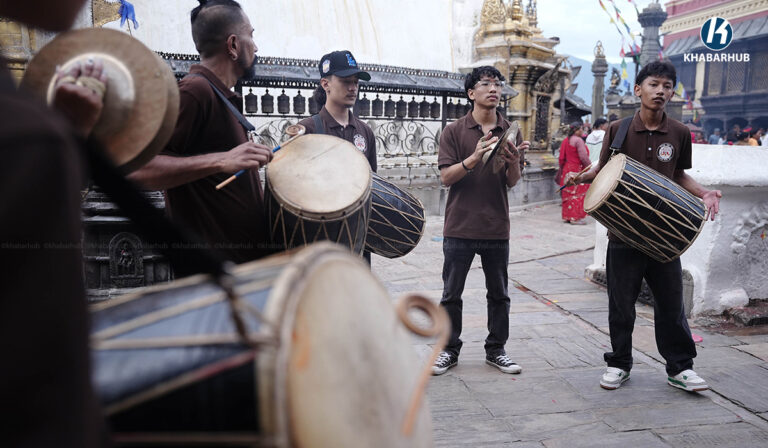
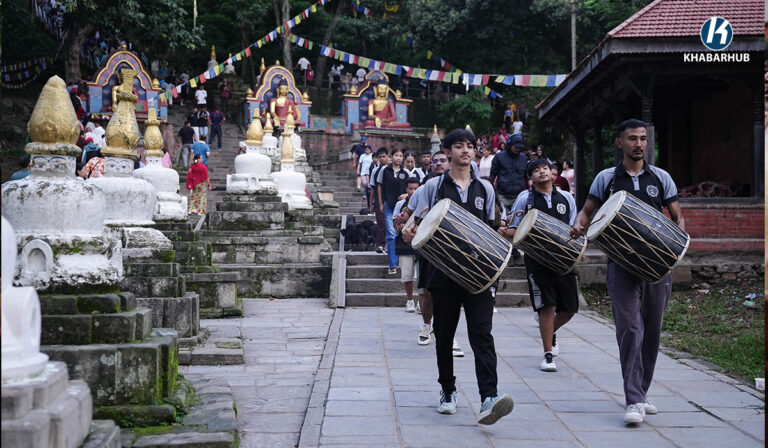
One of the distinctive features of Gula Parva is the use of the traditional ‘Nya Khu’ instrument, made from buffalo horns.
Other traditional instruments, including dha, dhime, bhusya and bamboo flutes, are also played during the festival.
Along with circumambulating Buddhist chaityas, devotees worship and visit local guardian deities as well as Ganesh, Bhimsen, Bhairav and other Hindu deities.
The practice reflects the intertwined religious and cultural traditions of the Kathmandu Valley.
Month-long celebration of faith and culture
Gula Parva is also regarded as a time for communities to come together after the major agricultural work of the season has been completed.
The festival provides an opportunity for people to celebrate together while preparing for the arrival of other major festivals.
Throughout the month, Buddhist devotees conduct special prayers and religious and cultural activities dedicated to the Buddha.
In recent years, participation in Gula Parva and the use of traditional musical instruments have increased, according to local residents.
They say the renewed participation is helping preserve the festival’s religious significance and cultural traditions among younger generations.
The festival will continue for a month, with devotees observing daily rituals, playing traditional instruments, circumambulating chaityas and offering prayers across the Kathmandu Valley.


Comment