




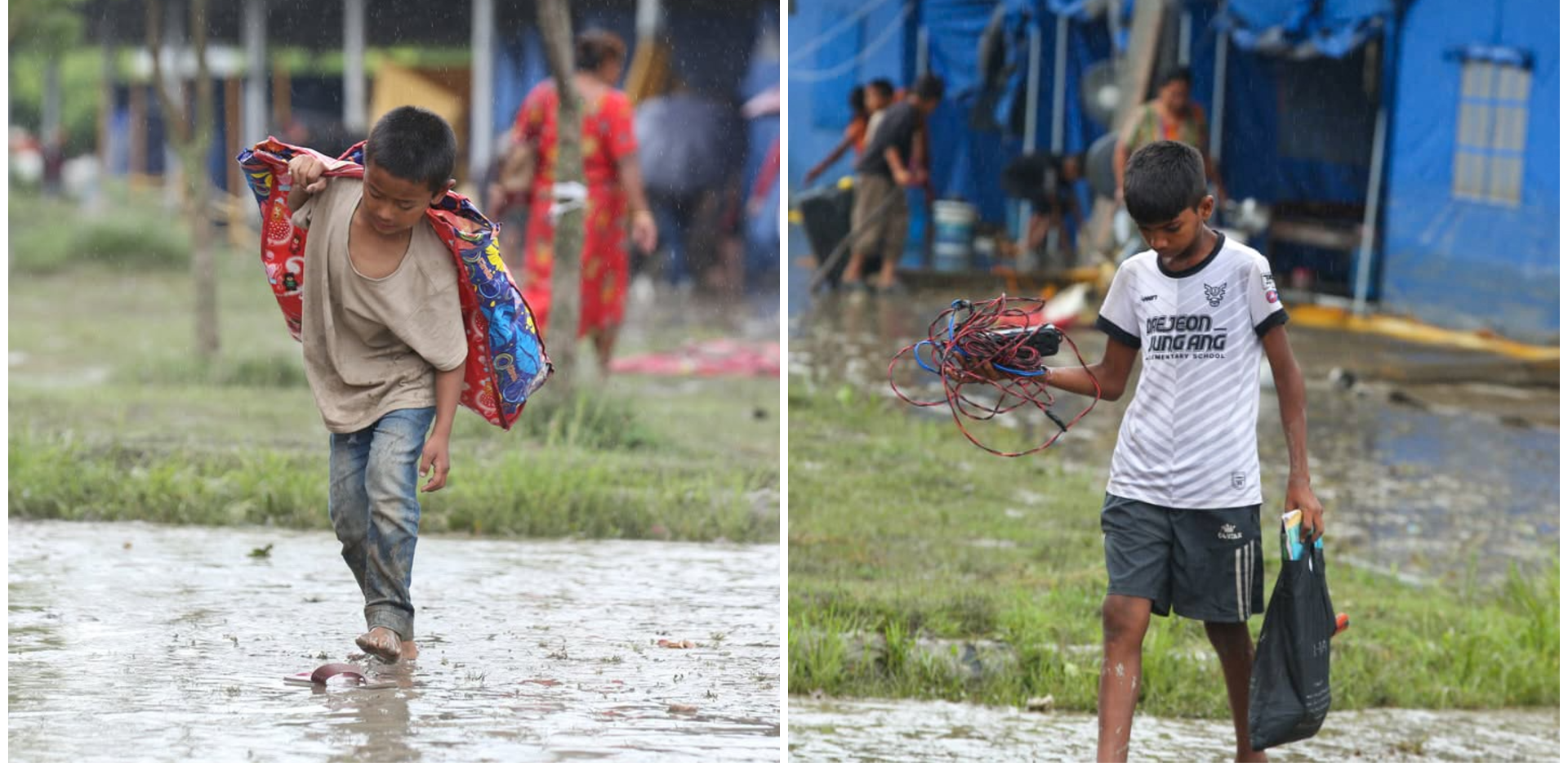
KATHMANDU: Standing at the gate of the temporary holding center at the Radhasoami Satsang Ashram in Kirtipur, a young boy shivered in mud-soaked clothes as he pleaded, “It’s getting cold. I have nothing to wear. Everything I own is soaked, and even my slippers were washed away.”
The Grade 5 student lost all his schoolbooks and uniform in the flood. According to local residents, the boy has lost his parents and had been living with the support of his grandmother.
He is not alone. The devastating flood has left the lives and education of around 20 children under the age of 18 staying at the holding center hanging in the balance, raising serious concerns about both their immediate well-being and their future.
From demolition drive to temporary shelter
Their ordeal began on April 25, when the Kathmandu Metropolitan City and the government jointly launched a demolition drive against informal settlements in Thapathali and along the banks of the Bagmati and Manohara rivers.
Authorities began collecting data and registering residents at Dasharath Stadium, saying the exercise was aimed at identifying genuine landless squatters and ensuring their proper rehabilitation.
However, the demolition was carried out before any long-term rehabilitation plan was in place. While some families managed to salvage a few belongings, many lost everything. Overnight rain further damaged whatever possessions they had managed to recover.
The government’s action drew widespread criticism. The following day, Prime Minister Balendra Shah (Balen) defended the operation in a lengthy social media post, arguing that the settlements had to be removed because they were located in flood-prone riverbanks and that relocation was necessary for the residents’ safety.
Following the demolition, 167 people from 67 families in Thapathali were relocated to temporary tents at the Radhasoami Satsang Ashram in Kirtipur. At the time, authorities assured them that the arrangement would last only 15 days.
Nearly three months later, however, no permanent rehabilitation has taken place. Ironically, families displaced in the name of protecting them from floods were relocated to another flood-prone area near Sundarighat and Bansighat.
A night of panic
Disaster struck again at around 1:00 am on Friday. As families, including young children, slept inside the tents, floodwaters from the swollen Sundarighat stream surged into the holding center.
Within moments, panic spread throughout the camp. People screamed and ran for safety as water rapidly engulfed their shelters. Most managed to escape with only their children and a handful of important documents, leaving behind nearly all of their belongings.
One woman, who has long suffered from a heart condition, said she barely had time to grab her medication. “Thankfully, I managed to put my medicines in my bag,” she said. “I picked up my two daughters, who were sleeping in their shorts and T-shirts. Even their slippers were swept away by the flood.”
Security personnel evacuated the residents from the camp at around 1:30 am after they reached the entrance gate. To save their lives, the families were forced to abandon years of hard-earned possessions to the floodwaters.
‘The government brought us back to the river’
An elderly woman, displaced for the second time in three months, questioned the government’s handling of their relocation. “The government removed us from the riverbank only to bring us back beside another river,” she said. “Maybe they wanted us to die here, but we survived. Where will they take us now?”
According to Gyanendra Karki, a volunteer at the Radhasoami Satsang Ashram, the holding center is located in an area that is inundated almost every year.
“We repeatedly urged both the government and the squatters to relocate as soon as possible because this place floods every year,” Karki said. “But neither the government paid attention, nor did the squatters believe us. Eventually, what we feared came true.”
Although the floodwaters have receded, the holding center remains covered in thick layers of mud. Volunteers say the site is unlikely to become habitable before the month of Asoj (mid-September to mid-October).
Many of the displaced families have already been moved elsewhere. Some have been relocated to Kharipati in Bhaktapur, while others have been accommodated at different temporary locations.
Yet a more pressing question remains: what happens to the children?
How will they continue their education? Who will replace the books, school uniforms and learning materials swept away by the flood? How will prolonged displacement and school absenteeism be prevented? And who will provide the psychosocial support many of these children now need?
So far, there are no clear answers.
The flood did not merely wash away tents and household belongings. It also disrupted the education, security, confidence and future aspirations of dozens of children.
Providing safe housing is the responsibility of the state, while education is a fundamental right guaranteed to every child. But when families are repeatedly displaced because of inadequate planning and poor rehabilitation, it is the children who pay the highest price—often with their education, stability and dreams.
As the floodwaters recede from Kirtipur, another question remains unanswered: when—and under what circumstances—will these children return to their classrooms? Equally important, how will the state ensure that their future is not another casualty of repeated displacement?




Comment