




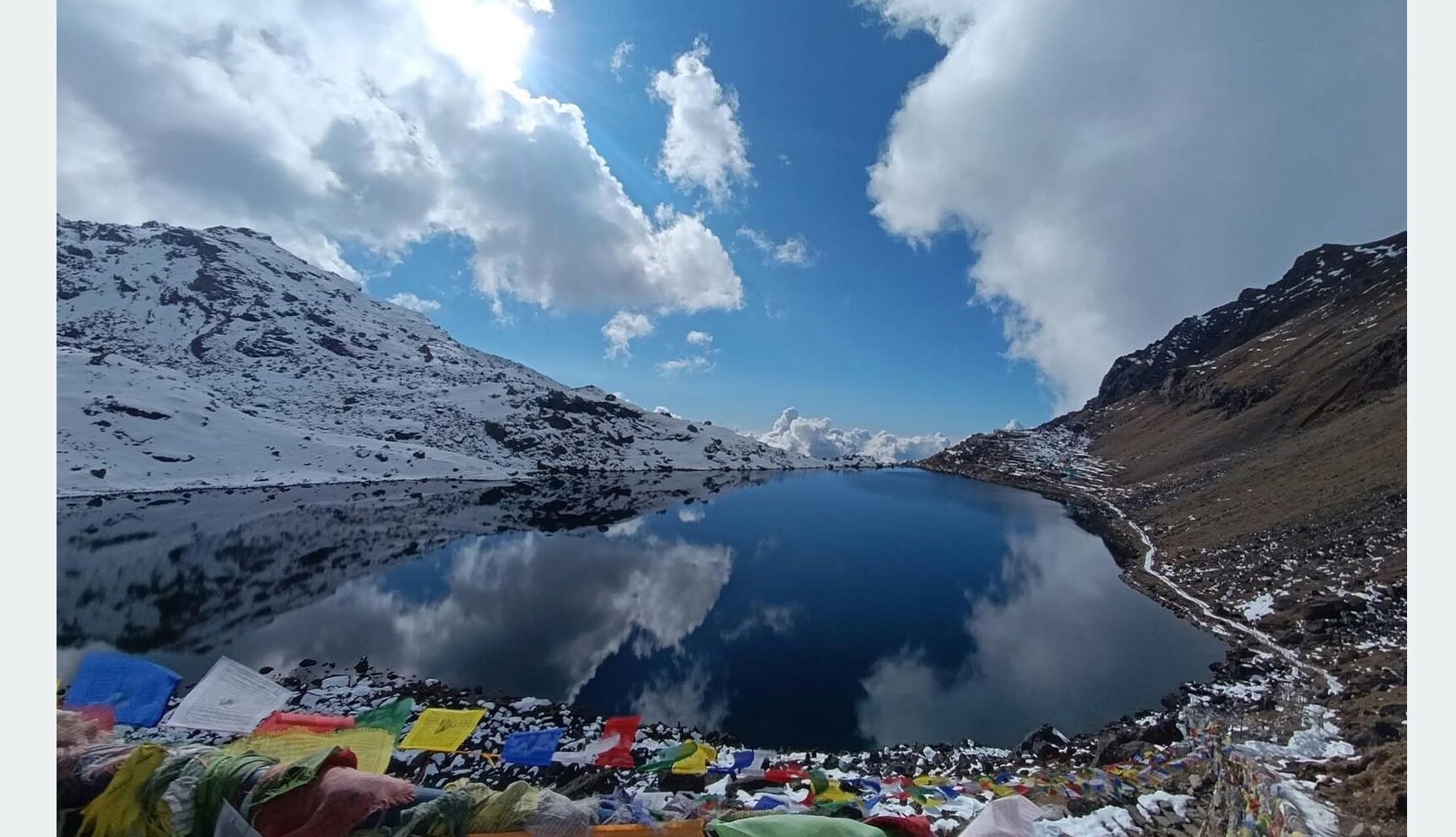
RASUWA: Tourist arrivals in Gosainkunda, a renowned religious and natural attraction in Rasuwa district, have started increasing following a gradual improvement in road and trekking route conditions damaged by the Bhotekoshi River flood on August 26.
The tourism sector, which had suffered a setback after the flood disrupted road access and trekking trails, is gradually returning to normal, with both domestic and international visitors beginning to return to the area.
Chairperson of Gosainkunda Rural Municipality, Keisang Nurpu Tamang, said tourism activities affected by the disaster had started recovering. The growing number of visitors has brought relief to local hoteliers, trekking guides, transport operators and small business owners, he added.
“Tourism activities had come to a standstill for some time following the flood. However, with road access gradually improving, domestic and foreign tourists have started arriving again,” Tamang said. He also noted that the rural municipality was coordinating efforts to maintain trekking routes and ensure the safety and convenience of visitors.
Ganesh Prasad Tiwari, Information Officer and Conservation Officer at Langtang National Park, said tourist arrivals in the Gosainkunda area were gradually returning to normal as transportation and movement had become easier. He added that the park had been implementing programmes to conserve the area’s natural environment and biodiversity.
Similarly, Babulal Tamang, president of Civil Society Rasuwa, said the number of pilgrims and trekkers visiting Gosainkunda had begun rising following improvements in road and trail conditions. Tourism activities had remained disrupted for some time because of infrastructure damage caused by the flood, he noted.
Local hotelier Santosh Ghale also reported an increase in domestic visitors, particularly young people travelling to Gosainkunda for trekking and sightseeing. Previously, the area received a significant number of pilgrims mainly during major religious festivals such as Janai Purnima. However, it has increasingly become a year-round destination for trekking and sightseeing, he said.
Ghale stressed that sustainable improvements to trekking routes, communication facilities and basic infrastructure would be essential to further develop tourism in the region. Such investments could strengthen local livelihoods while contributing to the national economy, he added.
Located within Langtang National Park, Gosainkunda lies in Ward No. 6 of Gosainkunda Rural Municipality at an elevation of 4,380 metres above sea level. The lake covers approximately 13.80 hectares, measuring 625.55 metres in length and 302 metres in width, with a maximum depth of 26 metres. It is estimated to contain around 1.472 million cubic metres of water.
Gosainkunda holds deep religious significance for both Hindu and Buddhist communities and has been revered as a sacred pilgrimage destination since ancient times. According to Hindu mythology, Lord Shiva created the lake by striking a rock with his trident to release water after consuming the deadly Kalakuta poison produced during the churning of the ocean.
The lake is also associated with the Trishul stream, with religious tradition holding that its water originated from the strike of Lord Shiva’s trident.
The lake is known by different names among various communities. The Tamang community refers to it as ‘Gyo’ or ‘Chhokar’, the Sherpa community as ‘Ghyo’, the Tibetan community as ‘Chho’ and the Newar community as ‘Shilu’.
Several other sacred lakes surround Gosainkunda, including Bhairav Kunda, Saraswatikunda, Suryakunda, Chandrakunda, Dudhkunda and Ganeshkunda. The historic Amarsingh Cave and the traditional cultural practices of the local Tamang community are additional attractions for visitors.
Recognizing its ecological significance, the Gosainkunda area was included in the Ramsar List of Wetlands of International Importance on September 23, 2007.
The region is home to diverse Himalayan wildlife, including snow leopards, red pandas, musk deer and Himalayan tahrs, alongside various high-altitude plant species and aquatic life.
Gosainkunda is one of Nepal’s prominent religious and tourism destinations and serves as a connecting point for the Helambu, Langtang and Tamang Heritage trekking routes.
Large religious fairs are held at the lake during Ganga Dussehra in Jestha–Asar and Janai Purnima in Shrawan–Bhadau. Special religious ceremonies are also organized on Bala Chaturdashi, according to Tanka Prasad Dhakal, a local priest from Rasuwa.



Comment