




KATHMANDU: With a series of high-level visits from Nepal to India underway, stakeholders have stressed the need to take Nepal-India relations forward on a new footing.
Home Minister Sudan Gurung left for India on Monday. In recent months, Finance Minister Dr Swarnim Wagle and Foreign Minister Shishir Khanal have also visited India, while preparations are underway for Prime Minister Balendra Shah’s visit.
Speakers expressed these views at a high-level interaction programme on Nepal-India relations organised by the Institute for Strategic and Socio-Economic Research (ISSR) and Khabarhub at Pavilion Hall in Kathmandu’s Durbarmarg.
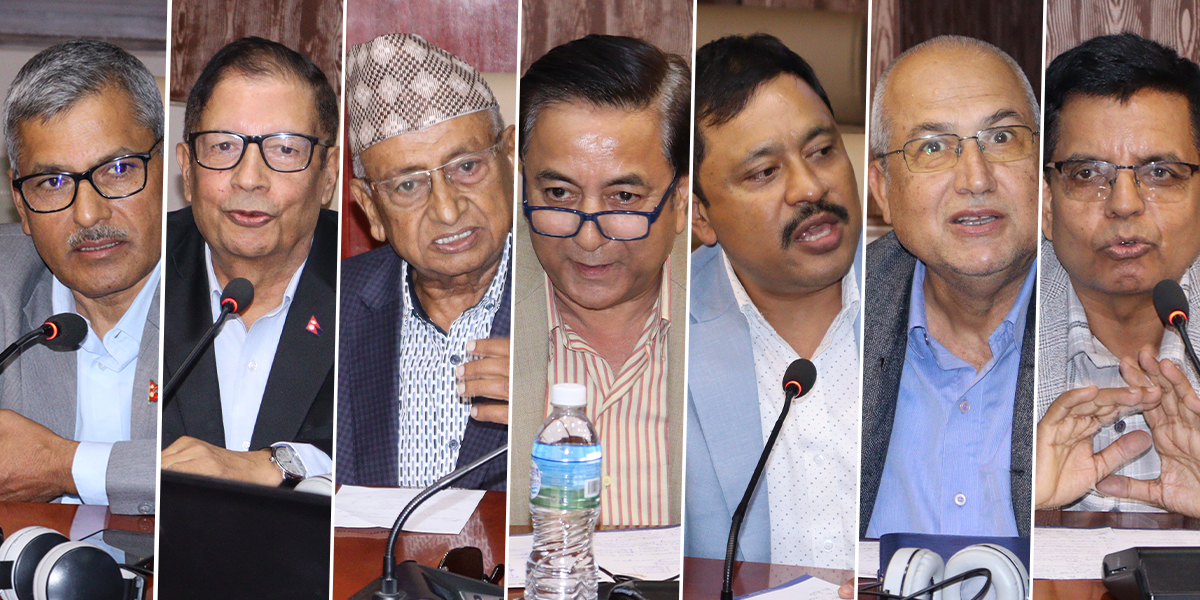
Speaking at the event, former Nepali ambassador to India Deep Kumar Upadhyay said Indian Prime Minister Narendra Modi and his cabinet ministers were willing to improve relations with Nepal, but various factors had prevented progress.
He identified administrative hurdles in Nepal as an obstacle to improving ties and said a trust deficit persisted between the two countries. He expressed hope that the prime minister’s upcoming visit to India would help address the problem.
Retired Nepal Army Major General Binoj Basnyat said the two countries had established more than 40 bilateral mechanisms, but these had failed to operate effectively and had instead created further uncertainty.
He proposed a reliable arrangement for the heads of government of both countries to meet in person once a year and discuss contemporary issues. Basnyat also highlighted the need to modernise and improve Nepal’s security system.
Former Nepal Rastra Bank Governor Maha Prasad Adhikari said Nepalis travelling to India were facing difficulties making payments through QR codes. He urged the prime minister to take up the issue during his visit.
Adhikari also criticised the state’s limited investment in digital infrastructure and expressed concern that the government was imposing taxes and value-added tax (VAT) on digital infrastructure developed by the private sector.
Former president of the Independent Power Producers’ Association, Nepal (IPPAN), Ganesh Karki, said the prime minister should give priority to energy-related issues during his visit to India.
Nepal Chamber of Commerce Vice-President Deepak Shrestha said Nepal faced transit-related difficulties with India as a landlocked country and stressed the need for diplomatic efforts to resolve them.
Geopolitical analyst Arun Kumar Subedi said Nepal’s foreign policy should focus on both India and China. He suggested that Nepal view the large population in Indian regions bordering Nepal as a potential market.
Subedi also noted the countries’ close cultural ties, saying Nepal should attract more Indian tourists to its religious sites.
Trade expert Rabishankar Sainju said Nepal needed to play a more active role in strengthening trade relations with India. As India pursues trade agreements with the European Union and other countries, he said Nepal should assess the potential implications and formulate policies accordingly.
The programme was attended by diplomats, private-sector representatives, former government officials and experts on foreign affairs.




Comment