





KATHMANDU: Economic Digest presents a brief yet comprehensive roundup of major business developments in Nepal, delivered in clear and accessible summaries.
Nepal’s current economic landscape reflects a combination of market optimism, disaster-related pressures, supply disruptions, and ongoing policy intervention. The NEPSE’s 27.94-point rise to 2,559.49, supported by Rs 4.35 billion in turnover and broad-based sectoral gains, suggests improving investor sentiment. However, declining gold and silver prices indicate mixed trends in domestic asset markets.
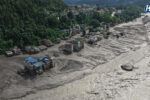
Meanwhile, the Bhote Koshi flood has emerged as a major economic and social challenge, causing Rs 67.87 billion in social-sector damage and requiring Rs 103.54 billion for recovery. Significant losses to homes, public buildings, schools, and health facilities highlight substantial reconstruction needs and potential pressure on public finances.
Energy and agricultural supply concerns further demonstrate Nepal’s vulnerability to external and infrastructure-related disruptions. Cooking gas shortages have prompted bottling plants to increase production, while allegations of hoarding have intensified calls for stronger market regulation. The suspension of DAP fertilizer sales, meanwhile, reflects concerns over international supply-chain instability and the need to protect domestic agricultural requirements.
On the policy front, the government is emphasizing structural reforms, including capital-market improvements, private-sector participation in state enterprises, financial-sector regulation, and support for disaster-hit businesses. Revenue growth from forestry, industrial activity, and tax collection indicates pockets of economic resilience. Overall, Nepal faces significant short-term pressures but is simultaneously pursuing institutional reforms and private-sector engagement to strengthen long-term economic stability.
NEPSE gains 27.94 points as turnover reaches Rs 4.35 billion
Nepal’s stock market ended the week on a positive note on Thursday, with the Nepal Stock Exchange (NEPSE) index climbing 27.94 points to close at 2,559.49. A total of 12,086,932 shares of 345 companies changed hands during the trading session, generating a turnover of Rs 4.35 billion. According to market data, share prices of 237 companies advanced, while 31 companies recorded declines. The prices of nine companies remained unchanged. All sectoral indices finished in positive territory, with the development bank, hydropower, investment, non-life insurance, and trading sectors each gaining more than one percent. Multipurpose Finance posted the steepest decline, with its share price dropping 5.71 percent. Upakar Laghubitta Bittiya Sanstha was the top performer, gaining 10.53 percent, followed by Abhiyan Laghubitta, which rose 10.09 percent.
Gold Falls to Rs 301,000 per Tola, Silver Drops to Rs 4,600
Gold prices declined in Nepal on Friday, with hallmark gold falling Rs 4,800 per tola (11.66 grams) to Rs 301,000. According to the Federation of Nepal Gold and Silver Dealers’ Association, gold had traded at Rs 305,800 per tola on Thursday. Silver prices also decreased. The association said the price of silver dropped by Rs 255 per tola to Rs 4,600. Silver had been trading at Rs 4,855 per tola on Thursday.
Bottling Plants Produce 50,000 Gas Cylinders Daily Through Overtime
Cooking gas shortages in Kathmandu caused by road disruptions along the Bhote Koshi highway have prompted bottling plants in Chitwan, Nawalparasi (Bardghat Susta Purba), Makwanpur, Barah, Parsa, and Dhanusha to operate extended shifts. Facilities operated by Baba, Saibaba, Nepal Gas Gandaki, Janaki, Narayani, Nobel, One (NL), Jagdamba, Leo, Amber, Supper, Manoj, Sahara, and Chandreswori are working double shifts of up to 14 hours a day. Using 24 bottling units, the plants are refilling around 100,000 cylinders daily and sending more than 53,000 filled cylinders to Kathmandu through Hetauda. The deliveries are being carried out despite narrow and heavily congested mountain roads, where sudden landslides pose an additional transportation risk.
LP Gas Federation Calls for Legal Action Against Profiteering Amid Supply Crisis
With domestic cooking gas supplies severely disrupted by highway obstructions and road washouts along the Bhote Koshi corridor at Krisnabhir, the Nepal LP Gas Industry Association has strongly criticized traders accused of taking advantage of the shortage to raise prices and make excessive profits. In a press statement issued Friday, the association urged distributors across the country to give priority to genuine consumers facing urgent shortages. It also called on the government to take firm legal action against illegal price increases and ensure that essential energy supplies reach households in urban areas experiencing serious distribution difficulties.
Bhote Koshi Flood Inflicts Rs 67.87 Billion in Social Sector Damage
The Bhote Koshi flash flood has caused an estimated Rs 67.87 billion in damage to the social sector, while approximately Rs 103.54 billion will be needed for recovery, according to the Rapid Damage and Needs Assessment (RDNA) report. Prepared jointly by the National Planning Commission and the National Disaster Risk Reduction and Management Authority, the assessment examines damage to private homes, public buildings, schools, health facilities, and cultural and religious sites. The disaster destroyed 7,570 private houses, with damage to the structures and property inside them estimated at more than Rs 63.88 billion. In addition, 48 public buildings, 18 schools, seven health facilities, and 30 cultural and religious sites were affected, demonstrating the flood’s extensive impact on social infrastructure.
Bhote Koshi Flood Damages 48 Public Buildings, Causing Rs 2.64 Billion in Losses
The Bhote Koshi flash flood damaged 48 public buildings, including 35 that were completely destroyed and 13 that suffered partial damage, according to the Rapid Damage and Needs Assessment (RDNA) report. The assessment, jointly conducted by the National Planning Commission and the National Disaster Risk Reduction and Management Authority, puts the value of damage to the buildings and their contents at more than Rs 2.64 billion. Rebuilding the affected public structures is estimated to cost around Rs 4.23 billion. The losses form part of the broader damage suffered by the social sector, which has incurred billions of rupees in losses due to the disaster. The affected infrastructure includes buildings used for administrative, security, community, and other public purposes, increasing the overall reconstruction requirements in the disaster-hit areas.
Bhote Koshi Flood: Customs Offices Make Up 35.4% of Damage Value
Customs office buildings accounted for just 4.2 percent of the structures affected by the Bhote Koshi flash flood but represented 35.4 percent of the total value of the damage, according to the Rapid Damage and Needs Assessment (RDNA) report. Police outposts constituted 10.4 percent of the affected structures and accounted for 11.3 percent of the damage value. Government office buildings represented 12.5 percent of affected structures and 8.8 percent of the total damage. Likewise, structures belonging to the Nepali Army made up 4.2 percent of the affected buildings and represented 5.9 percent of the damage by value. The findings are part of an assessment jointly conducted by the National Planning Commission and the National Disaster Risk Reduction and Management Authority.
Education Sector Recovery After Bhote Koshi Flood Estimated at Rs 2.343 Billion
The government estimates that more than Rs 2.343 billion will be needed to restore the education sector following the devastating Bhote Koshi River flood in Rasuwa on August 26. The Rapid Damage and Needs Assessment report, prepared by a joint technical team that included the National Planning Commission (NPC) and the National Disaster Risk Reduction and Management Authority (NDRRMA), found that 18 schools were affected. Eleven school buildings were completely destroyed, while seven sustained partial damage. Educational materials, furniture, and other school assets were also destroyed, disrupting the education of more than 9,000 students in the affected areas. The report estimates that Rs 105 million will be needed immediately to reconstruct damaged buildings and resume classes. A further Rs 2.238 billion is projected to be required for long-term recovery.
PM Shah Discusses Private Sector Challenges and Investment Climate With Industrialists
Prime Minister Balendra (Balen) Shah met with leading industrialists and business representatives today to discuss ways to strengthen the national economy and address challenges confronting the private sector. Business leaders including Binod Chaudhary, Pawan Golyan, Umesh Shrestha, and Chandra Dhakal attended the meeting at the Office of the Prime Minister and Council of Ministers. Officials said the discussions covered measures to improve the economic environment, resolve operational difficulties faced by private businesses, expand employment opportunities, and encourage investment. The meeting also focused on strengthening cooperation between the government and private sector to create a more supportive business climate and respond to the economic challenges currently facing the country.
Rebuilding Health Facilities Damaged by Bhote Koshi Flood to Cost Rs 780 Million
The Bhote Koshi flash flood affected seven buildings used for health services, destroying four completely and partially damaging three others, according to the Rapid Damage and Needs Assessment (RDNA) report. The assessment, jointly prepared by the National Planning Commission and the National Disaster Risk Reduction and Management Authority, estimates health-sector damage at Rs 236.6 million. Approximately Rs 780 million will be needed to reconstruct the affected facilities. The damage has further disrupted essential social infrastructure in the flood-affected areas. The findings are part of the government’s broader assessment of disaster-related losses and recovery requirements across multiple sectors. Reconstruction funding will be necessary to restore the damaged health facilities and return them to full operation.
Finance Minister Unveils 10- to 12-Point Plan for Capital Market Reform
Finance Minister Swarnim Wagle has announced that the government plans to introduce a special 10- to 12-point reform package aimed at addressing weaknesses in the capital market and supporting its continued development. Speaking Friday, Wagle said preparations were underway to introduce measures designed to strengthen the market and resolve existing challenges affecting its performance. The proposed reforms are expected to create a more effective environment for capital-market growth and expansion. The Finance Minister made the announcement on the final trading day of the week, when the share market recorded a significant gain.
Health Insurance Board Disburses Rs 2.014 Billion to 383 Service Providers
The Health Insurance Board has released Rs 2.014 billion to 383 health institutions to settle approved claims under the Health Insurance Program. The payments were made to government, private, and community hospitals providing services through the program in different districts. The board said the amount covers approved claims that had remained unpaid through April 14 of this year. Following a decision by the board, the outstanding payments were deposited directly into the bank accounts of the respective service-provider institutions.
Ministry Orders Temporary Suspension of DAP Fertilizer Sales Amid Global Supply Disruptions
The Ministry of Agriculture and Environment has directed the temporary suspension of commercial DAP (Diammonium Phosphate) fertilizer distribution, citing serious supply-chain disruptions and a declared force majeure following the closure of the Strait of Hormuz amid geopolitical tensions involving Israel, the United States, and Iran. Through a ministerial directive issued on September 1, the ministry instructed Agriculture Materials Company Limited and Salt Trading Corporation to halt commercial DAP sales. The directive suspended sub-section 6 of section 12 of the Fertilizer Distribution Management Procedure, 2026. The measure is intended to preserve fertilizer reserves for the upcoming wheat season. Company Managing Director Bishnu Prasad Pokharel said the decision was necessary to prevent artificial stockpiling while ensuring that available urea supplies remain focused on the current paddy crop.
HoR Finance Committee Asks Government to Revise Financial Penalty Provisions
The House of Representatives (HoR) Finance Committee has directed the government to revise provisions contained in Section 100, Sub-section 2, Clause (a) of the Nepal Rastra Bank Act, 2002, and Section 18 of the Bank and Financial Institution Act, 2017. The directive was issued during a meeting chaired by Finance Committee Chairman Dr. Krishna Hari Budhathoki. The committee maintained that minor supervisory actions, including official warnings and reprimands, should not automatically prevent bank directors and employees from continuing in their professional roles. During the meeting, Finance Minister Swarnim Wagle assured lawmakers that the government respects the autonomy of Nepal Rastra Bank and recognizes the governor’s legal independence without unnecessary administrative intervention.
HoR Lawmaker Ashika Tamang Accuses Retailers of Hoarding Cooking Gas
Speaking in Parliament about the continuing energy shortage, Member of Parliament Ashika Tamang expressed strong dissatisfaction with the situation and accused some local traders of deliberately withholding cooking gas cylinders. Tamang said she had received thousands of calls from distressed citizens who were unable to obtain gas despite reports that some retailers still had supplies. She questioned whether black-market operators had become more powerful than the state and urged the government to intensify market monitoring and force traders to release hoarded stocks. She also called on the authorities to clearly acknowledge a complete shortage of fuel if supplies were genuinely unavailable, saying households could then turn to traditional firewood cooking rather than continuing to suffer from administrative delays and frequent changes in government leadership.
Government to Retain Land Identified as Encroached in Rawal Commission Report
The Ministry of Land Management, Cooperatives, Federal Affairs and General Administration has decided to retain all government and public land identified as encroached in the fiscal year 1995/96 report of the High-Level Commission on Investigation and Protection of Government and Public Land, commonly known as the Rawal Commission, under the ownership of the Government of Nepal. The decision follows recommendations from an implementation committee established by the ministry. Based on the committee’s findings, the ministry will deduct the areas identified as encroached from the relevant plot numbers listed in the Rawal Commission report and register those portions in the name of the Government of Nepal. The ministry has also made a consolidated decision regarding plot numbers whose entire areas were identified as government or public land. Those plots will likewise remain registered under the Government of Nepal as government and public property.
Division Forest Office Revenue More Than Quadruples on Hydropower and Herb Fees
Revenue collected by the Division Forest Office has increased more than fourfold, largely due to forest-use and plantation fees paid by major infrastructure projects. The office collected Rs 53.6 million in fiscal year 2025/26, up from Rs 11.6 million in 2024/25. More than Rs 52.9 million of the latest revenue came from the 65-megawatt Myagdi Khola Hydropower Project, while additional income was generated through the Dandakhet-Rahughat 132 kV Transmission Line and Rahughat Hydropower Project. Revenue was allocated among the Federal Forest Development Fund, value-added tax, and provincial treasuries. The office also generated income through authorized extraction of medicinal herbs, timber, and other forest products.
Baglung Inland Revenue Office Collects Rs 1.29 Billion
The Inland Revenue Office in Baglung collected Rs 1.29 billion during fiscal year 2025/26, achieving 70.45 percent of its annual target of Rs 1.83 billion. Office Chief Kapil Shilwal said income tax generated Rs 757.02 million, equivalent to 72.41 percent of the target. Rental tax collection reached Rs 20.45 million, or 81.65 percent of the target. Excise duty performed comparatively strongly, with Rs 60.91 million collected, representing 96 percent of the target. Interest tax and value-added tax (VAT) collections reached 45.62 percent and 68.67 percent of their respective targets. Shilwal attributed the overall shortfall to factors including falling interest rates, the increasing use of online transactions, and the removal of the 30 percent VAT tax provision. Lower payments from contract-based work also affected revenue. In addition, businesses with annual turnovers exceeding Rs 500 million are required to pay taxes through higher-level tax offices, reducing collections at the Baglung office.
Manaslu Climbers Begin Reaching Base Camp for Autumn Expeditions
Climbers authorized to attempt Mount Manaslu during the autumn season have started arriving at the base camp through Samagau in Gorkha, with preparations for the climbing season already underway. According to the Department of Tourism, 422 climbers from 35 expedition teams have obtained permits this year. The group consists of 313 men and 109 women. Sherpa guides have also begun fixing ropes along the route leading to the summit. The Manaslu Conservation Area Project (MCAP) reported that 190 climbers from 18 trekking agencies had reached Samagau by Friday. MCAP Information Officer Bhuwan Ojha said climbers and support personnel began moving toward the base camp from the second half of August. Some reached the area by helicopter, while others traveled through Manang and Larke Pass or via the Gorkha route. Ojha said the base camp is currently crowded with climbers and support staff. Mount Manaslu stands at 8,163 meters in Chumanuvri Rural Municipality-1, Samagau, and is popularly known as the “Killer Mountain.” The autumn season is regarded as one of the most suitable periods for climbing the peak.
Private Sector to Operate State Enterprises Under Lease Arrangements
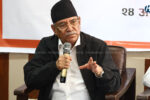
Finance Minister Swarnim Wagle has said the government does not intend to operate state-owned factories itself and will instead transfer closed and financially troubled public enterprises to the private sector. Speaking at the 28th Annual General Meeting of the Society of Economic Journalists Nepal (SEJON), Wagle said the government’s role would be to settle accumulated liabilities and resolve administrative obstacles before handing the enterprises over for operation. Detailed Due Diligence Audits (DDA) have already been completed for seven enterprises, including Gorakhkali Rubber, Hetauda Cement, and Udayapur Cement. Wagle said the government would retain ownership of public land to prevent future disputes over historical land holdings. Private operators would receive management rights through operational lease agreements, while the government would clear past liabilities to create a more level competitive environment.
Gulmi Coffee Research Program Moves Three Varieties Toward Formal Recommendation
The Coffee Research Program in Bhandaridanda, Gulmi, has completed evaluations of 38 coffee varieties during fiscal year 2025/26 and advanced three varieties—“Gulmi Local,” “Selection-10,” and “Yellow Caturra”—to the final recommendation stage. Program Chief Janardan Gautam said proposals for the three varieties have been submitted to the Seed Quality Control Center. Research activities cover 30,524 square meters of the program’s total 50,873-square-meter area, with work focused on organic cultivation, pest management, and sapling production. The program produced more than 15,000 saplings and sold 105 kilograms of improved coffee seed. Saplings are priced at Rs 35 each, while improved seed costs Rs 2,500 per kilogram. However, the facility is struggling to meet growing demand from farmers in more than 42 districts. Coffee is cultivated across more than 3 square kilometers in areas including Arghakhanchi, Kaski, Syangja, Lamjung, and Dhading.
FNCCI President Shrestha Calls for State Support for Disaster-Affected Businesses
Federation of Nepalese Chambers of Commerce and Industry (FNCCI) President Anjan Shrestha has called for stronger government support for businesses affected by natural disasters. Speaking at the 28th Annual General Meeting of the Nepal Economic Journalists Society (SEJON), Shrestha said long-term taxpayers who have lost their businesses in disasters such as the recent Bhote Koshi floods lack adequate social and economic protection. He urged the government to introduce immediate relief packages, housing loans, insurance payments, and refinancing facilities for affected businesses. Shrestha also stressed the need to increase domestic production in sectors with potential to replace imports, arguing that reducing dependence on foreign goods would help accelerate industrial development.
26 Industries Operating in Surkhet Industrial Village, Employing 122 People
At least 26 manufacturing enterprises are currently operating within the Surkhet Industrial Village under the Industry and Consumer Rights Protection Office in Surkhet. The businesses include traditional textile producers and allo fiber spinning units and collectively provide direct employment to 122 people. The enterprises are also contributing to regional production and market development by using locally available raw materials, labor, and skills. According to Office Chief Mukundanath Yogi, the office maintains a district-wide industrial registry containing 907 registered businesses, 1,452 renewed licenses, and 303 canceled firms, with 3,662 records documented in total.
United Nepali Diaspora Contributes Rs 5.1 Million to Disaster Relief Fund
The United Nepali Diaspora has donated Rs 5.1 million to the Prime Minister’s Disaster Relief Fund to assist disaster response and relief operations. A delegation led by United Nepali Diaspora Chairman Sonam Lama handed the donation cheque to Foreign Minister Shisir Khanal at Singha Durbar on Friday. Khanal thanked members of the diaspora on behalf of the government and Ministry of Foreign Affairs for supporting Nepal despite living overseas. He also said the Ministry of Foreign Affairs was working on amendments to laws affecting non-resident Nepalis, particularly provisions related to travel to and from Nepal, property transactions, and other practical concerns.
United Idi Mardi and RBB Hydropower Announce 5% Bonus Shares
The boards of directors of United Idi Mardi and RBB Hydropower Company have announced a combined dividend of 5.26 percent from profits earned during the previous fiscal year. The proposed distribution consists of 5 percent bonus shares and a 0.26 percent cash dividend intended to cover tax obligations. The dividend remains subject to approval from the Electricity Regulatory Commission and formal endorsement by shareholders at the companies’ upcoming annual general meetings. The decision was made during board meetings held on September 10.
Foreign travel details to be available through Nagarik app
The Department of Immigration has introduced an arrangement to make Nepali citizens’ foreign travel details available through the Nagarik app. Issuing a press release today, the department said the new service would allow Nepali citizens to access their international arrival and departure records through the app, with the aim of making its services more secure, organised, and technology-friendly. With the implementation of the new system, service seekers will no longer need to visit the department in person or submit a physical application to obtain their foreign travel details. According to the department, personal information will remain secure, as the passport details of the concerned individual will be displayed within the app.



Comment