




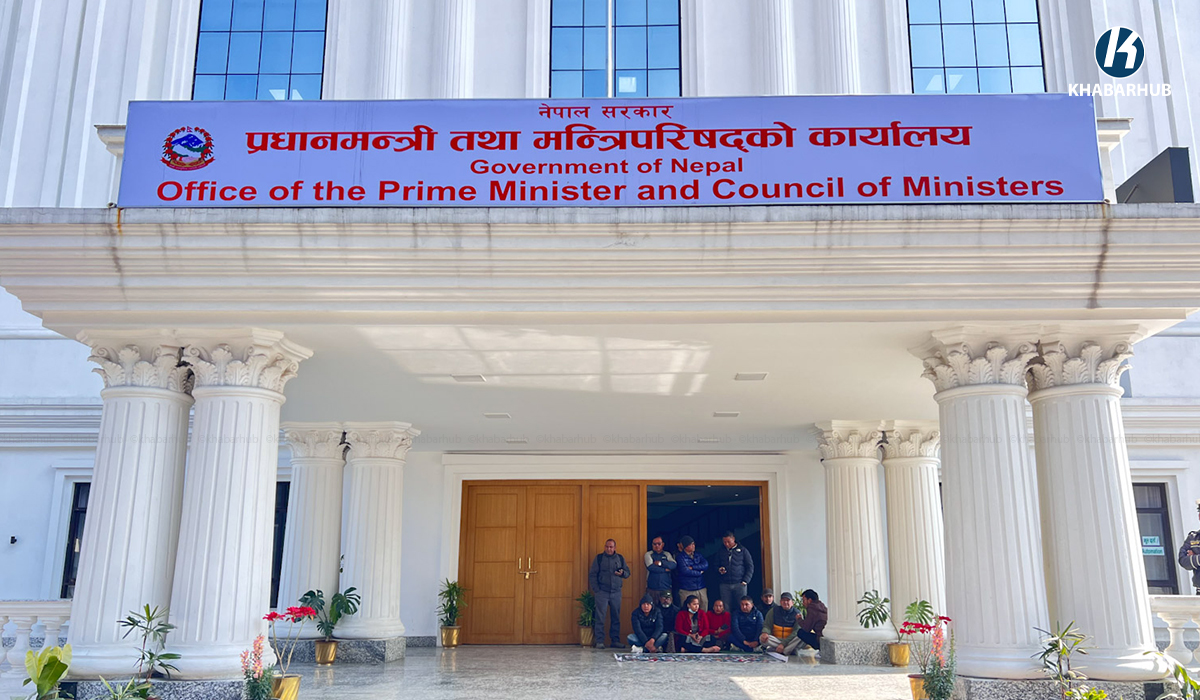
KATHMANDU: The government is set to standardise application forms used by citizens to access public services from government offices across the country.
The Office of the Prime Minister and Council of Ministers has issued the ‘Guideline on Application Forms Used in Government Offices and its Implementation, 2026’, directing all government and public bodies at the federal, provincial and local levels to implement the new system.
According to Hemraj Aryal, spokesperson for the Office of the Prime Minister and Council of Ministers, the guideline aims to end the practice of using different application formats for similar services and make public service delivery simpler, more effective, citizen-friendly and technology-friendly.
Under the guideline, every government and public body must prepare and implement a separate application form for each public service it provides.
The forms must be simple, clear and prepared in Nepali, while English versions may also be prepared when necessary. They must also be designed for digital use.
Each application form must include the name of the service-providing office, details of the application, the service being requested, required self-declaration, date, applicant’s signature, a list of required documents and other information necessary for official use.
Within seven days of the guideline coming into effect, every government office must prepare a list of all services it provides. It must then prepare application forms for each service and obtain approval from the office chief.
The approved forms must be published on the office notice board and website and made available to service recipients free of charge.
Prioritising paperless service delivery, the government has directed offices to make application forms available through websites, QR codes, electronic forms and downloadable PDF files.
Offices must also facilitate systems through which citizens can download, fill out, print or submit applications online themselves.
For this purpose, offices will be required to provide computers, tablets or digital kiosks. Each office must also establish a ‘Service Recipient Assistance Desk’ to provide technical assistance to people unable to access services independently.
Services provided through the assistance desks must be free of charge.
The guideline also directs government offices not to encourage individuals or organisations that unlawfully charge citizens for preparing applications, filling out forms or arranging required documents within or around office premises.
Offices must adopt necessary administrative and security measures to discourage activities that obstruct citizens’ access, provide unauthorised facilitation or act as intermediaries for financial gain.
The National Vigilance Centre and vigilance officers designated by the centre will monitor implementation of the guideline.
Monitoring may include field inspections, examination of records, testing of electronic systems, and assessment of complaints and feedback from service recipients.
Each government office must prepare a quarterly progress report on implementation in the format prescribed by the National Vigilance Centre and submit it to the centre.
Based on submitted reports and monitoring findings, the centre may direct concerned agencies to make necessary improvements.
The guideline also allows the National Vigilance Centre or designated officials to recommend action under prevailing law against offices or responsible officials who fail to comply, neglect implementation or deliberately create obstacles.
Government offices or officials demonstrating outstanding performance may be encouraged or recognised by their respective ministries.
Application forms and service-related information must be reviewed and updated at least once a year or whenever necessary.
The guideline also allows the concerned ministry, agency or local government to take necessary decisions to resolve any difficulties that arise during implementation.






Comment