




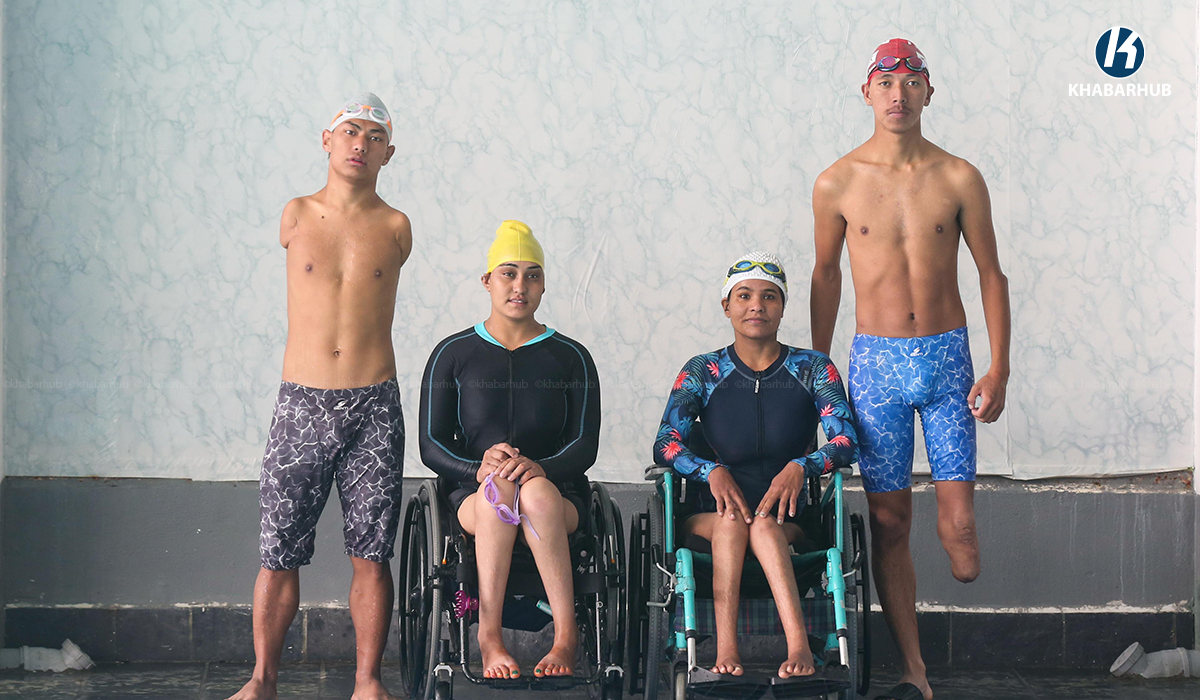
KATHMANDU: Swimming requires water, but for para swimmers, getting into the pool is only the beginning.
Regular training, accessible infrastructure, qualified coaches, physiotherapy, recovery facilities, nutrition, transportation and financial support are equally important.
Nepal’s para swimmers, however, are preparing for international competition amid a shortage of many of these basic facilities. Despite limited resources and difficult circumstances, they are training with the dream of flying Nepal’s flag high at the upcoming Para Asian Games.
Nepal has been participating in the Para Asian Games since 2010. However, its achievement at the continental event remains limited.
So far, Nepal has won only one medal at the Para Asian Games — a bronze secured by taekwondo athlete Palesha Goverdhan in the under-56 kg category at the 19th Asian Para Games in 2023.
Nepal’s para swimming team now hopes to add a new chapter to that history.
Training continues despite challenges
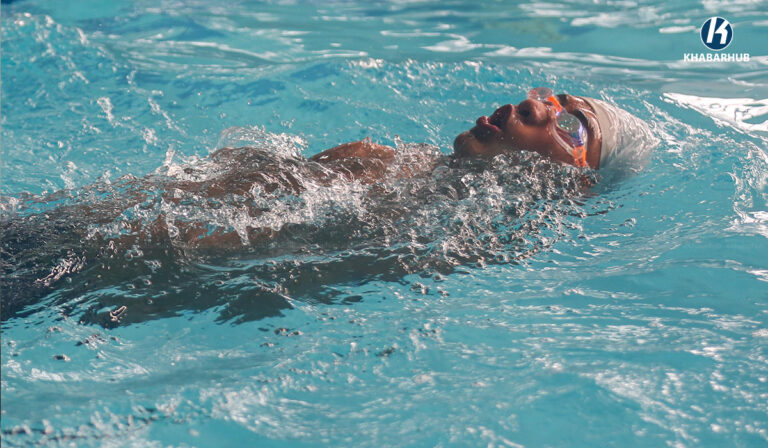
Under the Nepal Para Swimming Association, head coach Subas Shrestha has been providing regular training to four athletes — Srijana Sarki, Jenisha Kathayat, Harkaman Gharti and Member Singi Syangbo.
The athletes have been training regularly for the past five to six months.
According to coach Shrestha, the athletes have shown good commitment during training. However, a shortage of resources and facilities has made it difficult to take their preparations to the desired level.
Access to a swimming pool itself had been a major challenge. Training has become somewhat easier after Refresh Recreation Centre made its swimming pool and lanes available at a concessional rate.
But the challenges extend beyond the pool.
Physiotherapy, recovery facilities, jacuzzi services, nutrition, transportation and specialised sporting equipment remain difficult to arrange for the athletes.
For Shrestha, the biggest challenge is preparing the athletes for international-level competition with limited resources.
The athletes have talent and determination, he says, but inadequate facilities make it difficult for them to prepare according to their full potential.
Yet, their confidence and commitment continue to drive the team forward.
Srijana’s first international dream
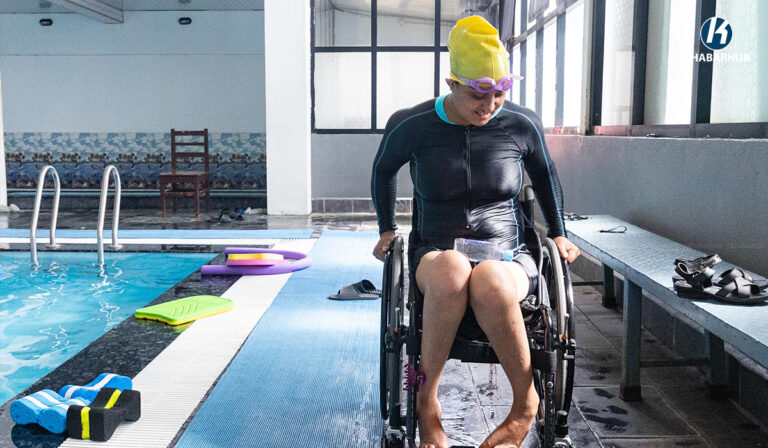
For 19-year-old Srijana Sarki, swimming is more than a sport. It is also a way of proving herself.
Sarki, originally from Jumla in Karnali Province, saw her life change three years ago after she was buried in a landslide while digging soil. The accident left her living with a disability and brought a series of challenges.
But she refused to give up on her dreams.
Currently preparing for undergraduate studies while living in Gokarneshwor, Sarki regularly travels to her training venue. Sometimes she takes a taxi and sometimes a tempo to reach practice.
She has been putting particular focus on swimming for the past three months.
The upcoming competition will be her first international event.
She is excited about getting the opportunity to represent Nepal for the first time and is determined to perform to the best of her ability and compete for a medal.
For Sarki, simply reaching an international competition is already a major achievement.
But she does not want to limit herself to participation.
When she enters the water, she wants her ability — rather than the pain of her past — to define her.
Harkaman: From losing both hands to finding identity in swimming
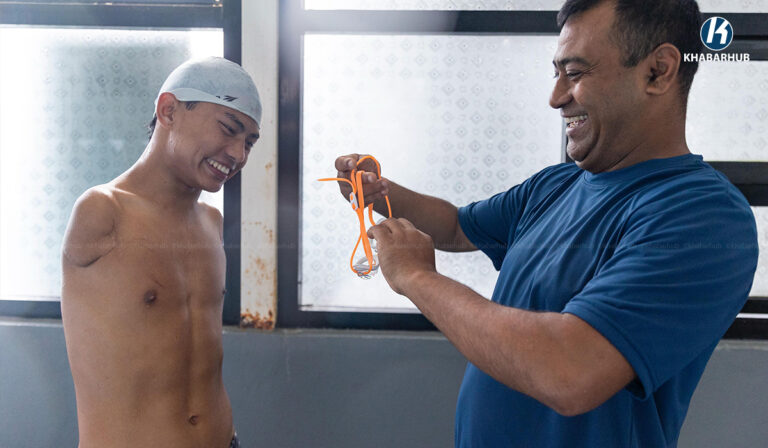
The story of 21-year-old Harkaman Gharti of Baglung is also one of extraordinary resilience.
Eleven years ago, electricity was connected to his village for the first time. During the process, Gharti suffered an electric shock after touching a main insulator.
The accident resulted in the loss of both his hands.
But the physical loss did not diminish his determination to compete in sport.
Gharti has been active in domestic sports for the past six years and now hopes to prove his ability at the international level through swimming.
A year ago, he obtained an international athlete licence in Japan.
However, he continues to face a shortage of essential recovery facilities, including jacuzzi services and physiotherapy.
Because of these limitations, Gharti says he cannot guarantee a medal at the upcoming competition.
His ambitions, however, extend beyond a single medal.
He wants to accumulate the necessary experience and qualification standards to compete at future Olympic and World Championship events.
For Gharti, swimming is not simply about competition. It has become a way to introduce himself to the world on his own terms.
Jenisha gets another chance
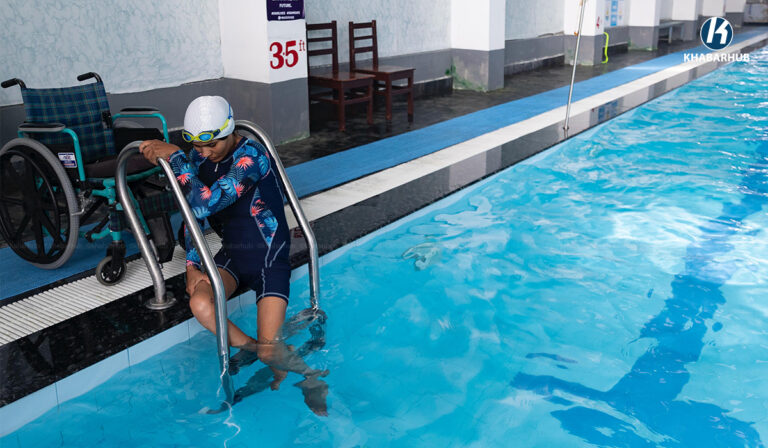
For Jenisha Kathayat from Sudurpaschim Province, swimming is not a new journey.
She has been involved in the sport for nine years.
While studying in Grade 10, she lost a leg. Yet she did not give up swimming. Instead, she turned the challenge into motivation and made the sport part of her identity.
Kathayat has already represented Nepal at the 19th Asian Games in China.
She could not deliver the performance she had hoped for at the event, but the experience did not weaken her confidence.
Instead, it strengthened her determination to return better prepared.
While continuing her higher education, Kathayat has also maintained her focus on training.
This time, she wants to turn her previous international experience into an improved performance.
Her target is clear — a medal.
Member Singi: From an accident to the swimming lane
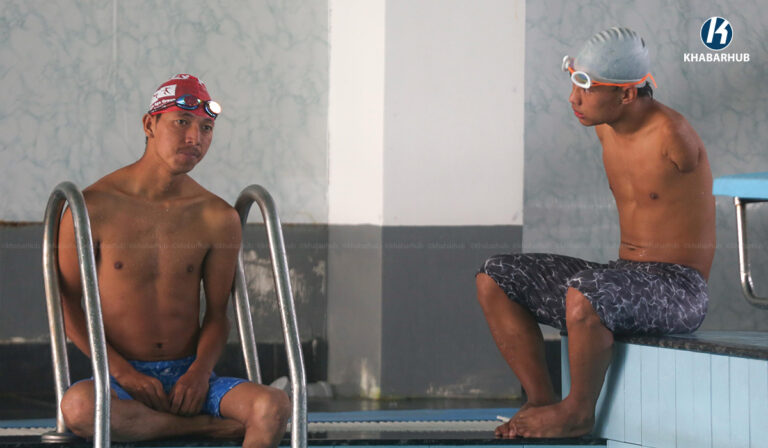
Among the four athletes, Member Singi Syangbo’s journey from a road accident to the swimming pool is equally remarkable.
At the age of 17, Syangbo was involved in a road accident near the Rasuwagadhi border with China.
He had been working as a helper on a Nepali container truck and had travelled to China while learning to drive and gaining experience.
While waiting for his turn at the border, another vehicle suddenly struck him.
The accident resulted in the loss of one of his legs.
Life was not easy after the accident.
While arranging for a prosthetic leg, however, Syangbo came into contact with swimming.
He had never planned to become a swimmer.
After getting an opportunity, he entered the pool with little more than the thought of giving it a try.
Gradually, swimming became an important part of his life.
Now 26, Syangbo trains every day. He has been undergoing regular training for around two months and says his preparations are progressing well.
Swimming is no longer simply a way to spend time.
His ambitions changed after he began competing.
“Bringing home a medal” is now his clear objective.
Syangbo believes Nepal has a good chance of winning a medal in para swimming this time and continues to train with that goal.
Although the relevant organisations have provided some assistance with training and daily expenses, he says not all the facilities required for high-level preparation are available.
His confidence, however, remains strong.
Four athletes, one goal
Srijana is preparing for her first international competition.
Jenisha wants to improve on her previous international performance.
Harkaman has his sights set on the qualification pathway for future Olympics and World Championships.
Member Singi wants to win a medal at his first major international opportunity.
Their stories are different.
One was left with a disability after a landslide. Another lost both hands in an electrical accident. Another lost a leg during adolescence. The fourth lost a leg in a road accident.
But they share one thing — an unwavering determination to compete.
Their biggest challenge remains the shortage of facilities.
There is limited funding, inadequate accessible sports infrastructure and insufficient access to physiotherapy, recovery facilities, equipment and nutrition.
Even reaching the training venue can require a personal struggle.
Yet, once they enter the pool, those difficulties are temporarily pushed aside.
In the swimming lane, they focus on their abilities rather than their physical conditions. Every stroke is an attempt to improve their time, and every training session brings them closer to their dream of performing on the international stage.
A coach’s challenge
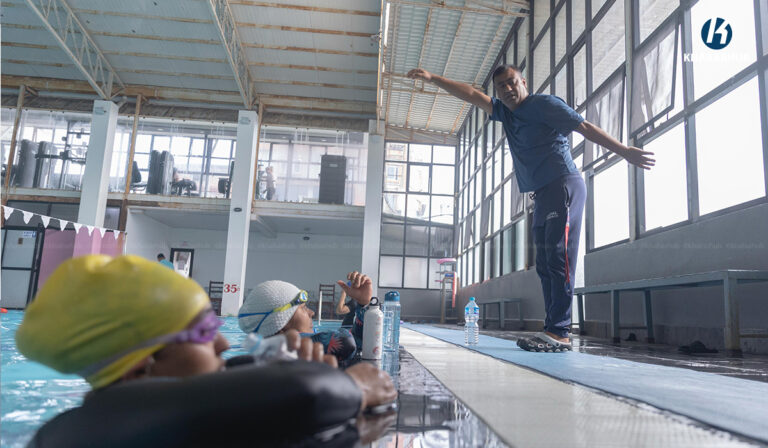
For head coach Subas Shrestha, the four athletes are not merely competitors. They are athletes with significant potential.
Their determination and work ethic are strong, but competing internationally requires regular and scientific training.
That requires time, equipment, facilities and financial resources.
Preparing athletes with limited resources remains a major challenge for Shrestha, but their potential continues to motivate him.
His approach is to focus on the athletes’ abilities rather than their limitations, making the best possible use of available resources to improve their technique, timing and performance.
However, if Nepal wants to target international medals, he believes their preparation needs to become more systematic and long-term.
Dreams in the water
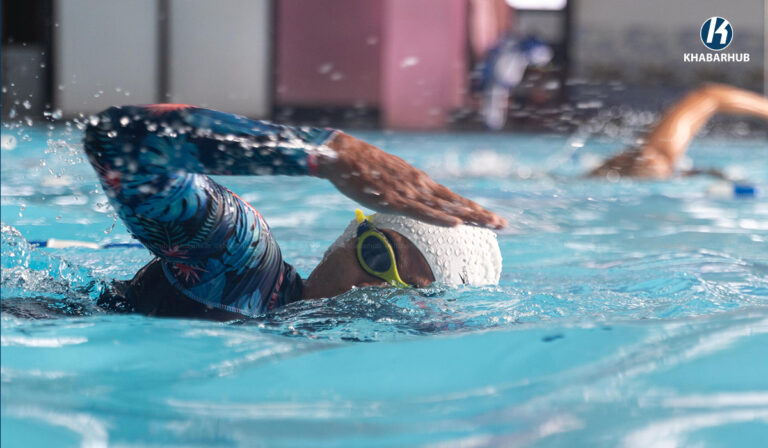
Nepal’s para-sports sector still has a long way to go.
A single medal cannot transform the sporting landscape. Sustained investment, infrastructure, training and long-term support for athletes are necessary.
For now, four athletes are searching for their future in the swimming pool.
Srijana wants to prove herself on her first international journey.
Harkaman wants to take his sporting career towards the Olympics and World Championships.
Jenisha hopes to turn her previous international experience into a stronger performance.
And Member Singi wants to transform the pain of losing a leg into the joy of winning a medal.
What they need most is an opportunity.
They have the ability to work hard. They have dreams. And they have the determination to represent Nepal.
The question now is not only how hard these four athletes are willing to work, but also how much support the state and sporting authorities are willing to provide.
Their story carries a simple message: physical limitations do not have to limit dreams. But turning those dreams into international medals requires opportunity, investment and support.




Comment