




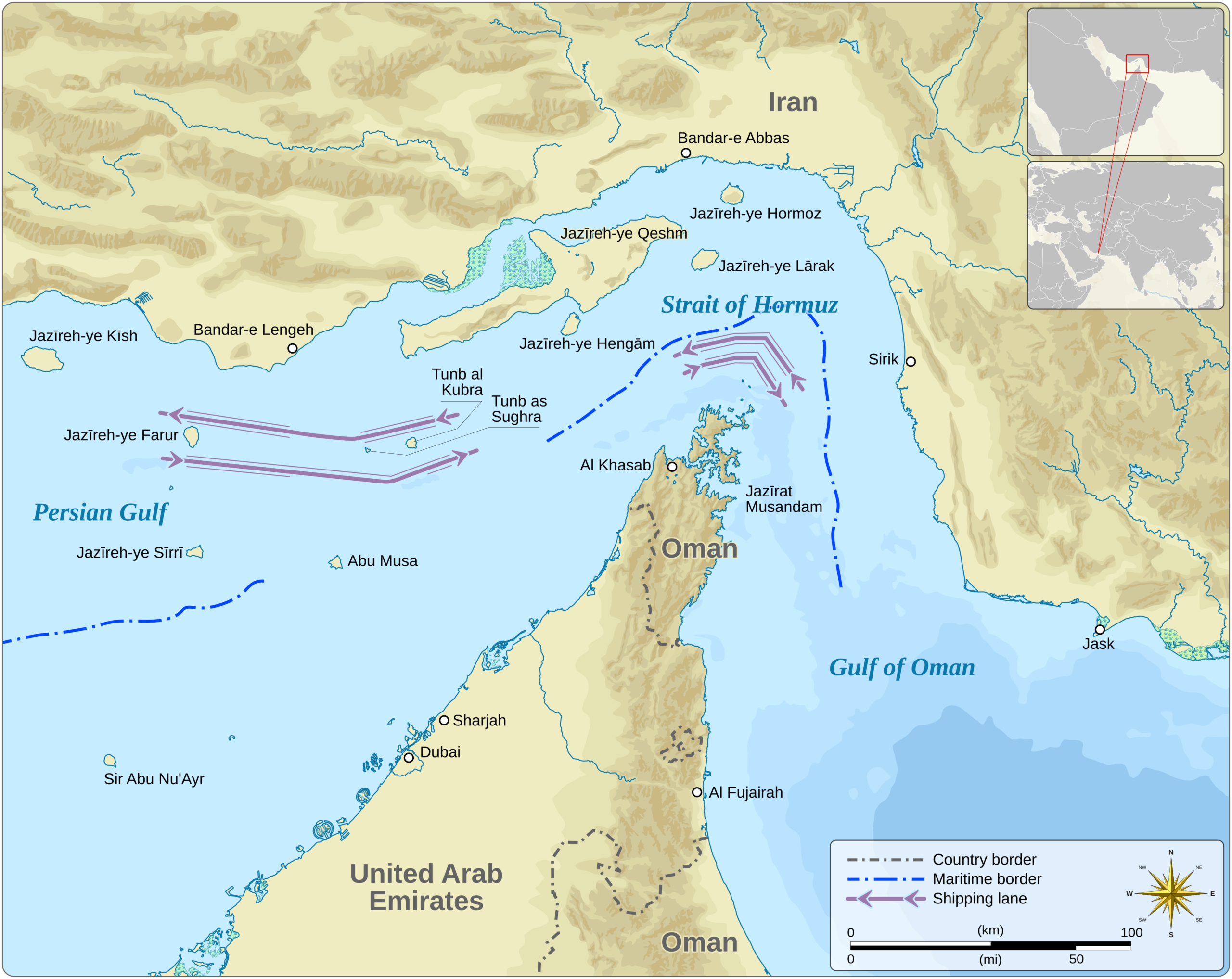
TEHRAN: Iran has reportedly ordered the closure of the Strait of Hormuz, one of the world’s most strategically important maritime routes, raising concerns over global energy supplies and the risk of a wider regional crisis.
According to Iran’s Mehr News Agency, Iranian military authorities have directed that oil tankers and commercial vessels be barred from passing through the narrow waterway, which serves as a critical gateway for crude oil exports from the Persian Gulf to international markets.
The move comes as military tensions between Iran and the United States continue to escalate. Iranian state media reported that the Islamic Revolutionary Guard Corps (IRGC) launched retaliatory strikes against US military bases in Kuwait, Bahrain and Jordan following a series of American airstrikes inside Iran.
Iranian media said US fighter jets targeted several locations, including the strategic port city of Bandar Abbas, Qeshm Island, the southern cities of Sirik and Minab, and areas near Karaj, west of the capital Tehran.
The Strait of Hormuz, located between Iran and Oman, is regarded as one of the world’s most vital energy chokepoints. A significant share of globally traded crude oil and liquefied natural gas passes through the route each day, making any disruption a major concern for international markets.
Analysts warn that a prolonged closure could trigger sharp increases in global oil prices, disrupt energy supplies and place additional pressure on economies heavily dependent on Gulf energy exports. Asian countries, which import large volumes of oil from the Middle East, could be particularly affected.
The reported closure follows warnings from US President Donald Trump, who said Iran would face further consequences after what he described as missed opportunities to reach an agreement with Washington.
As tensions mount, governments and energy markets worldwide are closely monitoring developments in the Strait of Hormuz, amid fears that the latest confrontation could have far-reaching geopolitical and economic consequences.






Comment