




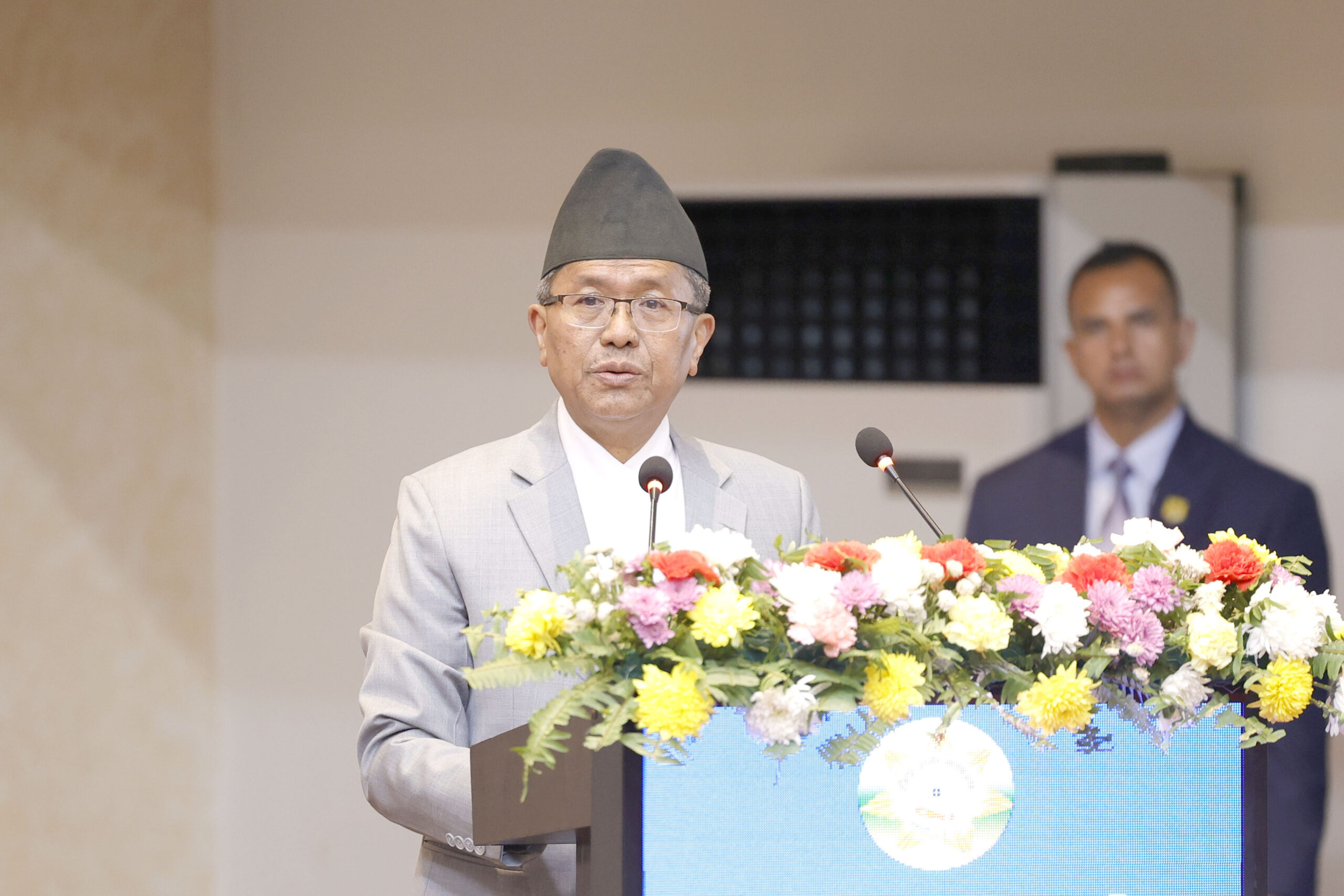
KATHMANDU: The Commission for the Investigation of Abuse of Authority (CIAA) has said that emerging trends in corruption have created additional challenges in controlling graft.
Speaking at a program in Kathmandu on Wednesday marking the Commission’s establishment day, Chief Commissioner Prem Kumar Rai said new patterns of corruption have made it necessary to adapt and reform existing control mechanisms and preventive strategies.
Rai said that while the CIAA has played a leading and undisputed role in combating corruption in the country, corruption cannot be controlled through the Commission’s efforts alone. He stressed that punitive measures alone are insufficient to promote good governance and curb corruption.
“For effective corruption control, coordinated efforts from all state mechanisms, the private sector, civil society and the media are essential,” he said.
Chief Commissioner Rai also expressed concern that state institutions have shown limited proactiveness in carrying out preventive and promotional measures required to strengthen good governance, management and corruption control.
He noted that coordinated efforts among state bodies in tackling corruption have not been adequately ensured. He called for increased state investment and the launch of nationwide preventive and promotional campaigns under the leadership of the Office of the Prime Minister and Council of Ministers.
Rai further pointed out the lack of a clear legal definition distinguishing policy decisions from administrative decisions within public bodies. Due to this ambiguity, he said, administrative matters are often escalated to the Cabinet, and some officials attempt to avoid responsibility by labeling decisions as policy matters.
According to CIAA data, 148,500 complaints were registered over the past five years, of which 107,915, or 72.8 percent, have been resolved. The Commission filed 137 cases in the last fiscal year and 94 cases so far in the current fiscal year.






Comment