




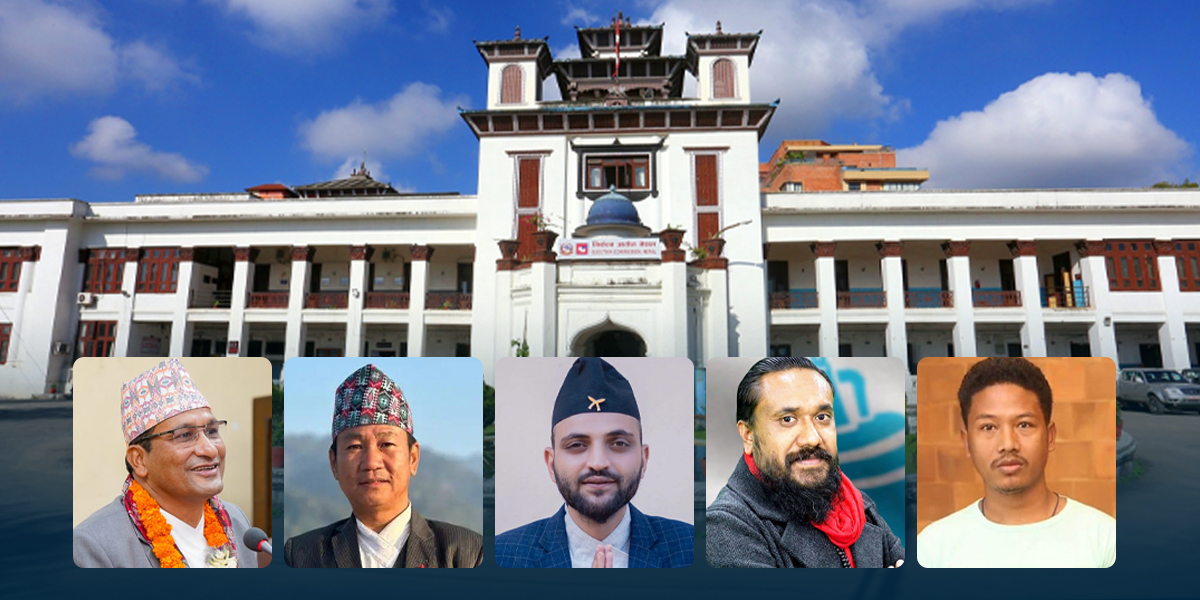
KATHMANDU: With just 22 days remaining until the election to the House of Representaitves (HoR), violations of the Election Code of Conduct continue despite its enforcement from January 19, according to the Election Commission (EC).
EC records show that 37 complaints have been filed so far for violations of the code of conduct. In the first phase, the Commission sought clarifications from the concerned parties and candidates. While most eventually responded, several were reluctant and failed to do so within the stipulated time.
According to the Commission, 32 parties and candidates submitted clarifications promptly, while five responded only after repeated reminders. At one point, as many as 10 complaints remained unanswered beyond the deadline.
Among those initially failing to respond were the Nepali Communist Party (NCP) and its proportional candidate Mangal Singh Praja. He had drawn controversy after making inflammatory statements on social media, including threatening violence if he lost the election. The Commission stated that it had sought clarification on why no action should be taken against such remarks.
Similarly, the National Sports Council (NSC) failed to respond for more than 20 days after being asked to explain the organization of an event during the enforcement of the election code. The Nepal Health Volunteer Association also delayed responding to a query regarding plans to hold a trade union convention during the election period.
Clarifications were also sought from the Guthi Sansthan head office regarding the removal of Dharmaguru Rinpoche from the Buddhist and Melamchi Ghyang Guthi and the appointment of a new Lama. In addition, delayed responses were noted from the Dhorpatan Hunting Reserve Office chief Ramdev Chaudhary, the National Trust for Nature Conservation, the Jhapa District Election Code of Conduct Monitoring Officer, and Press Council Nepal.
Former Chief Election Commissioner Dinesh Thapaliya said actions taken by the Commission following code violations are procedural. “There are four major forms of action, including removal, warning, financial penalty, and cancellation of candidacy, but cancellation has not been applied so far,” he said, noting that it is incorrect to view cancellation alone as punitive action.
“We sought clarifications from 37 parties and candidates who violated the election code of conduct,” said Mohanraj Joshi, a member of the Commission’s Central Code of Conduct Monitoring Committee. “While 32 submitted their explanations promptly, the remaining five responded only after repeated requests.”
One of the candidates asked for clarification more than once was candidate for Kathmandu-5 and actress Nisha Adhikari. A complaint was filed alleging she sought financial contributions through a QR code during her campaign.
“We asked her to clarify whether the election code was followed while collecting funds and to submit details including the bank name, branch, and account number within two days,” Joshi said, adding that her response has now been received.
Another candidate who delayed clarification was Nepal Janasewa Party candidate for Rupandehi-2, Dr Kamal Bhusal, also known as Nicholas Bhusal. The Commission sought clarification over his use of viral, blood-stained shoes, associated with the Gen-Z movement, during election campaigning.
In a letter, the Commission asked whether the shoes, claimed by another individual and allegedly misused, were used for campaign purposes. Dr Bhusal has since submitted his clarification after a second request.
The Commission has also sought clarification from CPN-UML candidate Shakti Bahadur Basnet for allegedly distributing Rs 500 notes to members of a group playing drums during his candidacy registration. Another candidate asked to explain his actions is Harkaraj Sampang Rai, chairperson of the Shram Sanskriti Party.
Sampang Rai has been asked to clarify allegations that children were used in his election campaign by making them wear T-shirts bearing the party’s logo, name, election symbol, and the candidate’s photograph. Similarly, the Commission repeatedly sought clarification from Rastriya Swatantra Party (RSP) candidate Khagendra Sunuwar over his controversial statement advocating the slaughter and consumption of the national animal, the cow.
“Information has been disseminated in a manner that spreads communal hatred regarding the national animal, the cow. Please clarify whether this constitutes a violation of the election code of conduct,” the Commission stated in its letter. Sunuwar submitted his response on January 28.
Other individuals found to have violated the election code of conduct include Balendra Shah, Jagadish Kharel, CK Raut, Shobha Pathak, and Bishwaraj Pokharel. According to the Commission, all of them have submitted their clarifications.
Commission member Mohanraj Joshi said that, at this initial stage, only cases involving the dissemination of hateful and false information have been made public. He added that the Commission is conducting necessary investigations and taking action on complaints to ensure effective compliance with the code of conduct and minimize violations.
For effective implementation, the Central Code of Conduct Monitoring Committee, District Code of Conduct Monitoring Committees, District Code of Conduct Approval Officers, and concerned election offices have been mobilized.
Under Section 32 of the Election Code of Conduct, 2082, Assistant Chief District Officers in all 77 districts have been authorized to oversee non-financial violations, while the Chief Treasury Controller in each district has been designated as the Code of Conduct Monitoring Officer for financial matters.
Section 30 of the Election Offences and Punishments Act, 2073 prohibits receiving or spending any kind of financial assistance for election-related activities. In case of violation, a fine equal to the amount received or spent can be imposed. A candidate who fails to pay the fine within six months may be barred from contesting any election for up to six years.
Similarly, the Election Commission Act, 2073 provides for penalties ranging from a fine of Rs 100,000 to cancellation of candidacy for violations of the code of conduct.
Political parties, candidates, government and non-government organizations, educational institutions, and other bodies are prohibited from violating the code of conduct. Joshi said the Commission can prescribe punishment based on recommendations from the central and district monitoring committees and thematic committees, depending on the nature and severity of the violation.
The election code of conduct will remain in force until vote counting is completed. In previous elections, violations included misuse of government resources, personal attacks, oversized posters, and environmental pollution. This year, however, many violations are being observed on social media platforms.
“We monitor content on TikTok and Viber directly from the Commission. For other platforms, we request the respective networks via email to remove objectionable content,” Joshi said, adding that the Commission is coordinating with the Press Council Nepal, the Information Department, the Cyber Bureau, and other agencies.
Former Chief Election Commissioner Dinesh Thapaliya said actions taken by the Commission following code violations are procedural. “There are four major forms of action, including removal, warning, financial penalty, and cancellation of candidacy, but cancellation has not been applied so far,” he said, noting that it is incorrect to view cancellation alone as punitive action.
“The Commission takes action in every election based on the nature of the violation. Seeking clarification, issuing warnings, and making cases public are also forms of action. All stakeholders, candidates, citizens, and institutions, must be held accountable,” Thapaliya added.





Comment