





KATHMANDU: Economic Digest offers a concise yet comprehensive overview of significant business happenings in Nepal, presented in easily digestible summaries.
Nepal’s economy shows mixed signals, balancing growth opportunities with structural and social challenges. NEPSE recorded modest gains, driven by select high-performing stocks, while hydropower and insurance sectors show both investment potential and operational risks. Remittances surged, boosting forex reserves and easing inflation, yet reliance on migration underscores domestic employment gaps, with the World Bank warning that 6.5 million jobs must be created by 2050 to harness a demographic dividend.
Tourism and hospitality are rebounding in emerging hubs like Ramite, though luxury hotels remain vulnerable to political disruptions. Government initiatives—from regulating e-commerce and casinos to setting food standards for masyaura and chhurpi—reflect efforts to improve consumer protection, trade, and export competitiveness.
Meanwhile, infrastructure delays, financial sector stress, and limited social protection highlight persistent governance and development challenges. Overall, Nepal faces the dual task of sustaining economic growth while addressing structural inefficiencies, social inequality, and workforce underutilization.
NEPSE gains 0.75% as SY Panel leads weekly rally
The Nepal Stock Exchange (NEPSE) index rose 0.75% this week, supported by gains across most sectors, while only three sector indices closed lower. The highest intraday rise was 28.73 points on Monday, with a daily turnover of Rs 6.47 Arba; weekly turnover totaled Rs 28.69 Arba over 5.86 crore shares and 3,94,789 transactions. NEPSE’s market capitalization currently stands at Rs 44.33 Kharba. SY Panel Nepal Limited (SYPNL) was the top gainer, climbing 19.13% to Rs 1,258.00. Companies with the highest volatility included Joshi Hydropower, Daramkhola Hydro, and Mid Solu Hydropower, while Naasa Securities led brokerage activity, purchasing stocks worth Rs 1.64 Arba.
Saudi Arabia becomes top destination for Nepali migrant workers
Saudi Arabia has surpassed the UAE as the leading destination for Nepali migrant workers following stricter visa requirements after the Gen Z protests. Over 30,000 Nepalis received labor permits for Saudi Arabia in two months, the highest of any country. UAE visa requirements, including police clearance certificates and extra verification fees, deterred workers, while Malaysia’s long-term restrictions limited alternatives. Qatar now ranks second, with the UAE in third. Nepal and Saudi Arabia plan their first bilateral labor agreement to formalize migration, covering wages, safety, and working conditions.
Government moves to regulate e-commerce for consumer protection and refunds
The Ministry of Industry, Commerce and Supplies has released a draft “Electronic Commerce (E-Commerce) Directive 2082” to regulate online trade on platforms like Facebook and TikTok. The directive aims to ensure transparency, prevent fraud, and protect consumers. It mandates refunds within seven days for undelivered or returned products, requires approved digital payment gateways, electronic receipts even for cash transactions, and strict adherence to payment, data security, and invoicing rules. Stakeholders are invited to provide feedback.
Six-year delay leaves key Taplejung–Biratnagar road unfinished despite millions spent
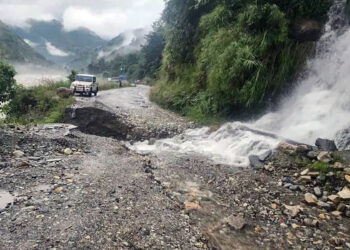
A critical road connecting Taplejung and Panchthar districts to Biratnagar remains incomplete six years after construction began. The 25-kilometre Khorsane–Kerabari–Singhadevi road, initiated in 2019 under the Rural Road Network Improvement Project, stalled when the contractor abandoned the work despite six deadline extensions. Although Rs 351.6 million has already been disbursed, only partial construction was completed, leading to contract termination in March 2025. The road is essential for cutting travel time and boosting tourism and agricultural trade in northern Morang. Authorities have started re-tendering with new funds, but residents are frustrated by continued inaccessibility.
‘Gen Z’ protests cause record physical and economic losses of NPR 84.45 billion
The September 8–9 ‘Gen Z’ protests inflicted unprecedented damage in Nepal, according to a government committee. Total losses reached NPR 84.45 billion, equivalent to 1.38% of GDP and 4.3% of the annual budget. Government assets bore 53% of the damage, private property 40%, and community resources 7%. Damaged assets included 2,671 buildings and 12,659 vehicles, with Bagmati Province suffering 66.5% of the losses. The protests also disrupted employment and production, affecting 2,999 workers. With limited insurance coverage, reconstruction costs are estimated at NPR 36.30 billion.
Tourism Department tightens casino rules to prevent money laundering
The Department of Tourism has revised casino regulations to strengthen anti-money laundering and counter-terrorist financing measures. This second update requires casinos to maintain detailed records of customers making cash transactions above Rs 200,000 per day, including identification and transaction details. Exercising authority under the Anti-Money Laundering Act, 2064, and the Tourism Act, 2035, the department aims to improve transparency, traceability, and regulatory oversight of large cash-based gambling operations.
NRB lowers cheque payment threshold to Rs 5 lakh to enhance accountability
Nepal Rastra Bank (NRB) has revised payment rules, reducing the mandatory account-payee cheque threshold from Rs 10 lakh to Rs 5 lakh, effective Magh 1. Payments of Rs 5 lakh or more must be made via account-payee cheque or directly to the beneficiary’s account, including for firms and institutions. Exceptions allow cash payments with justification. Microfinance institutions must comply, supporting anti-money laundering efforts. Daily cash transactions between licensed institutions are permitted, with monthly reporting required for exempted payments.
Banks face mounting loan recovery problems amid economic slowdown and post-protest uncertainty
Nepali banks and financial institutions are struggling with loan and interest recovery due to an economic slowdown, political instability, and disruptions from the Gen Z protests. Borrowers are increasingly unable to repay, creating pressure on staff and management, with threats and abusive behavior worsening the situation. Non-performing assets rose 61.7% year-on-year. Combined with business disruptions from protests, heavy rainfall, and blocked roads, banks face financial stress, rising bad loans, and increased operational risks.
Non-life insurance sector records 14% growth in first five months of FY 2082/83
Non-life insurers in Nepal generated about Rs 19.99 billion in premiums in the first five months of FY 2082/83, up 14.10% from Rs 17.52 billion last year, according to the Nepal Insurance Authority. Fourteen non-life and four micro non-life companies contributed. Bagmati Province led with Rs 13.63 billion (68.18% of total), followed by Lumbini (Rs 1.72 billion) and Koshi (Rs 1.67 billion). Other provinces contributed smaller shares, reflecting the sector’s growing regional reach.
Hydropower IPOs raise funds but delay generation, exposing sector risks
Nepal’s hydropower sector faces structural challenges as companies often raise billions via IPOs before starting commercial production. By 2025, 97 hydropower firms were listed, yet projects like Madhya Bhotekoshi and Rasuwa Gadhi faced years-long delays due to transmission, technical, and natural obstacles. Ongoing IPOs transfer construction and operational risks to retail investors, increasing costs and lowering earnings per share. Experts suggest prohibiting IPOs until production begins to protect public investors.
Nepalis live in “personal deficit”: lifetime earnings cover only 20 years of expenses
A Central Bureau of Statistics survey shows most Nepalis live much of life in financial deficit. Average lifetime earnings cover expenses for only 20 years, typically between ages 27 and 47. Household spending on food, housing, and transport accounts for around 90% of expenses. Education is largely privately funded despite constitutional provisions for free basic schooling, and healthcare costs rise in old age. The findings highlight short productive income periods and broader economic vulnerability.
Raughat 40 MW hydropower project nears completion with 92% progress
The 40 MW Raughat Hydropower Project in Myagdi has reached 92% physical completion, with the main tunnel, penstock, and powerhouse nearly finished. Managed by Raghuganga Hydropower Limited, the 6.27 km tunnel and 1.08 km penstock are complete, with one turbine installed and a second in final stages. The 31-meter dam and 119.7-meter descender pond are mostly done. Funded by the government, NEA, and India Exim Bank ($67M loan), the project aims to begin test generation by 2082, supplying 24.59 million units annually.
Nepali edible oil industry benefits from India’s higher import tariffs
Nepal’s edible oil refineries gained significantly after India raised import tariffs on palm, soybean, and sunflower oils in September 2024. Duties on raw oil rose from 5.5% to 27.5%, and on refined oil from 13.75% to 35.75%, making Nepali exports more competitive under WTO and SAFTA rules. Nepali refineries earned roughly NPR 2 trillion, with eight major refineries, including Narayani, Sushil, Ganapati, and Baba Vegetables, accounting for over NPR 52.47 billion in trade.
Gen Z protests push luxury hotels back into losses, spring season at risk
Nepal’s luxury hotels returned to losses after the Gen Z anti-corruption protests in September disrupted peak tourism. Q1 financials show declining profits or losses, reversing post-Covid recovery. Upcoming snap elections could trigger further protests and deter tourists. Major hotels, including Hyatt Regency Kathmandu, suffered vandalism and closures, while others cite falling occupancy, overcapacity, poor infrastructure, and negative advisories. Despite marginal tourist arrival growth, revenues have dropped, showing the sector’s vulnerability.
Kanchenjunga base camps quiet as spring tourism season ends
Mount Kanchenjunga’s base camps in Taplejung have grown quiet with the end of the spring season. High-altitude camps like Khambachen, Lonak, Pangpema, Cheiram, and Ramjerlagyat are mostly deserted, as service providers return to lower settlements. The Kanchenjunga Conservation Area reported 950 foreign tourists in spring 2025, up from 877 in 2024. Authorities are using the off-season for maintenance, ecological monitoring, and planning, while stakeholders remain optimistic about sustainable tourism growth.
Remittances surge 35.6% as forex reserves hit record high, inflation eases
Remittance inflows to Nepal rose 35.6% to Rs 870.31 billion in the first five months of FY 2025/26, according to Nepal Rastra Bank. Dollar inflows increased 29% to USD 6.16 billion, strengthening foreign reserves and net secondary income. Gross forex reserves now cover over 21 months of imports. Inflation eased to 1.63% by mid-December, driven mainly by falling food prices across most provinces.
Nepal Electricity Authority commissions 3 MVA Rakum substation in Dailekh
NEA inaugurated a 3 MVA, 33/11 kV Rakum Substation in Dailekh on Mangsir 25, the district’s third substation. It joins the 8 MVA Dailekh market and 3 MVA Dullu Municipality substations, improving power for 6,133 households in Aathbiskot, 3,840 in Thatikadh, and parts of Chamunda Bindrasaini. The 11.5 crore NPR project faced a one-year delay due to challenging terrain and road access. Future hydropower plants can also be connected.
Nepal Insurance Authority conducts risk-based supervision of four insurers
The Nepal Insurance Authority completed risk-based supervision (RBS) of Nepal Life Insurance, Citizen Life Insurance, Life Insurance Company (Nepal) Ltd, and Shikhar Insurance. RBS evaluates operational, market, credit, strategic, compliance, conduct, AML/CFT, and climate risks to enable timely regulatory intervention. Five more insurers are undergoing RBS. The framework allows differentiated supervision, from routine monitoring to corrective or board-level actions, enhancing sector stability and protecting policyholders.
Nepal must create 6.5 million jobs by 2050 to harness demographic dividend: World Bank
Nepal’s working-age population is expected to rise sharply by 2050, offering a potential demographic dividend, but the World Bank warns that 6.5 million new jobs must be created to capitalize on it. The report Nurturing Nepali Talent to Foster Economic Growth cites declining human capital, reliance on informal employment, and limited domestic job opportunities as key challenges. While remittances—nearly a quarter of GDP—have helped reduce poverty, large-scale migration depletes skilled labor. Women and youth face significant employment gaps, and regional disparities persist. Without urgent reforms to expand quality jobs, improve gender equity, and enhance workforce utilization, Nepal risks missing a historic growth opportunity.
Nepal Securities Board, Electricity Regulatory Commission discuss collaboration to boost power sector investment
Nepal Securities Board (SEBON) and the Electricity Regulatory Commission (ERC) met to enhance cooperation for capital market development and power sector investment. Discussions focused on promoting electricity project financing through capital markets, regulatory coordination, and policy alignment. Both authorities emphasized the need for transparent and investor-friendly mechanisms. Plans include a joint task force to improve policy, regulatory, and legal coordination to mobilize sustainable financial resources and strengthen sector stability.
Pratap Jung Pandey elected unopposed as president of Nepal Airline Operators’ Association
Pratap Jung Pandey was elected unopposed as president of the Nepal Airline Operators’ Association during its 25th annual general meeting in Kathmandu. The committee includes Nima Nuru Sherpa (First Vice President, Altitude Air), Suwas Sapkota (Second Vice President, Yeti Airlines), and Umesh Paneru (Third Vice President, Tara Air). Other office bearers are Murli Dhar Joshi (General Secretary, Simrik Air), Bal Krishna Pandit (Secretary, Air Dynasty), and Rupesh Joshi (Treasurer, Buddha Air). Acting Director of the Civil Aviation Authority, Devchandra Lal Karn, stressed strategic planning, fleet modernization, and maintaining aviation safety alongside commercial viability.
Hotel boom transforms Ramite into emerging hill tourism hub of Morang
Ramite in northern Morang has seen rapid tourism growth over the past two years, with 18 hotels opening following improved road access. Located 22 km north of the East–West Highway, the settlement attracts visitors for cool summers and warm winters. Tourism has boosted employment, reduced out-migration, and expanded agriculture and livestock trade. Hotel investments total around Rs 250–300 million. With a short stretch of road pending blacktopping, Ramite is emerging as a key tourism destination in Koshi Province.
Nepal sets first-ever quality standards for masyaura and chhurpi to enhance food safety and exports
Nepal has introduced official quality standards for masyaura and chhurpi to ensure food safety and boost exports. Approved by the Ministry of Agriculture and published in the Nepal Gazette, the standards specify ingredients, moisture and protein levels, hygiene, and packaging requirements. The move responds to rising domestic consumption and international demand, particularly among the Nepali diaspora and for dog chews. Last year, masyaura exports reached 42 tonnes, and chhurpi 2,610 tonnes worth Rs 4.51 billion. Producers failing to comply face legal penalties.





Comment