




Two brothers once went for a walk along a river. As they walked, the younger brother accidentally stepped on his elder brother’s foot. Hurt and angry, the elder brother slapped him.
The younger brother did not retaliate. Instead, he wrote in the sand: “Today, my brother slapped me because I stepped on his foot.”
The following day, they went to the river to bathe. The younger brother was swept away by the current. Without hesitation, the elder brother jumped into the river and rescued him.
Once he was safe, the younger brother wrote on a nearby stone: “Today, my brother saved me from the river.”
The elder brother was puzzled. “Yesterday, when I hurt you, you wrote it in the sand. Today, when I saved you, you wrote it on stone. Why?”
The younger brother replied: “Mother taught me that bad things should be written in sand so they can disappear quickly. Good things should be carved in stone so they remain forever.”
That simple lesson carries a much larger meaning for politics: mistakes should be corrected and allowed to fade, while good deeds should become part of our institutional memory.
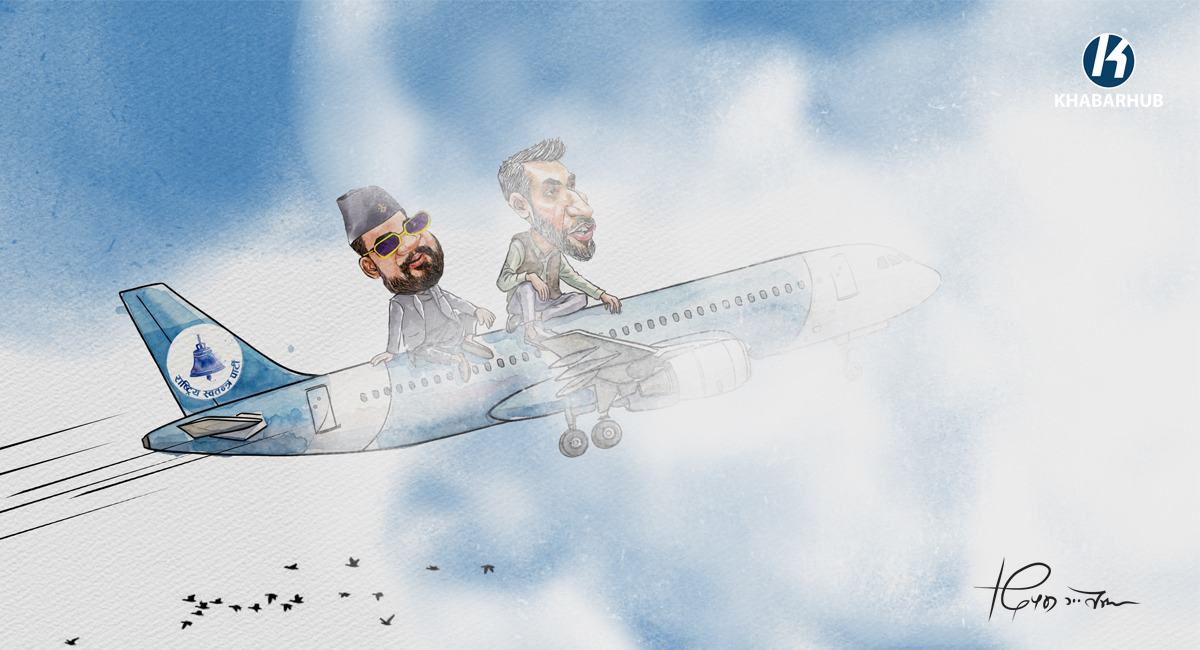
If the culture of admitting mistakes and correcting them had become established between Balen and Rabi, perhaps Nepal’s governance would have moved much further by now.
A country moves forward not merely on statistics, but on public confidence. Nationalism does not bloom simply in land, forests and rivers; it blooms in the minds of citizens. And the beginning of genuine nationalism is the transition from “me” to “us.”
The anger behind the ballot
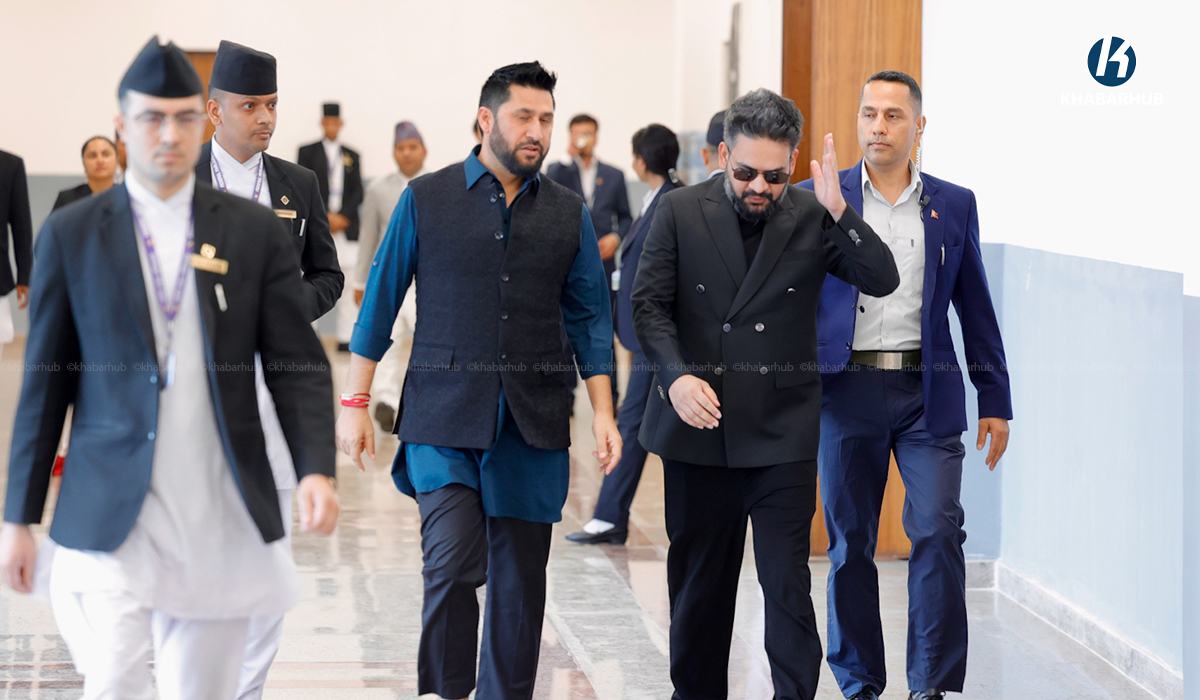
The votes received by the Rastriya Swatantra Party (RSP) were, to a significant extent, an expression of public anger against the arrogance and failures of the Nepali Congress, CPN-UML and Maoist Centre.
The electorate was not necessarily voting simply for a party ideology, a policy platform or the youthful image of its candidates. It was also voting against what the established parties had come to represent.
People wanted change.
But after entering government, the RSP appeared unable to clearly answer three fundamental questions: Where had we been? Where are we now? And where should we go?
Instead of transforming the state machinery, it often appeared to transplant a circle of political friends into Singha Durbar and merge that circle into the state system. Positions and proximity to power began to matter more than institutional capacity and professional qualifications.
A government, however, cannot be run as a private circle of trust.
The role of political leaders is not to command every individual component of the state. Their responsibility is to mobilise the machinery of government effectively.
Where has the engine of the state become rusty? Which bolts are loose? Which tyres need replacing? Which parts require repair?
Until those questions are answered, proclaiming good governance is merely another form of political performance.
The state is larger than its leaders
Governments change. Political slogans change. Parties rise and fall.
But the police officer standing in the rain remains the police officer. The civil servant processing documents remains the civil servant. The ward secretary issuing birth and death certificates remains the final link for many citizens. The sanitation worker still has to collect the rubbish. Soldiers and police officers still carry the responsibility of protecting the country.
These people are the everyday face of the state.
If political arrogance attacks these institutions instead of strengthening them, the consequences will eventually be political decline.
Perhaps this is also part of the explanation for why the traditional parties failed. Their failures were not necessarily born from one spectacular mistake. They accumulated through countless small decisions, neglected responsibilities and broken promises.
Good deeds accumulate. So do bad ones.
Eventually, the accumulated record becomes the verdict.
A government cannot survive on speeches
Presidents, prime ministers and ministers can deliver speeches filled with promises. But speeches are paper flowers: they may look attractive, but they produce neither nectar nor attraction for the bees.
A government may command a parliamentary majority, yet ordinary citizens may see little of the promised prosperity.
The weakness becomes particularly visible when political leadership begins reacting to every gust of public opinion on social media.
A ship whose captain panics whenever a small fog appears on social media cannot maintain a reliable course.
There must be a distinction between listening to citizens and being governed by every online reaction.
Ravi Lamichhane and other leaders associated with the RSP entered politics carrying the weight of enormous public expectations. Those expectations were not created by the RSP alone. They were created by decades of frustration with conventional politics.
That is why the responsibility is even greater.
The public did not hand the RSP power merely to replace one group of politicians with another. It wanted the political culture itself to change.
Leadership is measured in sacrifice
Nepal’s political history contains examples of leaders who understood that public service required personal sacrifice.
When B.P. Koirala became prime minister in 1959, he reportedly decided at the first Cabinet meeting to contribute part of his salary toward public welfare.
Prithvi Narayan Shah, during the campaign to unify Nepal, is remembered for accepting even a small contribution from Bise Nagarchi.
Whether these individual acts transformed the economy is not the point.
Leadership is also symbolic.
A leader who asks citizens to sacrifice while enjoying every privilege of office sends one message. A leader who voluntarily gives something up for the public sends another.
The difference between a politician and a statesman is often found in such gestures.
A large pair of scissors may be useful for cutting things apart. A small needle, however, can bring torn pieces together.
Politics needs more needles.
Democracy cannot become the rule of the strongest
Nepal often looks abroad for models of democracy and development, yet the country’s own cultural traditions contain lessons about public choice and accountability.
The story of Sita’s marriage in the Ramayana, for example, is traditionally associated with a public test through which Rama proved himself worthy. Whatever one’s religious interpretation, the broader cultural idea is significant: authority must, in some form, be earned.
Yet Nepal risks moving away from a democracy in which different interests coexist toward a system where power determines legitimacy.
Democracy should resemble a salad, where different ingredients retain their identity while forming a common whole.
It should not become a system where the strongest simply take everything.
Development is not the same as dependency
Singapore’s transformation under Lee Kuan Yew is often cited as an example of how leadership can build a capable state. The important lesson is not that Nepal should copy Singapore. It is that development requires building people’s capacity rather than permanently making them dependent on assistance.
Nepal has too often treated the export of young people as an economic strategy.
Our leaders celebrate remittances while young Nepalis leave for the Gulf, Malaysia and elsewhere because they cannot find sufficient opportunities at home.
The question should not simply be: “How much money are they sending back?”
It should be: “Why did they have to leave?”
A country becomes stronger when it creates the conditions in which its citizens can build their lives at home.
The temptation of political mythology
Nepal’s political culture has repeatedly transformed ordinary politicians into larger-than-life figures.
People have been promised revolutions, prosperity and transformation. Political movements have been built around anger, ideology, identity and personality.
But every political mythology eventually encounters the same test:
Can it improve the everyday life of ordinary people?
The answer cannot be found in speeches.
It must be found in functioning hospitals, schools, roads, public offices, employment opportunities, clean cities, reliable services and institutions that work regardless of who occupies the prime minister’s chair.
The citizen does not care which political philosophy the person behind the counter follows. The citizen wants the document processed.
The farmer wants irrigation. The student wants education. The worker wants dignity. The family wants security.
That is where governance begins.
Good politics is ultimately about trust
There is an old moral lesson that says wealth acquired unjustly cannot become virtuous simply because it is spent on grand ceremonies, while even a small contribution earned honestly can carry enormous moral value.
The same principle applies to politics.
A government cannot manufacture public trust through publicity.
Trust grows through consistency. It grows when leaders admit mistakes. It grows when promises are followed by action. It grows when institutions are respected. It grows when political opponents are treated as fellow citizens rather than enemies.
And above all, it grows when leaders remember that government is not an award they have won. It is a responsibility citizens have temporarily entrusted to them.
The younger brother in the story understood something many political leaders forget: bad actions should be written in sand; good actions should be written in stone.
Nepal’s political class has spent decades recording both in the public memory.
The task now is not to erase every mistake or glorify every success. It is to learn from both.
The country does not need more political heroes.
It needs better public servants.
As Mao Zedong once put it, a person’s legacy depends on whom their life was spent serving. The question for Nepal’s political leaders, therefore, is simple:
When history writes their names, will it remember what they did for themselves—or what they did for the country?





Comment