




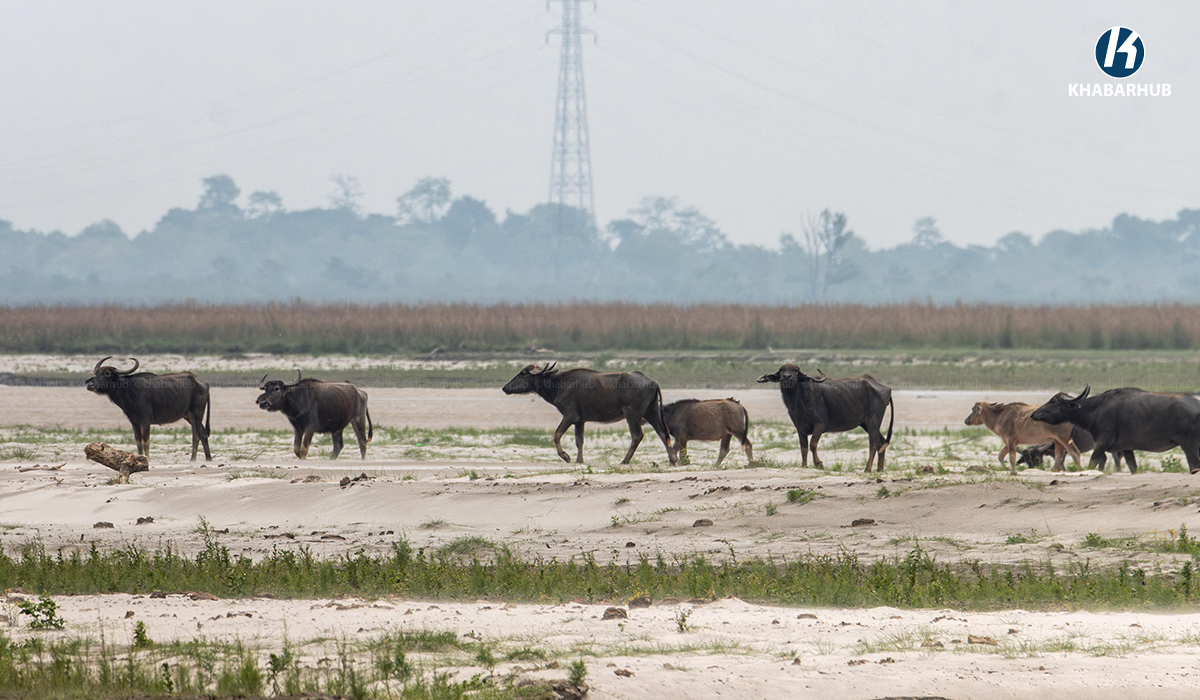
SUNSARI: The vast grasslands and wetlands of Koshi Tappu Wildlife Reserve, is a protected area in the Terai of eastern Nepal covering 176 km2 (68 sq mi) of wetlands in the Sunsari, Saptari, and Udaypur districts, are home to Nepal’s rare wild buffalo, locally known as arna.
But beneath the reserve’s rich biodiversity lies a growing conservation concern, as increasing cross-breeding with domesticated buffaloes threatens the genetic purity and long-term survival of the species.
Scientific studies show that the issue of free-ranging buffaloes in the Koshi Tappu area is not new. Research suggests that a feral buffalo population emerged in the 1950s after some domesticated buffaloes either escaped or were released into the wild.
Over time, these animals mixed with wild herds. Today, thousands of domesticated and feral cattle are found grazing in and around the reserve, posing a serious challenge to the conservation of pure wild buffalo genes.
Experts say uncontrolled grazing and livestock intrusion have increased cross-breeding between wild and domestic buffaloes. This has led to what scientists describe as “genetic erosion,” or the gradual weakening and loss of original genetic traits.
Conservationists fear that the unique physical and genetic identity of Nepal’s wild buffalo could slowly disappear if the trend continues.
Some buffaloes now seen in the grasslands of Koshi Tappu already display mixed characteristics. Pure wild buffaloes are generally larger, darker and more muscular, with thick crescent-shaped horns extending outward.
Cross-bred animals, however, often show noticeable differences in body structure, horn shape, facial features and colour patterns, indicating dilution of the original wild lineage.
The concern extends beyond genetics. Increased interaction between wild and domestic animals has also heightened the risk of disease transmission. Wildlife experts warn that infectious diseases from domestic livestock could spread to wild buffalo populations, threatening the survival of the already limited arna population.
Although the grasslands of Koshi Tappu may appear calm and thriving, conservationists say the reserve is facing a silent ecological struggle.
They stress that unless stronger measures are introduced to control open grazing, manage feral animals and conduct scientific monitoring, pure wild buffaloes could eventually become part of history rather than a living symbol of Nepal’s wildlife heritage.






Comment