




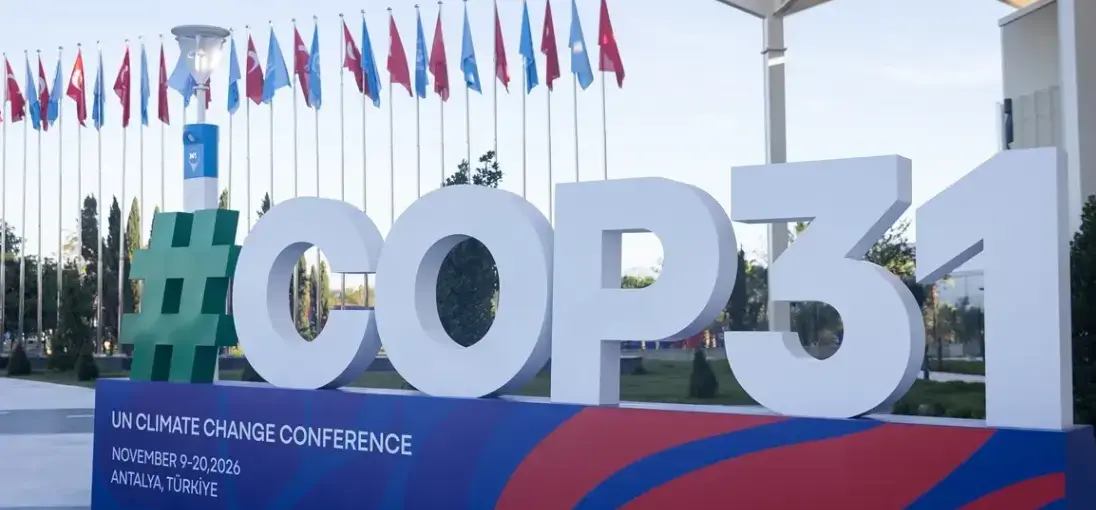
KATHMANDU: From villages swept away by glacial floods to hydropower infrastructure reduced to rubble, Nepal’s mounting climate crisis is set to take centre stage at the 31st Conference of the Parties (COP-31) to the United Nations Framework Convention on Climate Change (UNFCCC), beginning today in Antalya, Türkiye.
Carrying accounts of devastating floods, human casualties, destroyed settlements and billions of rupees in economic losses, Nepal is heading to the global climate summit with a clear message: countries that contribute least to global warming should not be left to bear its most devastating consequences.
The August 26 floods in the Bhote Koshi River, which caused widespread devastation in Rasuwa, remain among the most painful reminders of Nepal’s growing vulnerability to climate-induced disasters. The disaster left more than 1,450 people dead and over 5,000 missing, according to the figures cited in the disaster account, while inflicting enormous damage to public infrastructure, private property and livelihoods.
Before communities could recover from the tragedy, another devastating flood accompanied by mudslides struck the Budhigandaki River in Gorkha on September 25, adding to the country’s mounting disaster burden.
These were not isolated incidents. Last year, a glacial lake outburst triggered flooding in the Lende River, causing significant loss of life and property. Two years earlier, a sudden flood carrying massive amounts of mud and debris swept through Thame in Khumbu Pasanglhamu Rural Municipality of Solukhumbu, turning a thriving settlement into a scene of devastation.
The repeated destruction of settlements along the Bhote Koshi, Budhigandaki and Lende rivers, as well as Thame, illustrates the increasingly dangerous conditions facing Himalayan communities.
These disasters represent more than individual tragedies. They are manifestations of a wider climate crisis unfolding across the Hindu Kush Himalaya, where rising temperatures, accelerated snow and ice melt, and growing risks of glacial lake outburst floods are threatening communities, infrastructure and ecosystems.
For Nepal, which contributes relatively little to global greenhouse gas emissions but faces disproportionate climate risks, the issue is not simply one of disaster management. It is increasingly a question of climate justice, international responsibility and equitable access to climate finance.
Against this backdrop, Nepal is participating in COP-31 with the intention of bringing the realities of its vulnerable mountain communities before the international community and pressing for stronger global action on climate change.
Nepal delegation to highlight mountain vulnerability
A Nepali delegation comprising Foreign Minister Shisir Khanal and Minister for Health and Food Hygiene Nisha Mehta has already departed for Türkiye to participate in the conference. Minister for Agriculture, Forest and Environment Geeta Chaudhary is scheduled to leave on Tuesday.
Minister Khanal will deliver Nepal’s statement during the inaugural high-level session, while Minister Chaudhary will lead the technical negotiations. Minister Mehta is expected to highlight the consequences of the climate crisis for public health and the country’s health sector.
The conference will bring together representatives of 192 parties to the UNFCCC, including heads of state, heads of government, ministers and senior officials, alongside climate scientists, development partners and civil society representatives.
Nepal’s delegation also includes Agriculture, Forest and Environment Ministry Secretary Dr Rajendra Prasad Mishra and Climate Change Management Division Chief Dr Maheshwar Dhakal. They will participate in technical discussions, side events and programmes at the Nepal Pavilion to present the country’s priorities and advance its interests in international climate negotiations.
Dr Dharmaraj Upreti, Executive Chief of the National Disaster Risk Reduction and Management Authority, will draw attention to recent climate-related disasters, including the August 26 floods in Rasuwa’s Bhote Koshi River and the September 25 flooding in the Budhigandaki River.
Climate experts Manjit Dhakal, Raju Pandit Chhetri and Yugan Manandhar are also among those expected to advocate for Nepal’s climate priorities.
Political leaders, parliamentarians, government officials, civil society representatives and stakeholders from various governmental and non-governmental organisations are also expected to contribute to Nepal’s engagement at the conference.
Climate finance and the 1.5-degree target at the centre of Nepal’s agenda
Nepal has already made public its national position paper ahead of COP-31, outlining its priorities for the negotiations. The document continues to place mountain-related climate challenges, climate finance, loss and damage, and adaptation at the centre of the country’s international advocacy.
A key priority will be urging the international community to take more ambitious measures to limit the rise in global average temperatures to 1.5 degrees Celsius above pre-industrial levels.
For Nepal, the 1.5-degree target has particular significance. Even a relatively small increase in global temperatures can intensify the risks facing Himalayan ecosystems, accelerate glacier loss and increase the threat of glacial lake outburst floods, with potentially devastating consequences for downstream communities.
Nepal is also expected to press for greater financial and technical support for climate-vulnerable mountain countries, particularly in addressing loss and damage, strengthening early warning systems, building resilient infrastructure and supporting communities facing climate-related displacement and livelihood disruptions.
Minister Chaudhary said Nepal would prioritise climate justice, mountain-related concerns, loss and damage, and climate finance during the conference.
“Nepal’s national priorities and the realities of the climate crisis will be presented forcefully to the international community,” she said.
She added that Nepal had prepared its national position paper for COP-31, giving particular attention to issues shared by mountain countries.
This year, Nepal and Bhutan have also jointly advanced the agenda of ‘1.5 degrees Celsius temperature increase and mountain areas’, seeking greater international recognition of the particular vulnerability of mountain ecosystems and communities.
For Nepal, COP-31 is therefore an opportunity to move beyond presenting disaster statistics and highlight the human, economic and environmental consequences of a warming planet.
The challenge will be to translate these realities into stronger international commitments, predictable climate financing and concrete measures to protect vulnerable mountain communities. As increasingly frequent disasters threaten lives, livelihoods and development gains, Nepal’s central demand is that the international response must match the scale and urgency of the crisis confronting the Himalayas.
Nepal to press for climate justice, predictable loss-and-damage financing
Highlighting the far-reaching consequences of global warming on mountains, glaciers, glacial lakes and the broader Himalayan ecosystem, Minister Chaudhary said the climate crisis was increasingly threatening multiple sectors, including agriculture, hydropower, food security, river systems and human livelihoods.
She stressed that adequate financial resources, technology transfer and institutional capacity development were essential to help mountain communities adapt to the rapidly changing climate.
Climate justice will also feature prominently in Nepal’s agenda, she said, noting that despite the country’s negligible contribution to global greenhouse gas emissions, it continues to suffer disproportionately from the consequences of climate change.
Chaudhary said Nepal would draw international attention to the humanitarian, economic and non-economic losses caused by devastating floods and landslides, particularly in the Bhote Koshi-Rasuwa region.
“Countries affected by climate change should receive equitable support. Nepal will insist that countries suffering loss and damage have access to adequate, predictable and easily accessible financial resources from the Fund for Responding to Loss and Damage,” she said.
Nepal Pavilion to host more than 40 side events
For the first time, Nepal is preparing to establish its own national pavilion at COP-31, where it plans to organise more than 40 side events to showcase the country’s climate challenges, experiences and policy priorities.
According to the ministry, the Nepal Pavilion will serve as a common platform to bring the country’s climate realities and the experiences of local communities to the international stage. It will also provide space for the voices of young people, women, civil society, the private sector and other stakeholders to be heard in global climate discussions.
As part of efforts to strengthen international cooperation on mountain-related issues, Nepal is planning a high-level event on November 12 in collaboration with Tajikistan, Kyrgyzstan, Bhutan and Pakistan.
The programme, titled ‘Advancing the Mountain Agenda: Glaciers, Cryosphere and Resilience under Overshoot, Shared Responsibility and Sustainable Financing’, will focus on the growing threats to mountain ecosystems and the need for collective international action and sustainable financing.
Another side event, titled ‘Strengthening Mountain Resilience through Adaptation Finance’, will be organised jointly by Nepal, Bhutan, Kyrgyzstan and the International Centre for Integrated Mountain Development (ICIMOD).
Chaudhary said the initiatives were expected to strengthen international discussions on glacier loss, the cryosphere, mountain resilience and access to adaptation finance.
Nepal and South Korea plan carbon trading agreement
On the bilateral cooperation front, Nepal is preparing to sign a memorandum of understanding (MoU) with the government of South Korea on carbon trading.
Chaudhary said the proposed agreement would open new avenues for cooperation between the two countries in developing carbon markets and advancing climate change mitigation efforts.
She also emphasised that Nepal’s engagement at COP-31 would extend beyond government representation, with participation from civil society, local communities, youth, women, the private sector, experts and media representatives receiving particular attention.
Describing COP-31 as more than an international diplomatic gathering, Chaudhary said the conference offered Nepal an important opportunity to present the realities of the climate crisis, build common positions among mountain countries, reinforce its demand for climate justice and expand international cooperation and support.
She called for constructive engagement and support from all political parties, civil society organisations, the private sector, development partners, experts and media to ensure that Nepal’s national interests and climate priorities are effectively represented on the international stage.
Nepal to highlight adaptation, food security and climate finance
Dr Maheshwar Dhakal, Chief of the Climate Change Management Division at the Ministry of Agriculture, Forest and Environment, said Nepal would raise a broad range of issues, including climate adaptation, loss and damage, agriculture, food security, public health, climate finance and technology transfer.
He said the Nepali delegation would also emphasise rising temperatures in mountain regions, climate justice, international cooperation, emissions reduction, carbon markets, capacity development and a just transition.
Nepal’s position paper has also incorporated cross-cutting concerns, including gender equality and the disproportionate effects of climate change on children, young people, persons with disabilities, Indigenous Peoples and minority communities.
Meanwhile, Dr Dharmaraj Upreti, Executive Chief of the National Disaster Risk Reduction and Management Authority, said Nepal would present evidence of human casualties and physical destruction caused by climate-related disasters, including the devastating floods in the Bhote Koshi region of Rasuwa.
He said Nepal would use these examples to strengthen its international advocacy for adequate compensation, financial assistance and climate justice for countries and communities bearing the consequences of climate change despite having contributed little to the problem.






Comment