




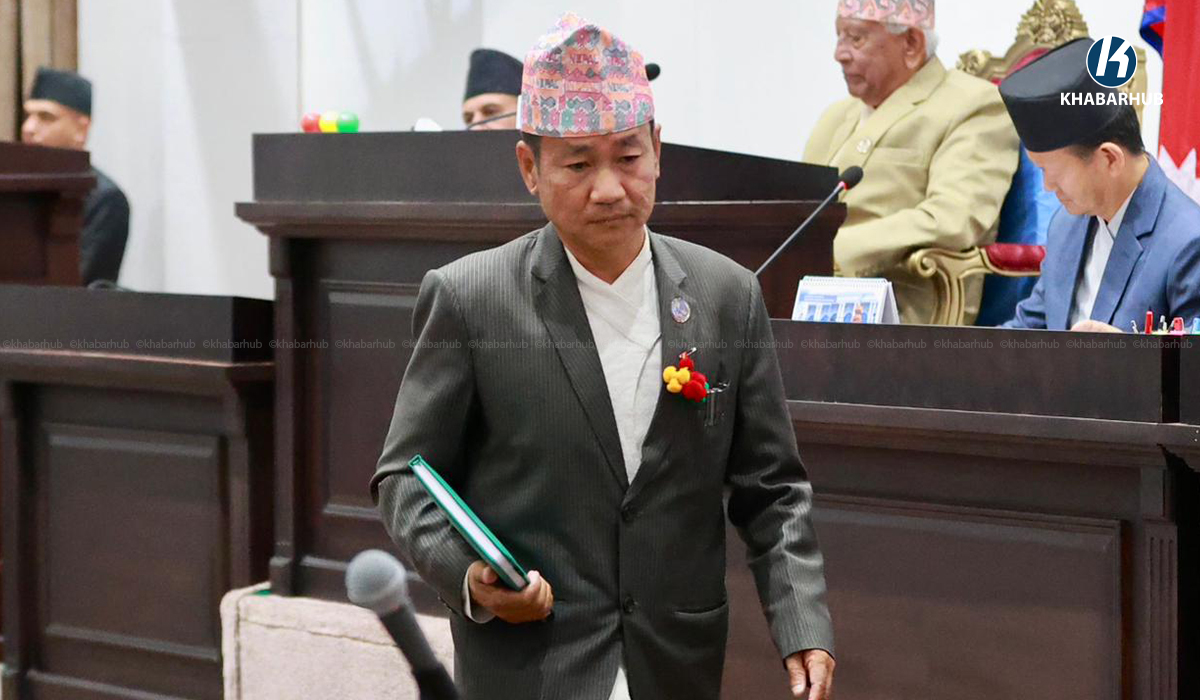
KATHMANDU: A Facebook post by Shram Sanskriti Party chair and lawmaker Harka Sampang falsely claiming that Indian actor Prabhas had died has triggered widespread criticism and renewed debate over the responsibility of public figures on social media.
On Sunday evening, Sampang posted a tribute reading, “Rest in peace, Prabhas. You were a great actor,” despite the actor being alive and actively working on upcoming film projects.
The post, shared from Sampang’s Facebook page with more than 1.4 million followers, spread rapidly across social media. While some users initially believed the claim, others quickly pointed out that it was false, prompting a wave of criticism over the dissemination of unverified information.
Although Sampang deleted the post on Monday morning, screenshots had already circulated widely across multiple platforms, with users accusing the lawmaker of irresponsibly sharing misinformation.
Many social media users argued that public officials have a greater responsibility to verify facts before publishing sensitive information, noting that posts from influential figures can spread far beyond their immediate audience and create widespread confusion.
The incident is not the first involving Sampang’s social media activity. He is known for posting frequently, often sharing controversial or unverified content, and has faced criticism on several previous occasions.
The episode has also reignited discussion about the role of social media algorithms, which often reward speed and engagement over accuracy. Experts have long warned that while digital platforms allow information to spread within seconds, correcting false information can take much longer.
The controversy serves as another reminder that in the digital age, the responsibility to verify information is especially important for public figures whose posts can shape public perception and influence thousands of people within minutes.





Comment