




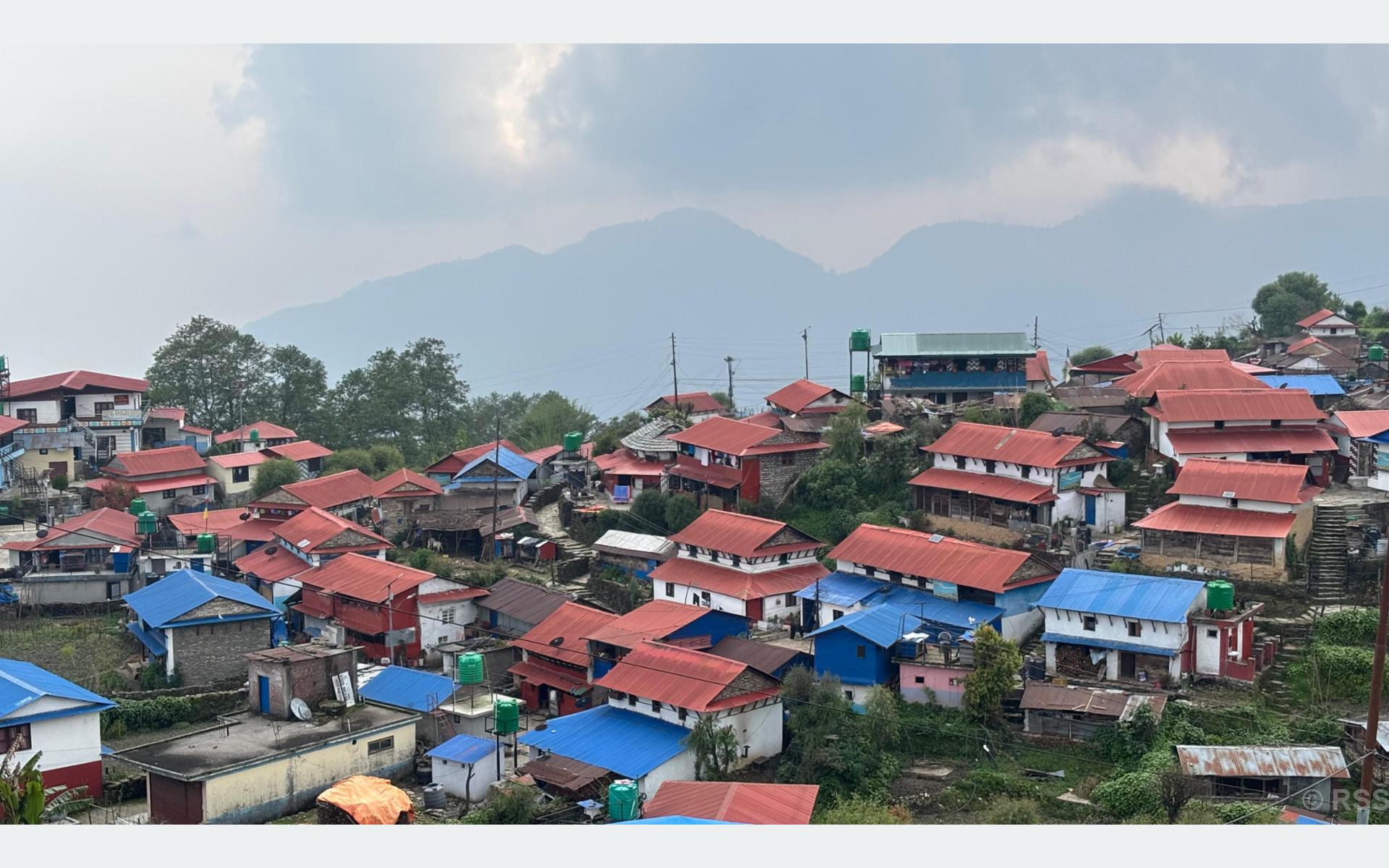
LAMJUNG: In the past, young people in Gurung villages would gather at the village house every evening to sing, dance, share their joys and sorrows, and pass on their customs, culture and community values from one generation to the next.
For the Gurung community, the village house was more than just a place for entertainment. It served as a social institution where traditions, cultural values and the spirit of collective living were nurtured. However, with changing lifestyles, foreign employment and migration, this long-standing tradition has gradually declined.
Today, the sense of community, cultural identity and togetherness once fostered in the village houses has become a strong foundation for rural tourism in Lamjung. By preserving this heritage through community homestays, the Gurung community has been promoting tourism as a reliable source of economic prosperity.
The campaign to connect the community’s unique identity with tourism has gained significant momentum in recent years in Lamjung, which is regarded as the birthplace of the Gurung community.
The Gurung language, traditional attire, art, culture, customs, local cuisine, lifestyle and warm hospitality have become major attractions for both domestic and international visitors.
Across the district, mothers’ groups, fathers’ groups, youth clubs, homestay management committees and local tourism committees have been actively promoting tourism while preserving the community’s cultural heritage.
Organised rural tourism in Lamjung is believed to have begun in Ghalegaun of Kholasothar Rural Municipality-3. The homestay campaign, launched in 2057 BS, has since become the village’s tourism identity. Since then, rural tourism has expanded to several other villages, including Bhujung, Siurung, Pasgaun, Ghanpokhara, Khasur, Rainaskot, Kaulepani, Ilampokhari, Nalma, Chapamimpra, Bhusme and Ghermu.
Situated at an altitude of about 2,100 metres above sea level, Ghalegaun is recognised as a model rural tourism village in South Asia. The village offers panoramic views of the Annapurna, Manaslu, Lamjung and Himalchuli mountain ranges.
Its traditional Gurung settlement, authentic local cuisine, cultural performances and warm hospitality have attracted tourists for many years.
According to Prem Bahadur Ghale, chairman of the Ghalegaun Rural Tourism Management Committee, homestays have brought remarkable economic, social and cultural transformation to the village. Tourism has increased the income of local residents while expanding the village’s identity at both the national and international levels.
He said homestays have also played a vital role in preserving endangered customs, traditions, local cuisine and the community’s traditional way of life.
Bhujung, in Kholasothar Rural Municipality-4, is regarded as a living museum of Gurung culture. Homestays have been operating there since 2064 BS. Surrounded by traditional stone houses, rich cultural traditions, religious heritage and natural beauty, the village offers visitors an opportunity to experience the Gurung community’s lifestyle and customs firsthand.
Siurung village in Marsyangdi Rural Municipality-3 is another popular destination nestled in the lap of the Manaslu range. The village offers spectacular views of the winding Marsyangdi River, while local residents continue to promote tourism and preserve their cultural heritage through community-led initiatives.
According to local resident Purna Bahadur Gurung, although the community’s traditional culture has come under pressure due to modern lifestyles and foreign employment, interest in preserving it has grown significantly since it became linked with tourism.
He said the benefits of tourism extend beyond homestay operators to dairy farmers, organic vegetable growers, producers of traditional food crops, women engaged in handicrafts and other small entrepreneurs. As tourist arrivals continue to increase, employment and income-generating opportunities in the village are also expanding.
To offer visitors authentic local flavours and experiences, villagers have been preserving seasonal produce. After the monsoon, wild vegetables such as niuro (fiddlehead ferns) and mushrooms are collected from nearby forests, preserved and later served to tourists as traditional delicacies.
Local dishes prepared from millet, buckwheat (phapar), maize, indigenous lentils and other traditional ingredients also give visitors a genuine taste of village life.
Pasgaun, another Gurung-majority settlement, has also established a distinct identity in rural tourism. Cultural performances such as the Krishnacharitra dance, Ghatu, Jhyaure, Sorathi and Sarangi music have become major attractions for visitors. These performances not only preserve the cultural identity of the Gurung community but also contribute significantly to tourism promotion.
Women have played an equally important role in the growth of rural tourism. In most homestays, mothers’ groups (Ama Samuhas) take the lead in welcoming guests, preparing traditional cuisine, maintaining cleanliness and organising cultural programmes. At the same time, the younger generation has begun creating employment opportunities in their own villages by working as guides, tourism entrepreneurs, cultural performers and digital promoters.
Kholasothar Rural Municipality Chairperson Surya Prasad Gurung said priority has been given to developing tourism infrastructure while conserving the area’s cultural and natural heritage. According to him, work is underway to build parks in villages, conserve and beautify natural waterfalls, develop new tourist destinations, construct trekking trails and expand tourism-related services.
He said a trekking route is currently being developed in the Memedanda area leading to Dudh Pokhari. Once completed, the trail is expected to serve as an alternative route for trekkers travelling from Kaski to Manang through the area.
He added that the rural municipality is focusing on introducing new tourism activities, promoting local products and integrating agriculture with tourism to encourage visitors to stay longer.
Despite its achievements, rural tourism in Lamjung continues to face several challenges. Road blockages during the monsoon, inadequate infrastructure in some tourist villages, the migration of skilled workers for foreign employment and the growing influence of modern lifestyles on indigenous culture remain major concerns.
Tourism entrepreneurs say that improving infrastructure, strengthening promotion and ensuring better coordination among all three levels of government are essential to addressing these issues.
The future of rural tourism in Lamjung appears promising, driven by its rich natural heritage, the authenticity of Gurung culture, successful community homestays, the close relationship between agriculture and tourism, and the active participation of local communities.
Stakeholders believe tourist arrivals, the average length of stay and tourism income will increase further if trekking routes are expanded, digital promotion is strengthened, local products are effectively branded and cultural heritage conservation is further enhanced.
The spirit of collective living that once flourished in the traditional Rodhi Ghar is now being revived through community homestays, cultural tourism and the Gurung community’s warm hospitality.
By preserving their language, traditions, culture and indigenous way of life, the Gurung community has transformed its cultural heritage into a foundation for economic prosperity.
Tourism has become not only a means of preserving culture but also a driver of employment generation, agricultural marketing and local economic growth. Lamjung’s success in promoting cultural preservation alongside tourism development is increasingly being recognised as a model for other rural communities across Nepal.
RSS




Comment