




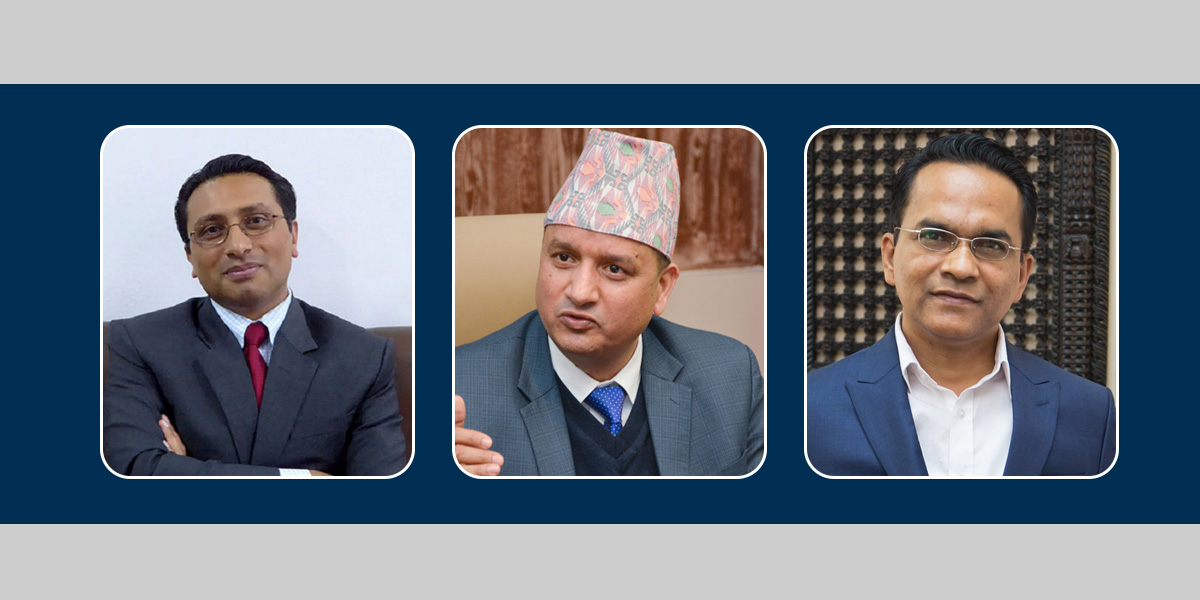
KATHMANDU: The economic direction of the government led by Prime Minister Balendra Shah is increasingly being seen as shaped by individuals with deep-rooted ties to the Nepali Congress, prompting debate over whether the new political order can truly deliver a break from the past.
The government, formed after a major political shift fueled by the Gen-Z movement and March 5 election, had come to power with a strong promise of reform. The rise of the Rastriya Swatantra Party was widely interpreted as a rejection of traditional political forces and their long-standing grip on state power. The party’s leadership had framed the transition not merely as a change in government, but as a broader push for good governance, anti-corruption, and structural transformation.
However, developments in the economic sector suggest a more complex reality. While the political leadership represents a new force, the stewardship of the economy has largely been entrusted to individuals associated with Congress-era economic thinking and institutions.
Finance Minister Swarnim Wagle, a prominent economist with international recognition, previously held key roles under Congress-led governments, including serving as vice-chair of the National Planning Commission. His appointment has been viewed as an effort to bring intellectual depth and policy credibility to the new administration. At the same time, his longstanding association with Congress has raised questions about the extent to which he can diverge from established policy frameworks.
The Cabinet’s recent decision to appoint Gunakar Bhatta as vice-chair of the National Planning Commission has further reinforced this perception. Bhatta, who served as executive director and spokesperson at Nepal Rastra Bank, has built a reputation as a technocrat. However, his earlier consideration for the post of central bank governor with backing linked to Congress circles has led some analysts to view him as aligned with the traditional economic establishment.
At the monetary policy level, Governor Bishwo Poudel remains a central figure. Poudel, who has previously been politically active within the Nepali Congress and even contested elections, is expected to play a decisive role in shaping the government’s economic trajectory. His leadership at Nepal Rastra Bank is seen as critical to maintaining macroeconomic stability while supporting the government’s reform agenda.
Taken together, these appointments mean that the three key pillars of Nepal’s economic management—the Finance Ministry, the central bank, and the National Planning Commission—are being led by individuals with either direct political backgrounds in the Nepali Congress or strong ideological alignment with its liberal economic approach.
Experts say this reflects the government’s strategic choice to prioritize stability and continuity in economic management, even as it pursues political change. Economist Govinda Nepal argues that the current administration appears firmly committed to a liberal economic framework, which naturally leads to the selection of individuals who share similar policy orientations.
“The government seems to believe in a liberal economic model, and the appointments reflect that preference,” he said, adding that broader inclusion of diverse perspectives would be important to ensure balanced and inclusive growth.
The apparent continuity in economic policy also aligns with the ideological overlap between the ruling party’s stated commitment to a liberal economy and the Nepali Congress’s long-standing economic philosophy, often described as a blend of market-oriented reforms and democratic socialism.
Despite these concerns, there has been little public skepticism regarding the competence of the individuals leading the economic sector. Supporters of the government argue that relying on experienced and credible experts is a pragmatic decision, particularly at a time when the economy requires careful management and policy consistency.
Finance Minister Wagle has already outlined an ambitious roadmap, pledging to establish stronger economic governance within five years and deliver a transformative budget reminiscent of the early 1990s reform era. These commitments have raised expectations that the government could still bring meaningful change, even within a familiar policy framework.
At the same time, the contrast between the anti-establishment momentum that brought the government to power and the conventional profile of its economic leadership has fueled public curiosity. The Gen-Z-driven political wave had explicitly challenged entrenched practices such as corruption, patronage, and bureaucratic inertia. Whether the current team can overcome these systemic constraints remains a key question.
Analysts say the government appears to be pursuing a “safe landing” strategy—combining new political leadership with experienced economic managers to avoid instability. While this approach may ensure continuity and investor confidence, it also carries the risk of limiting the scope of transformative change.






Comment