




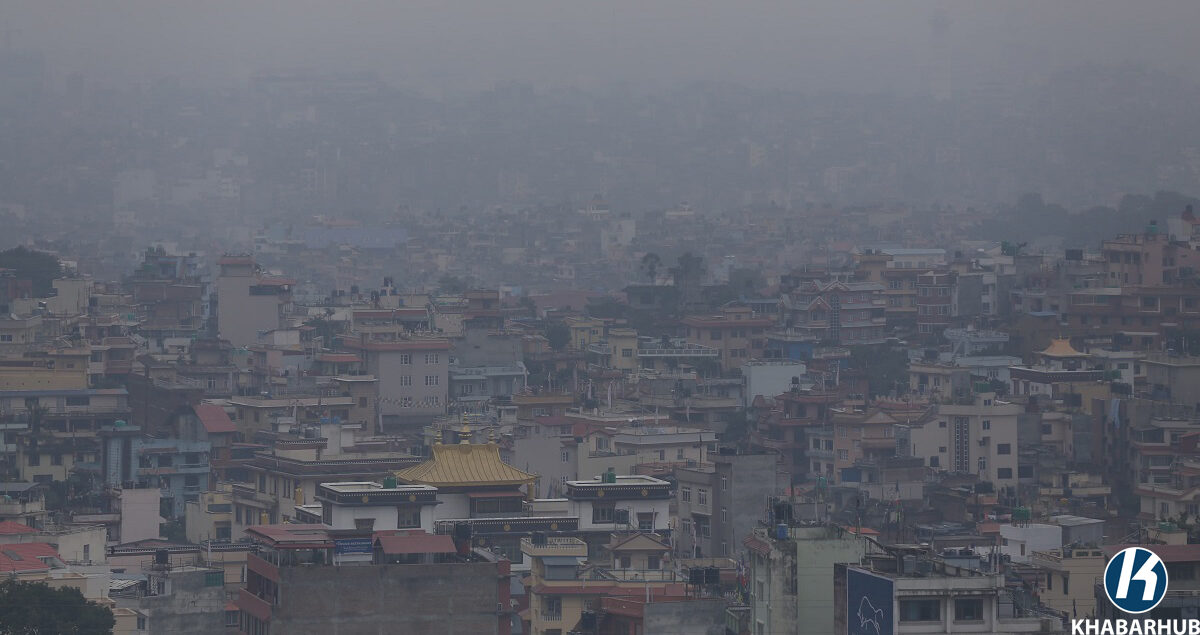
KATHMANDU: Kathmandu is facing a serious air pollution episode, with the Air Quality Index (AQI) nearing 200, placing it in the “very unhealthy” category.
Fine particulate matter (PM2.5) dominates the pollution, posing health risks, particularly for children, older adults, and people with underlying conditions.
The poor air quality is driven by a combination of urban emissions and weather conditions that trap pollutants in the valley. Calm winds and lack of rainfall prevent smoke, dust, and other pollutants from dispersing, allowing them to accumulate in the air.
Vehicular emissions, particularly from diesel-powered vehicles that exceed permitted smoke levels, are a major source of pollution. Industrial activity, construction dust, biomass burning, and residential fuel use also contribute to the poor air quality.
Cross-border pollution from neighboring regions and seasonal forest fires further exacerbate the situation. Rapid urbanization has increased energy consumption, transportation demand, and industrial activity, adding to the concentrations of PM2.5, carbon monoxide, and nitrogen dioxide.
Historical data show Kathmandu’s pollution is a long-term concern. In 2024, the city recorded an average PM2.5 concentration of 45.1 µg/m³, equivalent to an AQI of 128, nearly nine times higher than the World Health Organization’s annual guideline of 5 µg/m³. Currently, Kathmandu ranks as the third most polluted major city in the world.
Air quality may gradually improve depending on weather changes and the implementation of emission control measures.
Over the past 30 days, Kathmandu’s air quality has remained consistently in the “unhealthy” range, with occasional spikes into very unhealthy conditions. Residents are advised to reduce exposure, especially during peak pollution hours, and authorities are urged to strengthen pollution control measures to protect public health.





Comment