




KATHMANDU: Winter is considered the most suitable season for development works in Nepal. With minimal rainfall, both the government and contractors usually rush to complete projects stalled during the monsoon. This year, however, the government adopted an unusual approach.
Soon after the dry season began, Minister Kulman Ghising, who was overseeing three key development ministries, publicly declared 312 projects as sick or non-performing. He went on to immediately cancel 58 contracts worth more than Rs 17 billion, triggering widespread controversy.
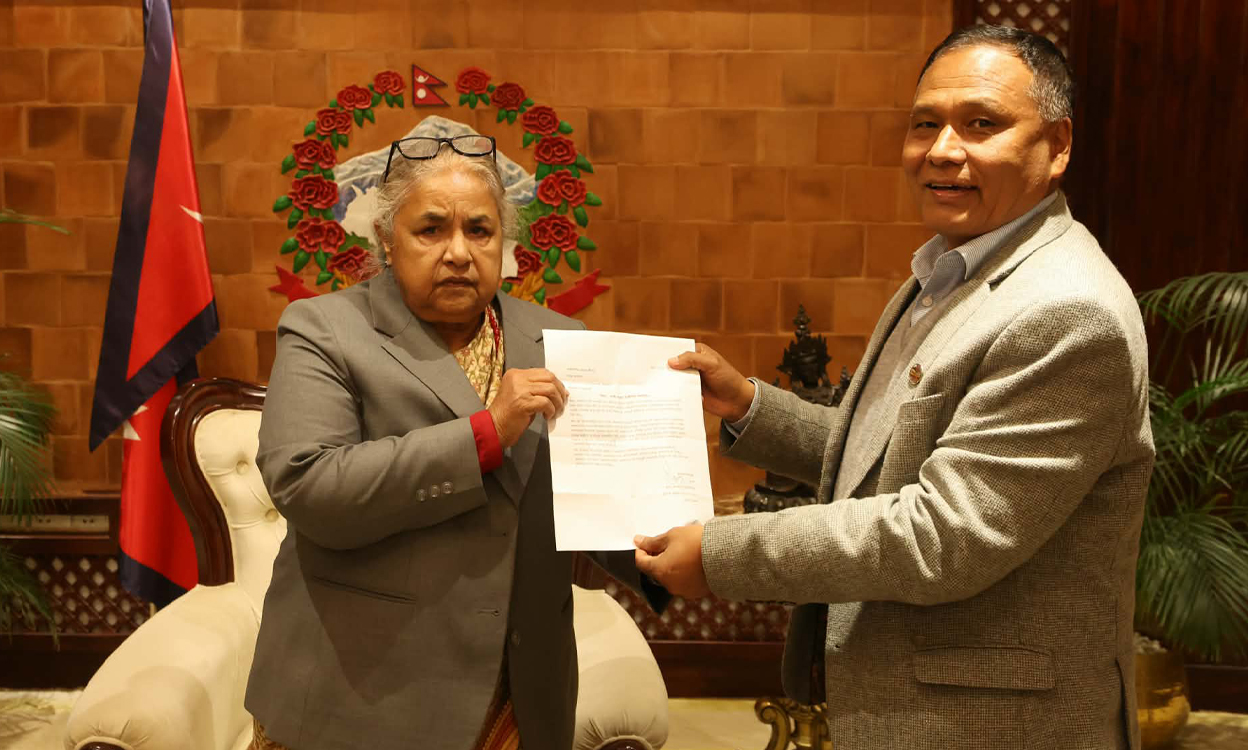
Amid mounting criticism, Minister Ghising submitted his resignation to the government on Wednesday night. His exit has now raised serious questions about the fate of hundreds of already-cancelled contracts and many others that were in the process of being terminated.
Although Ghising had earlier claimed that procedures to re-tender the cancelled projects had already begun, while presenting a list of 101 achievements completed in his first 100 days, officials within the ministries concerned suggest otherwise.
Ministry of Physical Infrastructure and Transport
Under the Ministry of Physical Infrastructure and Transport, Ghising had declared 235 contracts as sick due to contractors’ failure to deliver. Of these, 40 road project contracts were formally terminated, while around 150 more were said to be in the process of cancellation, according to details he shared during a press conference before his resignation.
“Contracts worth nearly Rs 3 billion under the Department of Roads, including the Kankai Bridge in Jhapa that has remained incomplete for 14 years, have been terminated. Around 150 more sick contracts are in the pipeline for termination,” Ghising stated in his report.
He reiterated the same position while releasing his 100-day performance report after assuming office on December 24, 2025. While Ghising claimed that processes to re-invite bids had already begun, officials within the department say no concrete steps have been taken.
“There has been no further discussion on cancelling additional contracts, nor on re-tendering the terminated ones,” said Department of Roads spokesperson Engineer Shyam Bahadur Khadka. “All relevant data and documentation need to be collected before issuing new tenders, and that has not been done.”
Ministry of Energy, Water Resources and Irrigation
Nepal faced an unprecedented situation this year when Madhesh Province had to be declared drought-affected during the monsoon season. Against this backdrop, Minister Ghising terminated 16 out of 33 contracts under the Department of Water Resources and Irrigation, many of them targeting Madhesh-based projects, including the nationally significant Sunkoshi–Marin Diversion Multipurpose Project.
Although notices had been issued to terminate six additional contracts by the end October 2025, those contracts have not yet been formally cancelled.
According to Ghising’s performance report, contractors repeatedly failed to improve progress on key components such as dams and powerhouses, forcing the ministry to terminate contracts as per procurement rules. Contractors, however, allege political vendetta and personal interest behind the decisions, pushing several cases into the courts.
“Even ministers from previous governments tried various bargaining tactics. Because I refused, obstacles were created,” said contractor Raman Mahato, who is involved in one of the affected projects. “It is clear that the current minister targeted contractors to benefit people close to him.”
Prem Hari Parajuli, Chief of the Planning, Program and Monitoring Division at the Irrigation Department, defended the decisions, saying contractors were warned multiple times over a long period.
“Sixteen contracts have already been terminated due to prolonged inaction by contractors. This was not a sudden decision,” Parajuli said. “Six more are in the termination process. So far, there has been no decision to re-tender these projects.”
He added that smaller projects worth Rs 5–6 million, which are already near completion, will not be re-tendered.
Ministry of Urban Development
Under the Ministry of Urban Development, notices were issued questioning why 44 sick contracts should not be terminated. Of these, four contracts have already been cancelled.
Stakeholders argue that the government’s aggressive approach to contract termination has unfairly targeted the construction sector.
“The construction sector has been treated unjustly by the government itself,” said Ravi Singh, President of the Federation of Contractors’ Associations of Nepal. “This retaliatory approach is disrupting the entire supply chain and could have a negative impact on the national economy.”
Contractors who have not received payments for months say they are demoralized by decisions taken without adequate study and monitoring. Many are now preparing to seek legal remedies.
“The Sunkoshi–Marin Irrigation Project is already in court, and most other affected contractors are also preparing for legal action,” Singh said. “Some contractors, however, are choosing to withdraw after collecting guarantees and pending payments and move on to new projects.”
Singh also urged the government to immediately amend Clause 59(8) of the Public Procurement Act, arguing that its current provision is excessively punitive.
“If a contract is terminated under Clause 59(8), the contractor is forced to bear the cost of restarting the project, including unspent government allocations. This is an unheard-of provision globally,” he said. “For contractors, this is equivalent to a death sentence, especially when contracts are cancelled arbitrarily.”
He added that contractors have already raised the issue with Prime Minister Sushila Karki and expressed hope that the government would move toward amending the law.



Comment