




KATHMANDU: The merger between the Ujyalo Nepal Party and the Rastriya Swatantra Party (RSP) has plunged into uncertainty. Despite an agreement in principle between the two sides, persistent differences, particularly over the distribution of positions, have complicated the unity process.
While the two parties appear broadly aligned on political agendas, disagreements over leadership sharing have stalled progress. Amid growing public scrutiny, Ujyalo Nepal leader Kulman Ghising, who had been handling three ministerial portfolios, resigned from the government on Wednesday. Just a day earlier, while speaking at a programme of engineers, Ghising had claimed he was not yet a member of any political party. However, he stepped down before Prime Minister Sushila Karki could move to dismiss him.
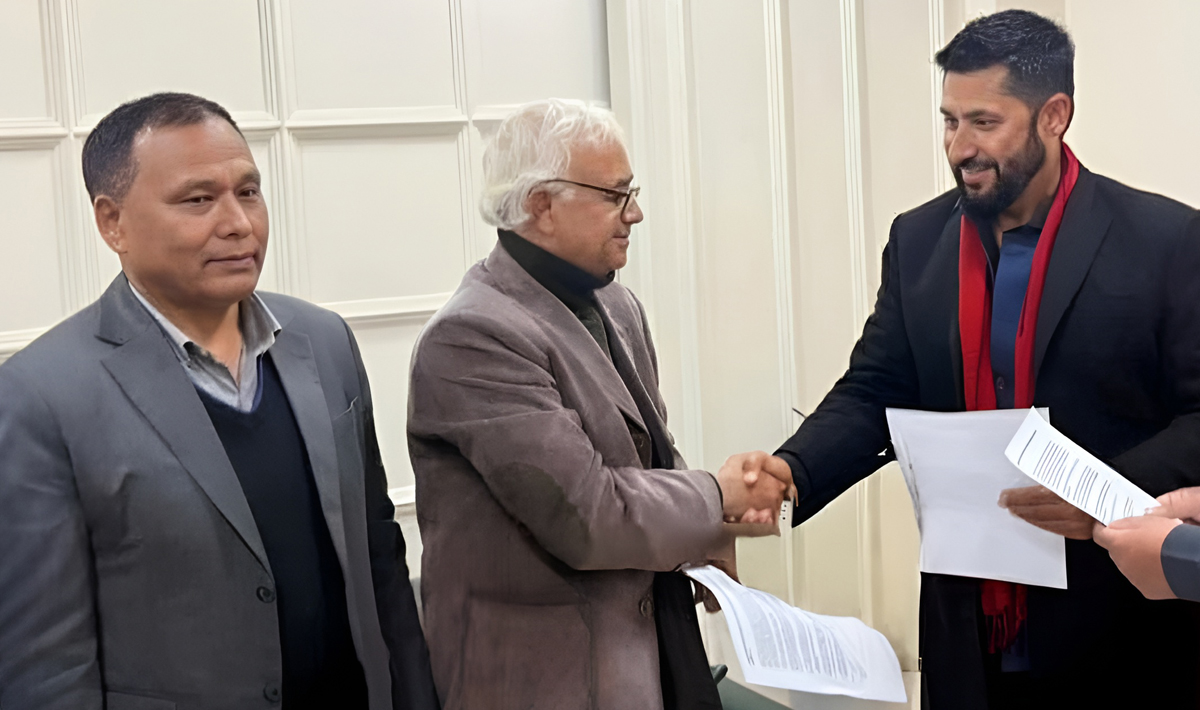
On the evening of Poush 14, Ghising was taken from a hotel in Boudha by Gen-Z activist Sudan Gurung to a residence in Kamal Pokhari, where RSP chair Rabi Lamichhane and Kathmandu Mayor Balen Shah were present. It was there that the two sides reached an agreement on party unity. According to that understanding, Ghising was to become the second-ranking leader of RSP with the position of vice-chair. That agreement, however, has since turned into a liability for Ghising. Despite holding three ministerial roles in government, he was forced out of his position within just three months.
At the time of merging Ujyalo Nepal into RSP, party chair Anup Kumar Upadhyay had signed the agreement, which guaranteed Ghising second seniority after Lamichhane and the post of vice-chair. Other positions were to be announced later through a formal unity declaration programme.
Leaders from Ujyalo Nepal now say the situation has become increasingly uncertain. They allege that RSP has been delaying implementation of the agreement, not only on leadership management but also on ideological commitments and electoral arrangements. According to them, promises regarding proportional representation, central committee inclusion and candidate placement in winnable constituencies have not been honoured.
Ujyalo Nepal had also demanded a supplementary agreement clearly committing to federalism, secularism, republicanism, multiculturalism, national unity, inclusive federal democracy and proportional representation. Although RSP had earlier indicated these principles would be incorporated into its statute and manifesto, Ghising’s camp now believes the party is backtracking.
Senior leaders of Ujyalo Nepal say they are now weighing two options: moving forward independently or joining RSP only if a supplementary agreement is finalised with due respect and clarity. Ghising is scheduled to hold a decisive one-on-one meeting with RSP chair Lamichhane after 4 pm on Thursday to determine the future course. Lamichhane, currently in Chitwan, is expected to return to Kathmandu for the talks.
Earlier on Thursday morning, Ghising convened a central committee meeting of Ujyalo Nepal, where he reportedly admitted that the unity deal had been rushed and insufficiently thought through. Leaders close to him say the party has also begun informal discussions with other political forces, including Madhesh-based and progressive democratic parties.
On the RSP side, second-tier leaders are reportedly reluctant to amend the party statute to create additional senior posts such as another vice-chair or general secretary for Ghising. Party chair Lamichhane has been consulting vice-chairs Swarnim Wagle and DP Aryal, who are said to be opposed to the proposal. General Secretary Kabindra Burlakoti has also reportedly taken a firm stance against expanding the leadership structure for this purpose.
Ujyalo Nepal leaders say Ghising has informed the party that second-tier RSP leaders fear losing their influence if new leaders are accommodated, and are therefore obstructing the implementation of the agreement. They argue that while consensus had been reached on ideological issues, internal resistance within the RSP has once again destabilized the process.
RSP vice-chair Aryal, however, maintains that unity discussions are ongoing and that the merger has already taken place in principle. He said talks are focused on how to move forward and expressed confidence that all outstanding issues would be resolved through consensus in the coming days. According to him, work is underway on formal agreement documents and the party is committed to providing Ghising and his team with a respectable role.
While RSP leaders maintain that unity has already taken place and that remaining issues will be resolved through dialogue, leaders from Ujyalo Nepal argue that delays and internal resistance within RSP have put the entire process at risk.
Both sides continue to express hope that a mutually acceptable agreement can still be reached. However, with trust eroding and disagreements widening, the proposed unity remains fragile, even as negotiations continue.




Comment