




PALPA: Dengue infection has been confirmed in 255 people in Palpa district in the first two months of the current fiscal year.
According to Madhusudan Bhattarai, a lab technician at the District Health Office, 255 people tested positive for dengue in Shrawan and Bhadra.
Although the number of dengue cases has fluctuated in recent years, the number of infections remains significant. The confirmation of 255 cases in just two months indicates that the risk of dengue remains high in Palpa this year.
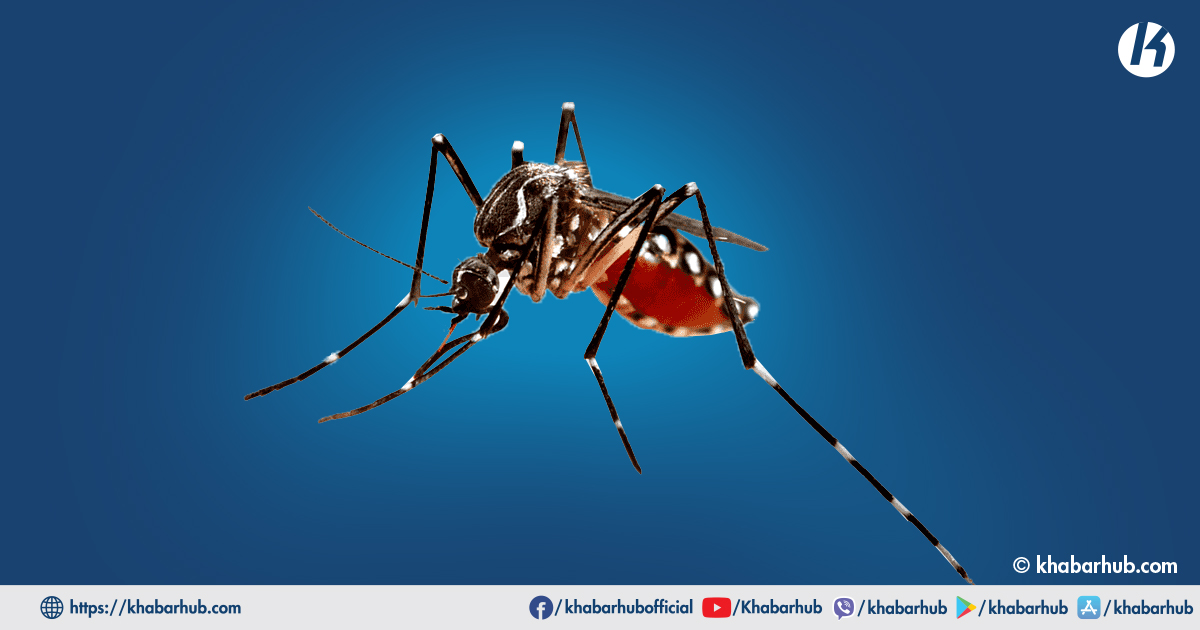
Health workers say the risk of dengue transmission increases during the rainy season, when stagnant water provides favorable breeding grounds for Aedes mosquitoes, which transmit the virus.
Lab technician Bhattarai said changes in environmental conditions caused by climate change, along with increased access to dengue testing, have contributed to the rise in reported cases. He said dengue testing has become more accessible in recent years, resulting in more cases being detected.
Dengue cases have been reported among patients visiting hospitals including United Mission Hospital, Palpa Hospital and Lumbini Medical College.
Dengue testing is also available at some private medical facilities, primary health centres and health posts.
Aedes mosquitoes commonly breed in water collected in discarded tires, flower pots, tin cans and other small and large containers around homes. Health workers say such breeding sites should be identified and destroyed, particularly during the mosquito’s larval and pupal stages.
The District Health Office has intensified awareness programmes following the rise in dengue cases. It has conducted advocacy and orientation programmes with concerned stakeholders on dengue prevention and control.
The programmes have emphasized the need to maintain cleanliness in and around homes and public places, as the mosquito population increases during the rainy season, raising the risk of dengue transmission.
Gaurav Dhakal, chief of the District Health Office, Palpa, urged people to pay close attention to environmental cleanliness, saying that controlling mosquitoes can help prevent dengue and other mosquito-borne diseases.
He advised people to wear full-sleeved clothing, sleep under mosquito nets and install screens on doors and windows to prevent mosquito bites.
Dhakal also urged people to prevent water from accumulating in homes, offices, schools and public places, fill potholes and immediately repair water or sewage leaks. He also advised changing the water in flower pots, coolers and other containers at least once a week.






Comment