




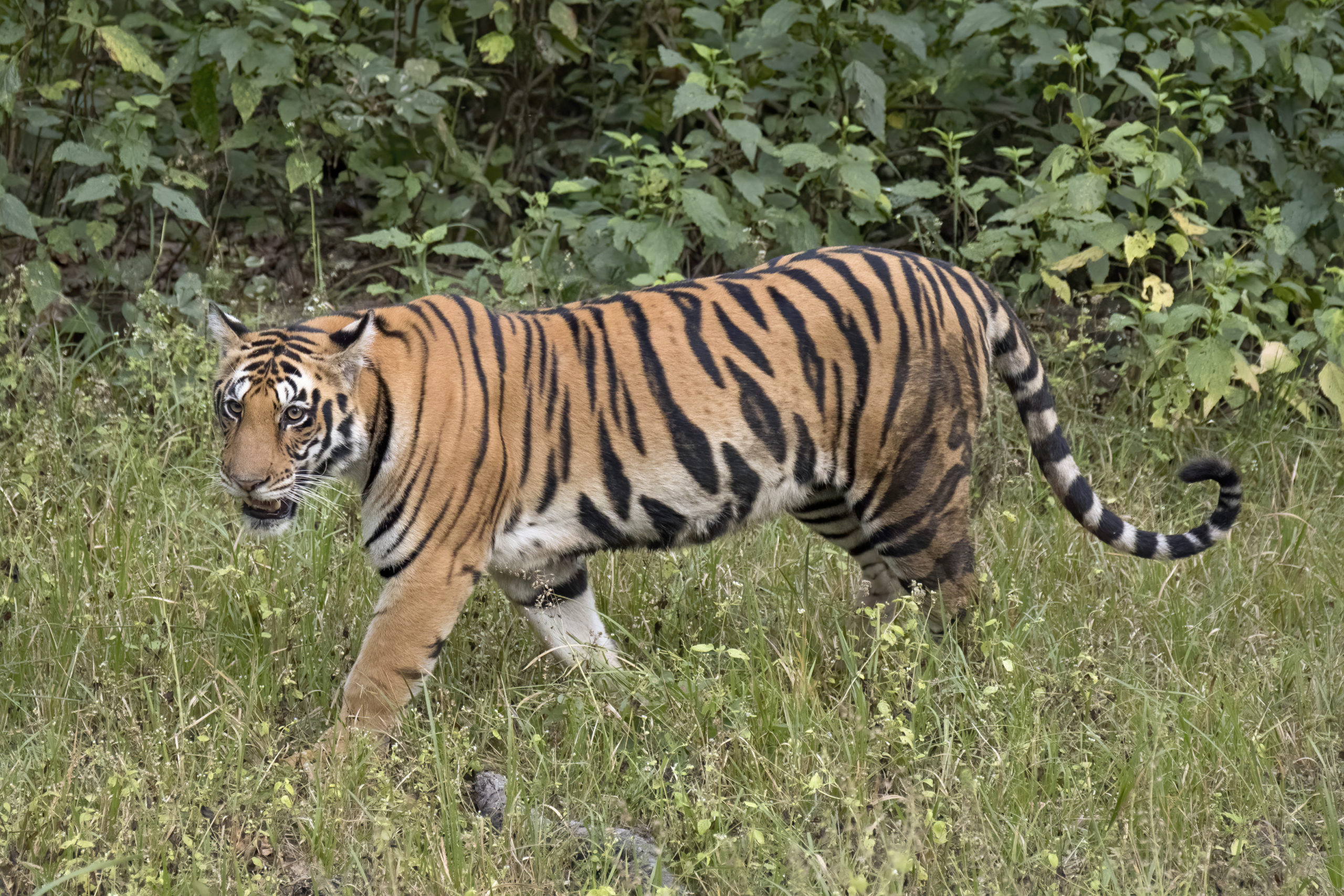
KATHMANDU: The Division Forest Office, Chitwan, has intensified monitoring of tiger and leopard movements near human settlements by installing camera traps and setting up cages to capture wildlife if necessary.
Forest Officer Sudip Hamal said the office has placed camera traps and rescue cages to monitor wild animals entering residential areas and facilitate their safe control.
According to Hamal, a cage equipped with a camera has been installed for trapping purposes at Avinas Poultry premises in Bharatpur Metropolitan City-15. Another camera has been placed nearby in a bamboo grove area.
During the monitoring, a leopard cub trapped inside the cage at the poultry premises was rescued and taken to the National Trust for Nature Conservation in Sauraha.
The Division Forest Office said camera footage showed the mother leopard and another cub staying outside the cage after the cub was trapped. After clearing the bushes in the area, authorities estimated that the mother and the remaining cub moved toward the premises of the Agriculture and Forestry University.
The office has also installed cages and cameras around the university area for regular monitoring.
Similarly, a camera trap was installed at the electricity station area in Aaptari, Bharatpur-11, after employees reported the presence of a tiger in the area. The tiger had reportedly killed a local resident’s goat.
Following the report, a team including Chief District Officer Ganesh Aryal, security personnel and forest officials conducted an on-site inspection. After the assessment, cameras were installed at the station’s entrance and inside the premises.
Division Forest Office Chief Bishnu Prasad Acharya said camera traps and cages have been placed at all three locations, with arrangements made for immediate rescue if a tiger or leopard is captured.
Experts say physically weak tigers and leopards often move out of forests while raising their cubs. They suspect such animals may approach human settlements due to the risk of their young ones being attacked by other predators inside forests.
Experts have also observed that when wild animals find it difficult to hunt in forests, they sometimes move closer to settlements and prey on domestic animals.






Comment