




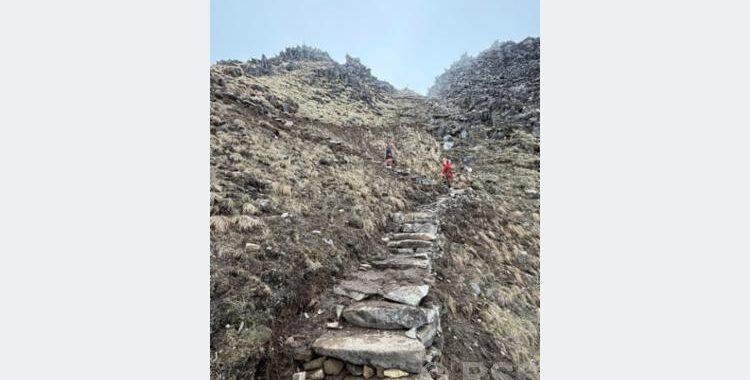
DHADING: A new trekking route has been constructed through rugged terrain leading to the popular tourist destinations of Kalo Daha and Seto Daha in Ruby Valley Rural Municipality, Dhading.
The trail, developed across a geographically remote and challenging landscape, extends through Kalo Daha and Seto Daha to Harchi Pass near the Nepal-China border, according to local guide Markus Tamang.
Residents of Lingjo village in Ward No. 1 of Ruby Valley Rural Municipality voluntarily contributed 21 days of labor to construct the trekking route from Babil Kharka to Harchi Pass, situated at an altitude of 4,650 metres. Following the community’s initiative, the ward office provided financial support of Rs 1.5 million for the project.
Ward Chairperson Pambar Tamang said local residents worked under difficult conditions, staying at Chhar Cho Kharka at an altitude of around 4,000 metres during the construction period. Despite the harsh terrain and high-altitude environment, the project was completed successfully through collective effort.
He added that the ward plans to allocate funds in the next fiscal year’s budget for the construction of a tourist shelter and other supporting infrastructure along the route.
During construction, local youths used tools such as axes, chisels, and hammers to cut through rocky sections, while women played a key role by carrying stones and helping build stairways along the trail.
Ward Chairperson Tamang praised the dedication of local residents, noting that the work was completed in areas where low oxygen levels make physical labor particularly demanding.
The newly built route has significantly improved access to Kalo Daha, Seto Daha, and Harchi Pass, making travel safer and more convenient for trekkers and visitors.
Local residents believe the trail will boost both domestic and international tourism while creating employment and income-generating opportunities for the community. Local leader Lama Tamang said the project has opened new prospects for the village and will contribute significantly to the development of tourism in the region.
As one of the closest high-altitude trekking destinations to Kathmandu, reaching elevations of nearly 5,000 metres, the route is expected to help promote Ruby Valley as a major trekking destination at both national and international levels.





Comment