




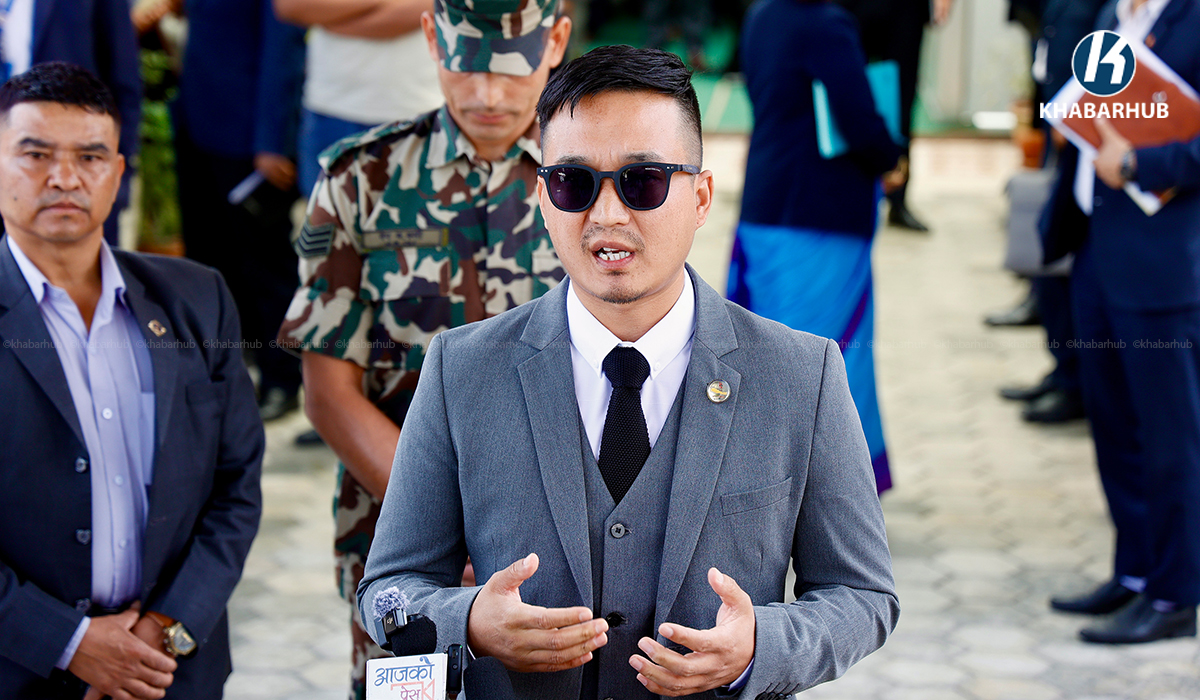
KATHMANDU: Home Minister Sudhan Gurung has shared that the government was committed to disaster management with the strengthening of policy, institutional and technical preparedness and coordination with all concerned public agencies.
In response to the queries raised during the National Assembly (NA) discussion that sought government attention towards disaster preparedness on Thursday, Home Minister reiterated that government had paid adequate attention to curb monsoon-induced disasters. Suggestions received from the House would be helpful in forwarding activities to minimize disasters’ impacts.
NA member Kamala Panta tabled the proposal, drawing government’s attention to the urgent issue and seeking response from the Home Minister. The proposal was tabled in the wake of increasing risk of floods, landslides, inundation and glacial lake outbursts.
Minister Gurung informed the NA members that government had enforced ‘Monsoon Preparedness and Response Action Plan, 2083’. The bulletins of weather forecasts issued by the Department of Hydrology and Meteorology were made basis for the preparations and vigilance from the central to the districts, thereby putting in place necessary measures. High-risk settlements are identified in coordination with the local levels, he added.
Even a central ‘command post’ is stationed at the National Disaster Risk Reduction and Management Authority and the district ‘command post’ at the District Administration Office for disaster preparedness and management. The ‘situation room’, national and district emergency operation centres are running round the clock so that monitoring of disaster incidents is conducted for 24 hours.
As many as 7,524 Nepali Army persons, 10,585 Nepal Police persons, and 8,110 APF persons were kept standby for search and rescue. He further informed the NA that 197 fire engines, 460 ambulances, 612 rescue boats, 163 excavators, 13 portable bridges, and three helicopters were also managed to equip workforce for rescue operations.
Sirens were installed at 55 flood-affected places, while SMS alerts, toll-free call centres and early warning systems were also running. There were also the arrangements to disseminate early warning through local levels, community radio, FM, television, Federation of Nepali Journalists, the Rastriya Samachar Samiti (RSS) and local volunteers in the areas where access to communication is poor.
The government had given a priority to the purchase of rescue equipment for security agencies. The District Administration Offices were provided budget to buy rescue equipment and boats in the last fiscal year, which is given continuity for this year too. Minister Gurung made aware the NA members that the provincial, district and local disaster management funds had Rs 7.56 billion at present, which is utilized for relief distribution, reconstruction and the study and inspection of vulnerable settlements.
He underlined that disaster management is a shared responsibility, so it warrants concerted efforts from all tiers of government, civil society, public and private sector. Utmost coordination and cooperation among the federal, provincial and local governments is prioritized to minimize the loss of life and property, according to the Minister.





Comment