




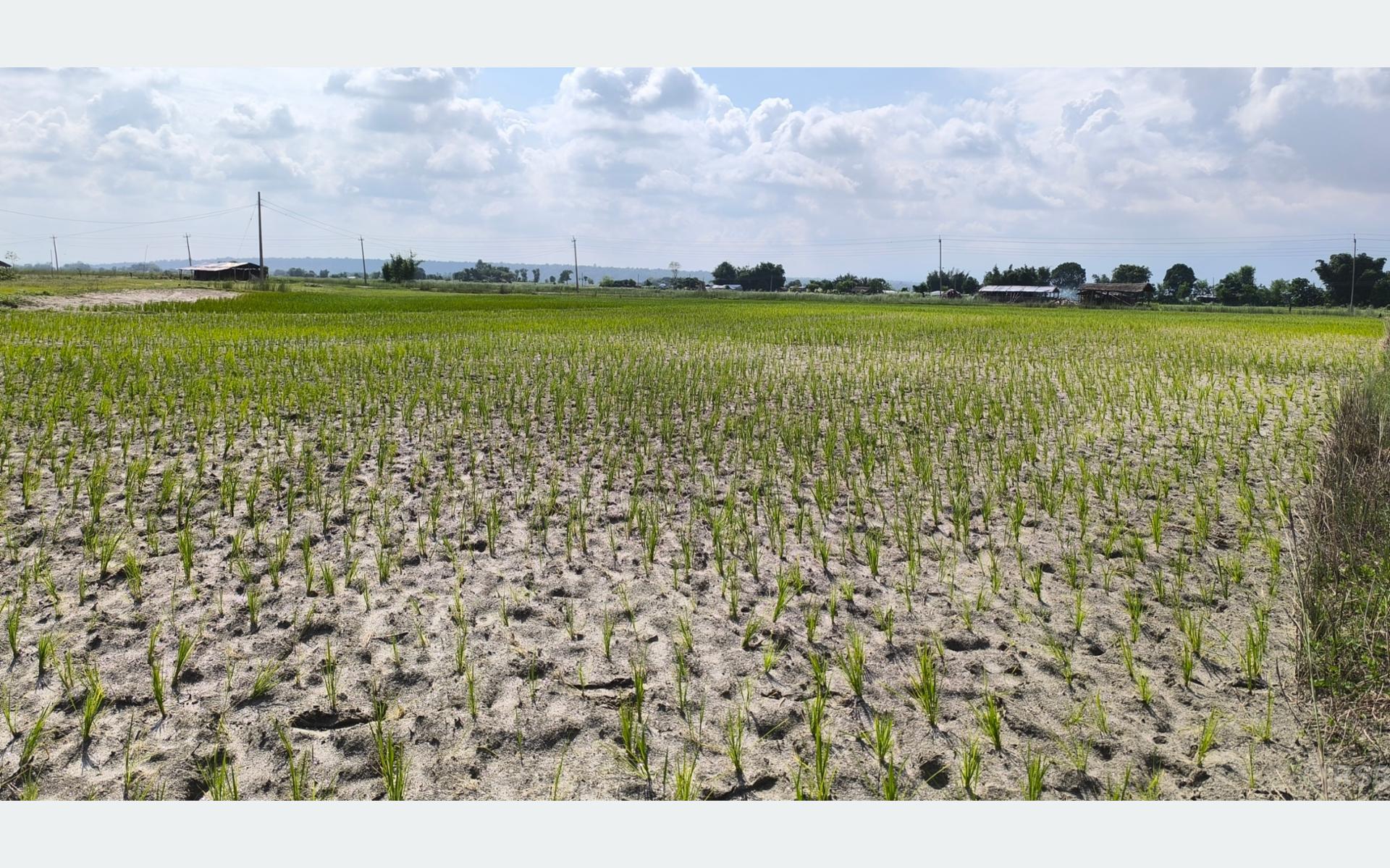
BHAIRAHAWA: Despite the active monsoon season, most farmers in Rupandehi have been forced to rely on borewells and pump sets for paddy transplantation this year due to insufficient rainfall.
Farmers in Kotahimai, Marchwari, Sammarimai, Gaidahawa and Omsatiya rural municipalities, as well as Lumbini Cultural Municipality, are drawing groundwater to irrigate their fields as rainwater and canal supplies remain inadequate.
Locals say farmers who previously depended on rainfall and canal irrigation are now incurring significant costs to operate borewells under intense heat. They fear that delayed and insufficient rainfall could affect both paddy transplantation and crop yields.
Amit Chauhan, a farmer from Lumbini Cultural Municipality, said irrigation water has failed to reach farmlands because canals built over the years have fallen into disrepair due to poor conservation and maintenance.
“There are canals, but there is no water. Because they have not been properly maintained, farmers have been unable to benefit from them,” he said.
Baijnath Barai, a resident of Marchwari Rural Municipality, said most farmers are currently irrigating their fields using pump sets.
“Many farmers are operating three to four pump sets simultaneously to complete paddy transplantation,” he said.
According to local residents, farmers in the southern belt of Rupandehi, including the Marchwar area, face the same challenge every year because of the absence of a reliable irrigation system. They said increasing dependence on groundwater, rising diesel and electricity costs, and erratic weather have significantly increased the cost of cultivation.





Comment