




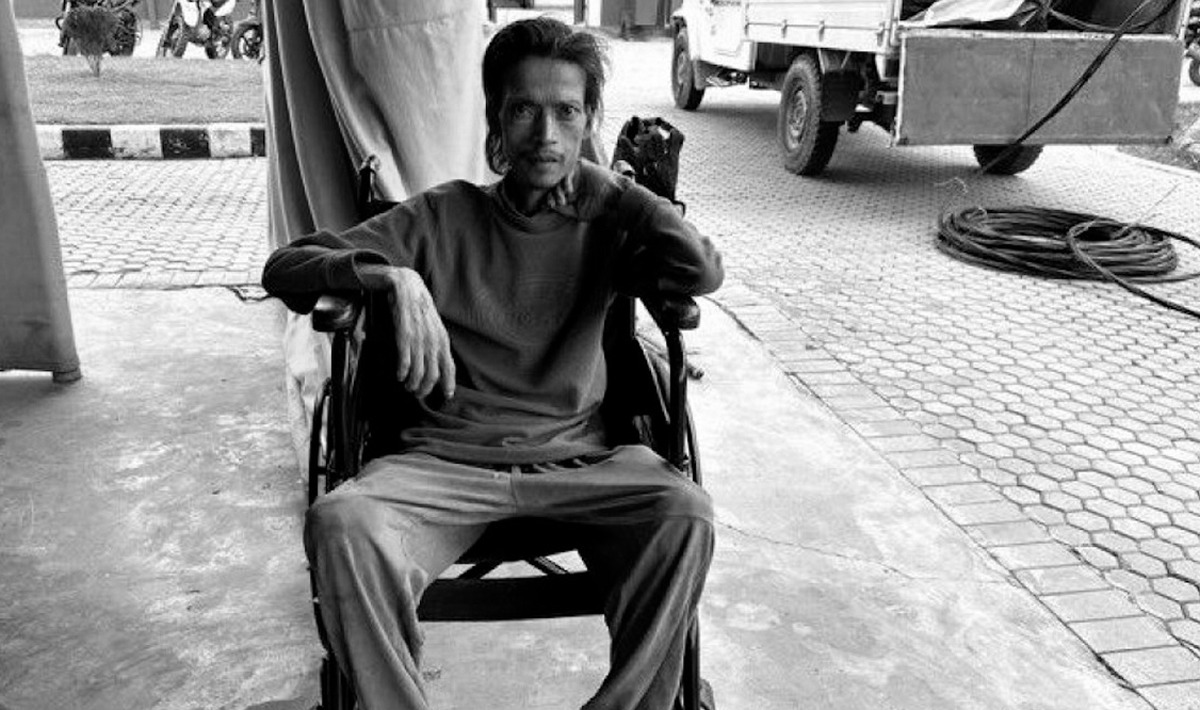
KATHMANDU: A 37-year-old man displaced from a riverside settlement in Kathmandu has died while living at a government-managed holding shelter in Kirtipur, triggering criticism from activists and raising fresh questions about the condition of families relocated from informal settlements.
Bheshraj Darji, who had been living with his wife and young daughter at the Radhaswami holding shelter in Kirtipur, died on Thursday after battling multiple health complications.
Darji was among 66 families relocated to the shelter after government authorities cleared several informal settlements across the Kathmandu Valley. He had previously lived in the Thapathali settlement before it was demolished as part of an eviction drive.
According to family members and residents, Darji had long been suffering from chronic health problems and was facing financial hardship. The loss of his home and the uncertainty surrounding his family’s future reportedly added to his difficulties.
His health deteriorated suddenly on Monday at the shelter, after which he was rushed to Bir Hospital. Despite treatment efforts, he died on Thursday afternoon.
Hospital cites septic shock and multiple health complications
According to a medical report issued by Bir Hospital, the primary cause of death was refractory septic shock, a severe condition caused by overwhelming infection that can lead to multiple organ failure.
Doctors reported that Darji’s condition had already become critically fragile. He was suffering from pus accumulation in his right lung, a severe urinary tract infection, and chronic pancreatitis.
The report also noted that he had anemia, diabetes, and deficiencies of essential nutrients, including albumin and calcium.
Activists question living conditions
Following his death, housing rights activists and members of the public criticized the government’s handling of displaced settlement residents, arguing that vulnerable individuals require adequate healthcare, nutrition, and long-term housing support.
Among those expressing concern was former energy minister and chair of the Ujyalo Nepal Party, Kulman Ghising, who said the use of bulldozers without providing sustainable alternatives had contributed to a humanitarian crisis for displaced families.
Shelter management rejects negligence claims
Shelter manager Sher Bahadur Karki rejected allegations that Darji died because of a lack of medical care.
According to Karki, Darji was already seriously ill when he arrived at the shelter. He said the resident had continued receiving his regular medication and that healthcare workers, including doctors, conducted routine health checks and monitoring at the facility.
However, concerns remain over the prolonged stay of displaced families at the shelter. Although authorities had initially indicated that residents would be relocated to more permanent arrangements within a short period, many families have continued living at the facility for months.
Darji’s death has renewed debate over the long-term management of displaced settlement residents and whether additional support mechanisms are needed for people with chronic illnesses and other vulnerabilities.





Comment