




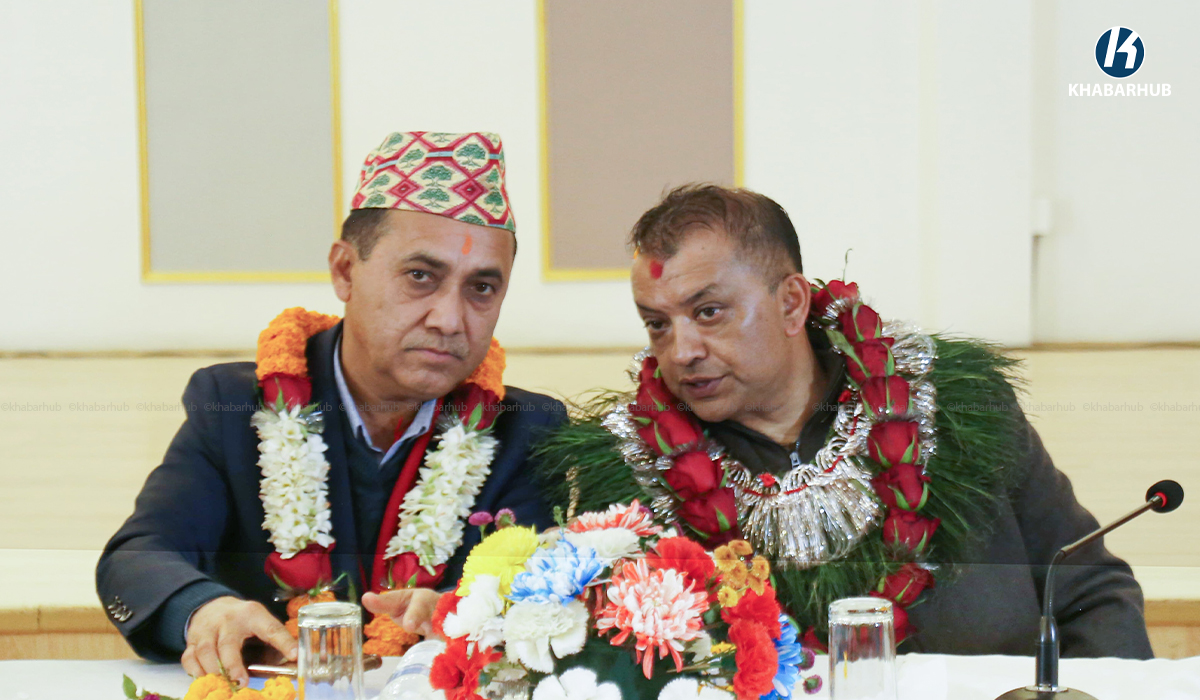
KATHMANDU: The Nepali Congress appears to be facing a major setback in the House of Representatives election, with early vote count trends showing many of its top leaders trailing behind their rivals.
The party had contested the election with the slogan “We changed the Congress, now we will change the system,” but preliminary results indicate that voters have largely rejected the message.
Early vote counts from the election held on March 5 show the party leading in only a small number of constituencies, raising concerns that the reform-oriented “Congress 2.0” campaign may have failed to gain public support.
The new leadership of the party, headed by Gagan Kumar Thapa, came to power after a special general convention held in late December following the Gen-Z Movement in Nepal. The convention replaced the leadership of Sher Bahadur Deuba and introduced a major shift in the party’s candidate selection process, fielding 110 new candidates in the parliamentary race.
However, the early results suggest that the strategy has not translated into electoral success.
In Sarlahi Constituency No. 4, party president Thapa is trailing significantly behind Amresh Singh of the Rastriya Swatantra Party. Singh has secured 1,908 votes, while Thapa has received 536 votes so far.
Similarly, party general secretary Pradeep Paudel is trailing in Kathmandu Constituency No. 5. According to the latest tally, Sasmit Pokhrel has secured 9,917 votes, while Paudel has received 3,190 votes.
Another general secretary, Gururaj Ghimire, is also trailing in Morang Constituency No. 4. Early results show Santosh Rajbanshi leading with 9,650 votes, while Ghimire has secured 1,711 votes, placing him in third position.
Among other party office bearers, joint general secretary Yogendra Chaudhary is also trailing in Dang Constituency No. 2. According to preliminary results, Devraj Pathak has secured 5,009 votes, while Chaudhary has received 1,326 votes.
The early vote count also suggests that several former party officials and senior leaders are lagging behind in their respective constituencies.
Analysts say the preliminary results indicate that voters may have rejected the new leadership that emerged after the special convention replaced the older leadership faction led by Sher Bahadur Deuba.






Comment