



For generations, the mountains have been a source of pride, identity and livelihood for communities in the Himalayas. But what happens when the very mountains we admire begin to threaten our homes, families and future?
The recent disaster in Rasuwa has brought this painful reality closer to home. Having lost six family members and seen five houses destroyed by a landslide, I believe we must rethink how we understand, prepare for and respond to the growing risks of natural disasters.
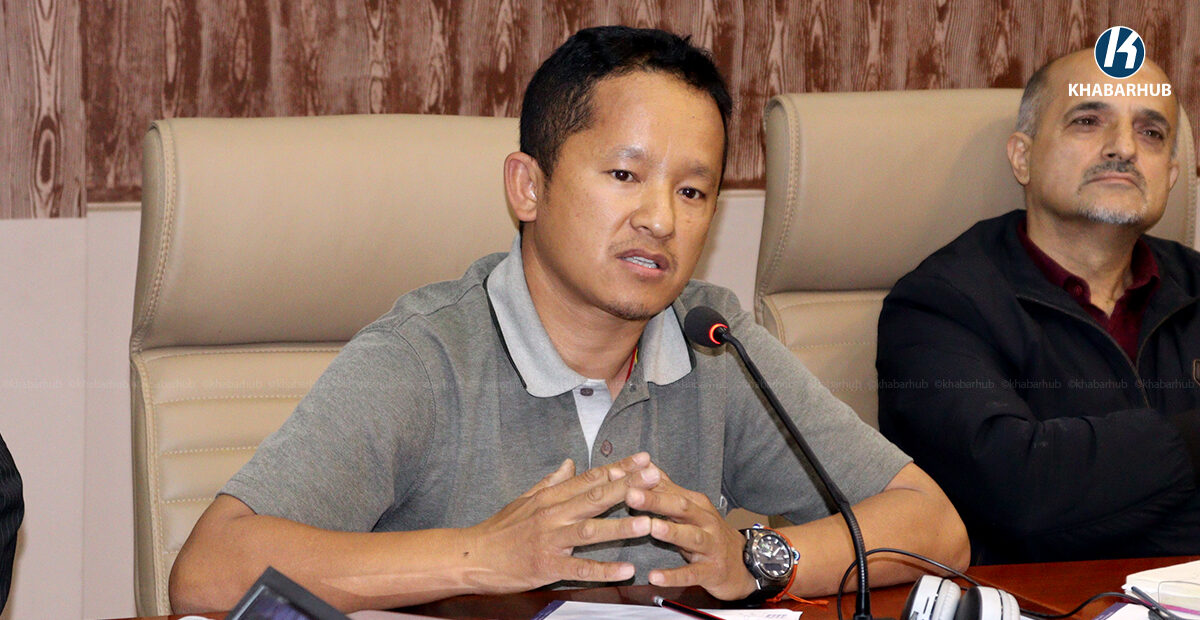
My name is Cheten Gyalpo. I am a resident of Syafrubesi in Rasuwa and am associated with the Rasuwa Chamber of Commerce. I am also involved in business activities in the border area.
Although I spent my childhood in Kathmandu, I returned to Syafrubesi after completing my graduation. I wanted to contribute something to my hometown because I believed that my own place had everything needed to build a meaningful life. From an economic and commercial perspective, Syafrubesi offers considerable opportunities. It has a favourable environment for business, and I have always believed that people do not necessarily need to leave their hometowns in search of opportunities elsewhere.
I invested my hopes, resources and future in this place. My family also built its economic foundation here because we believed in the potential of our own community.
However, our relationship with the mountains has changed dramatically.
We are people who live in the lower settlements. We have neither climbed the mountains nor spent much time in the higher Himalayan areas. In the past, looking at the mountains filled me with immense happiness and pride. Today, however, those same mountains increasingly inspire fear and uncertainty. They seem to be becoming more dangerous.
The recent landslide has taken six members of my family and destroyed five houses. It has devastated not only our family but also the economic foundation we had built over the years. We had not invested our resources elsewhere because we believed in developing our own hometown. Now, much of what we worked for has been lost.
This tragedy must teach us a serious lesson.
We often describe the present era as the age of science, technology and modern development. Yet, despite our technological progress, we cannot afford to ignore the forces of nature. We must take environmental changes and the growing risks of natural disasters much more seriously.
I do not know how far our voices will reach or whether our concerns will receive the attention they deserve. Nevertheless, I sincerely request that the conclusions and recommendations emerging from this gathering be conveyed to the relevant authorities and institutions.
From the perspective of ordinary people living in vulnerable communities, disaster preparedness and ecological balance must become priorities for everyone, including the government, policymakers, scientific institutions and the international community.
The dramatic changes taking place in the higher Himalayan regions over the past 10 to 15 years are no longer confined to the mountains. Their consequences are being felt throughout the region, from high-altitude settlements to downstream communities. These changes have caused enormous damage and threaten the lives, livelihoods and economic security of people living across the region.
Another issue that deserves serious attention is the role of hydropower development in disaster-prone areas.
In my personal observation, hydropower infrastructure also appears to have been significantly affected by the recent disaster. I recognise that hydropower has an important role in reducing dependence on polluting energy sources, generating revenue and providing relatively affordable electricity. However, the destruction of dams and other infrastructure by floods originating in the upper reaches of the river system raises serious questions about how and where such projects should be developed.
The mountains that once gave us pride should not become a source of fear. It is our collective responsibility to understand the changes taking place, protect vulnerable communities and ensure that development goes hand in hand with environmental and human safety.
We need to reconsider the location, design and safety standards of hydropower projects, particularly in areas exposed to floods, landslides and other climate-related hazards.
Development must not come at the expense of the safety of established communities. Villages do not simply emerge after hydropower projects are constructed. Many of our settlements have existed for generations, long before these projects were conceived. Some communities have lived in these places since the time of our great-grandparents. Their history, livelihoods and attachment to the land must be respected when development decisions are made.
The 2015 avalanche in Langtang was a major warning. The recent disaster in Rasuwa is another. We cannot continue treating such incidents as isolated events or unfortunate accidents. They should compel us to examine the changing Himalayan environment and prepare for the risks that may lie ahead.
What makes the situation even more concerning is that we experienced a similar disaster six or seven months ago, although its impact was much smaller than the recent catastrophe. At that time, we did not take adequate precautions or make sufficient preparations. We assumed that something worse would not happen again.
That assumption was a mistake.
We must stop waiting for disasters to strike before taking action. Risk assessments, early-warning systems, community awareness, emergency preparedness and coordinated response mechanisms must be strengthened. Local communities should be involved in identifying vulnerable areas and developing practical plans to protect lives and property.
I will conclude with the hope that this interaction and the discussions taking place today will lead to meaningful support and relief for affected communities. More importantly, I hope they will encourage the authorities and concerned institutions to take our concerns seriously and work towards long-term solutions.
People in Rasuwa have already paid a heavy price. We cannot bring back those we have lost, but we can learn from this tragedy and work to prevent similar suffering in the future.
The mountains that once gave us pride should not become a source of fear. It is our collective responsibility to understand the changes taking place, protect vulnerable communities and ensure that development goes hand in hand with environmental and human safety.
(Edited excerpt from a speech delivered by Cheten Gyalpo, a resident of Syafrubesi, Rasuwa, at an interaction programme titled “From Climate Victims to Climate Leadership”, organised by the Institute of Strategic Studies and Socio-Economic Research (ISSR) and Khabarhub on Monday at Durbarmarg, Kathmandu)




Comment