




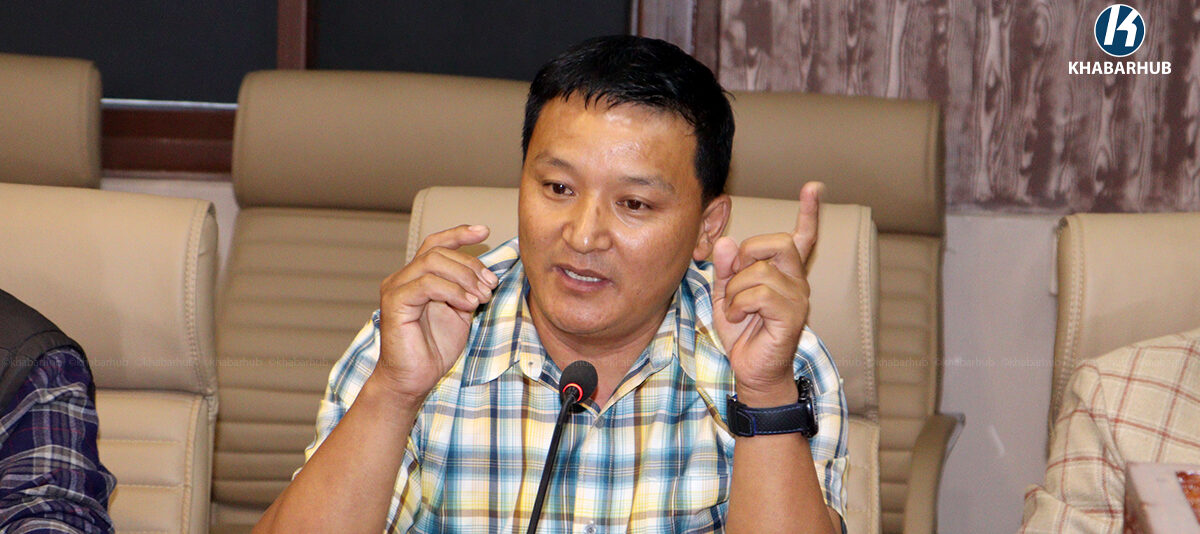
From shrinking glaciers and disappearing snowfields to increasingly dangerous climbing routes, Everest climber Jangbu Sherpa has witnessed dramatic changes in the Himalayas over the years. Drawing on decades of experience in the mountains, he warns that what we are seeing today may only be the beginning of a much greater crisis.
I have witnessed the changing face of the Everest region through my own experiences and observations. When I compare the mountain landscapes I saw in 2008 with those I encountered in 2018, the difference is striking.
In 2008, the snow was thick, forming what looked like massive piles of ice, and walking across it was relatively easy. By 2018, however, the situation had changed dramatically. Much of the snow and ice had disappeared, and the glaciers had visibly retreated.
My experiences at Camp One and Camp Two have also changed significantly. The transformation is even more pronounced as we move towards Camp Three and Camp Four. In the past, these areas were covered with thick snow, making it relatively easy to walk and pitch tents. Today, much of that snow has disappeared, leaving exposed rocks behind.
Walking on bare, uneven rock instead of snow has significantly increased the risk of slipping and falling. Climbing has also become much more difficult. The entire mountain landscape across the Solukhumbu region has changed considerably.
I am not a highly educated person. I am the son of a Sherpa, and my village is Junbesi in Solukhumbu. What I am sharing comes from my personal experiences and the little knowledge I have gained from spending years in the mountains.
When we talk about Mount Everest, we should not limit the discussion to the mountain itself. We must also pay attention to the wider Himalayan region, including Khumbu, Gorkha and other areas. From Thame to Rasuwa and Gorkha, glaciers across these regions have undergone significant changes.
I remember when I was 22 years old and went looking for my father. It took me only about half an hour to reach the mountain. Today, that same distance has become much greater because the landscape has changed. Areas that were once covered with snow have melted, leaving behind water bodies and ponds.
Who is monitoring these changes?
At present, we often reach out to people and respond only after someone goes missing or an accident takes place. This approach needs to change. We must conduct regular reconnaissance, research and risk assessments before disasters occur, rather than waiting until it is too late.
We should coordinate with local governments, including rural municipalities, to inform local communities about emerging risks. Awareness programmes and training sessions are essential so that people living in these areas understand the changing mountain environment and know how to respond to potential disasters.
What I am sharing is only a glimpse of the situation in Solukhumbu, Gorkha, Khumbu and Thame. It is like a trailer of a much larger story unfolding across the Himalayas.
There are also other pressing challenges, including access to electricity, the difficulties of living at high altitudes and the availability of basic services. The Government of Nepal must develop a comprehensive, long-term plan to address these concerns.
Speaking about my own climbing career, my last expedition was in 2021. I have successfully climbed Mount Everest 17 times. Besides Everest, I have also climbed Mount Makalu, Cho Oyu and Shishapangma. Having spent so many years on different mountains, I can say that their landscapes have changed significantly.
When I look at Mount Everest today, one question deeply concerns me: Will we still see snow on Everest 30 years from now? I fear that future generations may witness a mountain very different from the one we know today. The Khumbu Icefall, in particular, is constantly shifting.
How can we protect our mountains and communities?
The government should deploy teams to monitor and measure ice conditions at least three to four times a year, particularly during the spring and summer seasons. Regular records should be maintained to track the depth of glacial lakes, changes in their water levels and the growth or retreat of glaciers.
For instance, when snow falls in April, the melting process in May can generate large volumes of water. These flows can be substantial, and their movement can sometimes appear almost unnatural.
The water eventually flows towards glacial areas, where it can contribute to the formation and expansion of lakes around the base camp. As temperatures rise, these lakes may grow larger. When the pressure becomes too great, there is a risk of glacial lake outburst floods (GLOFs), which can cause devastating damage.
The Khumbu region is particularly vulnerable to such risks, making regular monitoring and preparedness even more important.
My humble suggestion is that we must conduct timely reconnaissance, expand scientific research and establish effective disaster-preparedness mechanisms. Settlements located in high-risk areas should be assessed, and arrangements should be made to relocate communities to safer places wherever necessary.
We must not allow people to lose their lives simply because of a lack of information or preparation. A major disaster in the Khumbu region could put thousands of lives at risk.
There are also other pressing challenges, including access to electricity, the difficulties of living at high altitudes and the availability of basic services. The Government of Nepal must develop a comprehensive, long-term plan to address these concerns.
This is what I have witnessed, experienced and understood from my years in the mountains. I may not have academic expertise, but I have seen these changes with my own eyes. And I believe we must take them seriously before it is too late.
(Edited excerpt from remarks by Everest climber Jangbu Sherpa at an interaction programme titled “From Climate Victims to Climate Leadership”, organised by the Institute of Strategic Studies and Socio-Economic Research (ISSR) and Khabarhub on Monday at Durbarmarg, Kathmandu)





Comment