




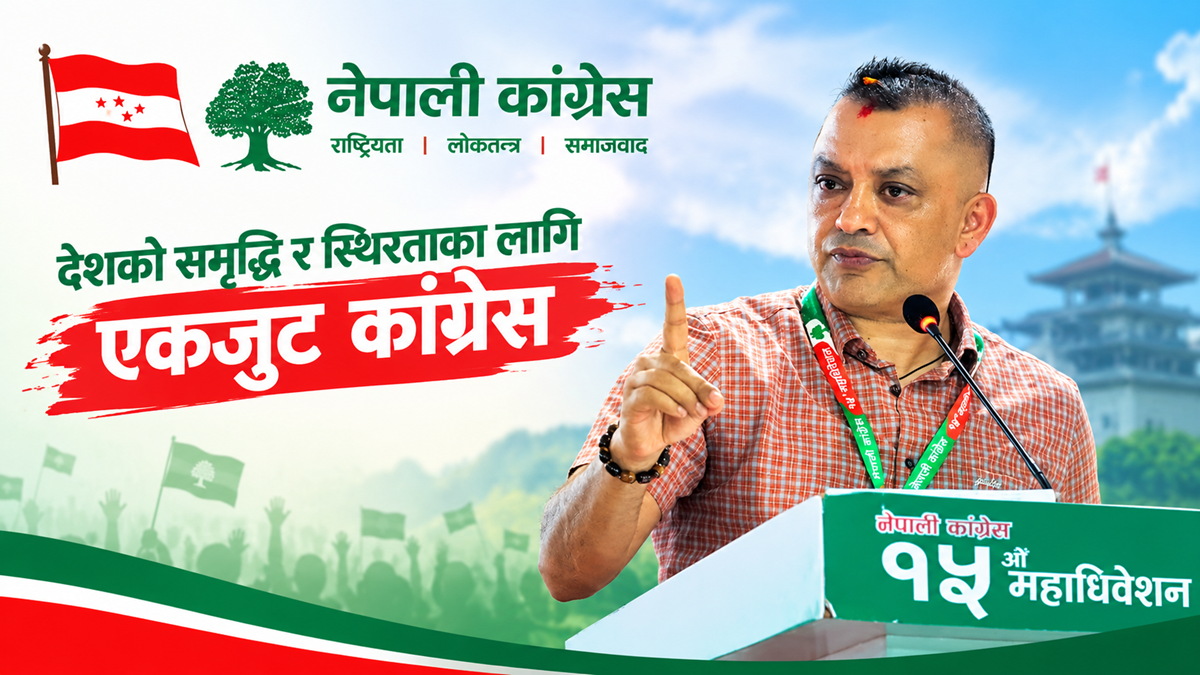
KATHMANDU: The Nepali Congress has adopted a clear policy of not forming electoral alliances with other political parties ahead of future elections.
In the political proposal presented by party President Gagan Thapa at the ongoing 15th General Convention in Kathmandu, the Congress has committed to contesting elections under its own election symbol—the tree—with its own candidates and programmes.
The party has decided to contest elections independently, concluding that its identity and connection with voters have been weakened by alliances with other parties in previous elections.
“We are firm in our commitment to compete under the tree symbol with our own candidates and programmes without forming an alliance before the elections,” the document states.
The section on political integrity, which outlines what the party will and will not do, also makes clear that the Congress will not make its political identity dependent on pre-election alliances or electoral arithmetic. The party has declared that it should be capable of winning elections on the strength of its own symbol, programmes and candidates.
No power-sharing through political cooperation
The Congress has also adopted a policy of not turning cooperation with other political parties into an arrangement for sharing power.
The document states that the party may cooperate with other forces on issues of national importance, including the defence of the Constitution, disaster response, national security, justice and public interest. However, such cooperation should not lead to the division of political power or state institutions.
The Congress has committed not to equate political cooperation with the exchange of positions, influence or state benefits.
“No vote” option and voting rights for Nepalis abroad
As part of electoral reform, the Nepali Congress has proposed initiating a public debate on introducing a “no vote” or “none of the candidates” option, allowing voters to reject all candidates.
The proposal also calls for reforms aimed at making elections fairer and less expensive and ensuring voting rights for Nepalis living abroad and citizens residing outside their permanent constituencies.
The party has further proposed bringing issues such as mobile reserved constituencies and reforms to the representation system into public debate.




Comment