




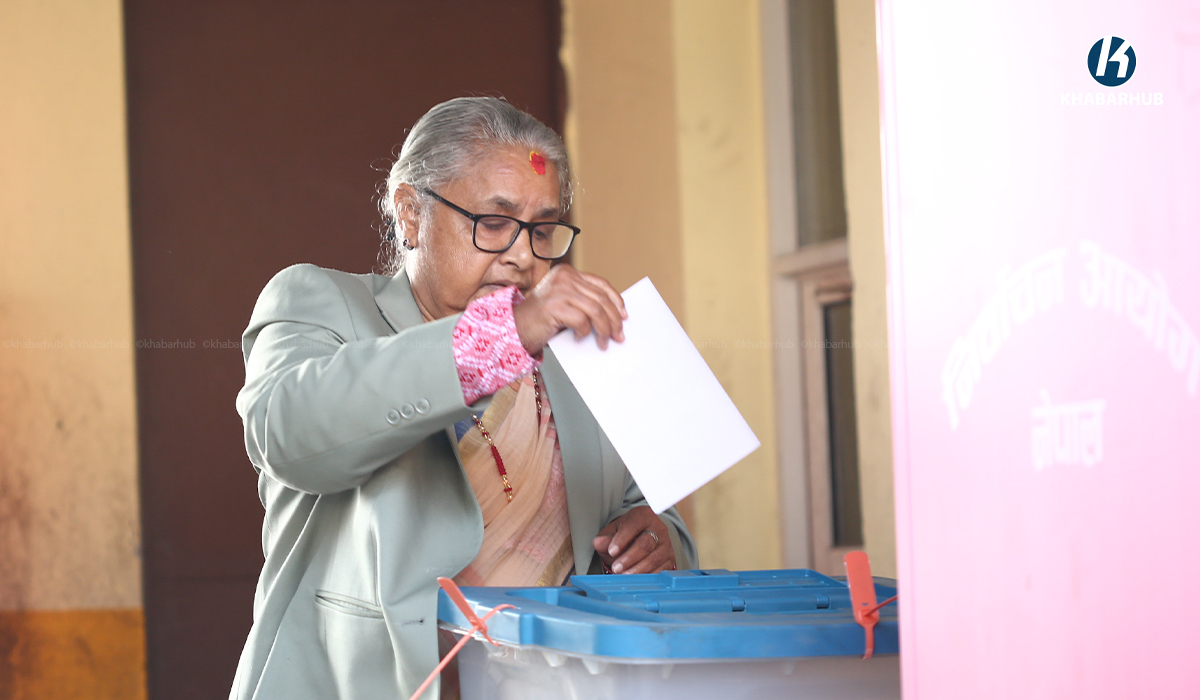
KATHMANDU: The government led by Prime Minister Sushila Karki, which assumed office amid the political crisis following the Gen-Z movement on September 8 and 9, has successfully executed its main mandate by overseeing the House of Representatives election.
When President Ram Chandra Paudel appointed Karki as Prime Minister, she was given the mandate to hold the HoR election by March 5. Despite a period of political uncertainty, the Karki government has managed to implement this crucial mandate.
The government successfully coordinated and managed key political, economic, diplomatic, and security matters to ensure a smooth electoral process.
Diplomatic, security, and financial management successes
Following the Gen-Z movement, the government faced the difficult challenge of maintaining trust between long-established political parties and the movement’s leadership while preparing for the elections.
Through multiple phases of dialogue and understanding, the government managed to bring major political parties, Gen-Z leaders, and even smaller factions such as those led by Durga Prasai to the polls. Some minor communist factions and Durga Prasai’s supporters had announced election boycotts, but these did not derail the process.
Notably, the government successfully recovered a large portion of weapons looted during the Gen-Z protests before the election. No incidents of these looted weapons being used during the election were reported, marking a major security achievement for the Karki administration.
From a financial perspective, managing election funding was another challenge, given prior mismanagement and the government’s limited revenue. Finance Minister Rameshore Khanal effectively reallocated resources from past budgets to cover electoral expenses without additional strain.
Comparatively peaceful election
Across 165 constituencies, the HoR polls were conducted in a manner that was comparatively more peaceful than past elections. Previously, incidents such as ballot or booth capture, violent clashes, and even fatalities were reported.
This year, aside from minor incidents—such as a ballot snatching by a political party representative in Malu, Dolakha, a stray gunfire, minor scuffles in Sarlahi-4, and a brief gunfire in Udayapur—no major disruptions occurred.
However, despite the generally calm conduct of the election, overall voter turnout appears lower than in previous elections. The Election Commission Nepal has yet to release nationwide voting figures, but preliminary data as of 4 pm suggest turnout may be below 60 percent.
The Karki government’s handling of security, diplomatic coordination, and financial management, alongside the relatively peaceful conduct of elections, reflects a notable success in executing its mandate amid challenging political conditions.



Comment