



The 31st Conference of the Parties (COP31) to the United Nations Framework Convention on Climate Change (UNFCCC), scheduled for 9–20 November 2026 in Antalya, Türkiye, presents an important opportunity for Nepal to redefine its position in global climate negotiations. For a country among the most vulnerable to climate change, the conference should not simply become another occasion to highlight the risks, losses, and damages associated with global warming. Rather, it should be an opportunity to advance a clear diplomatic agenda, demand climate justice, secure adequate financial support, and establish mountain resilience as a permanent priority in international climate discourse.
Nepal must move beyond being recognised merely as a climate-vulnerable country and position itself as a strategic voice in shaping global climate solutions. This requires a better understanding of the international negotiation landscape, stronger diplomatic capacity, and clearly defined national priorities.
Established in 1992, the UNFCCC provides the principal multilateral framework for international cooperation on climate change. Since 1995, its annual conferences have brought countries together to negotiate collective responses to global warming and advance the commitments of the 2015 Paris Agreement. The central objective is to limit global temperature rise to well below 2°C while pursuing efforts to restrict it to 1.5°C above pre-industrial levels. Achieving this requires substantial reductions in greenhouse gas emissions, a transition towards net-zero emissions, stronger adaptation measures, and greater resilience to climate impacts.
There has been some progress through three decades of international negotiations. Without the UNFCCC process and subsequent climate agreements, projected global warming could have been considerably higher. However, the gap between political commitments and actual implementation remains alarming. The UN Environment Programme’s Emissions Gap Report 2025 estimated that warming could reach 2.3–2.5°C even if current national climate pledges were fully implemented, while existing policies pointed towards approximately 2.8°C. The latest 2026 assessment further underscores the urgency of substantially accelerating emission reductions to return to the 1.5°C pathway. These projections demonstrate that existing commitments remain insufficient and that international climate negotiations must focus increasingly on implementation rather than declarations alone.
Glacier retreat, glacial lake expansion, changing precipitation patterns, landslides, and increasing disaster risks threaten not only mountain communities but also downstream populations and economies across South Asia.
At COP31, Türkiye will host the conference under the leadership of its Environment Minister, Murat Kurum, while Australia’s Climate Minister, Chris Bowen, will lead the formal negotiations. This division of responsibilities makes the conference particularly important from a diplomatic perspective. The negotiations will revolve around mitigation and emission reductions, climate finance, adaptation and resilience, loss and damage, and the implementation of the Paris Agreement. Climate justice must remain central to all these discussions.
Among these issues, climate finance is arguably the most decisive. Without predictable, accessible, and adequate financial resources, developing countries cannot implement their climate commitments. The financial requirements of mitigation, adaptation, and loss and damage are enormous, particularly for countries with limited fiscal capacity and high exposure to climate risks. The New Collective Quantified Goal (NCQG), agreed at COP29 in Baku, established a commitment to mobilise at least USD 300 billion annually for developing countries by 2035. It also called for efforts to scale up financing from all sources to at least USD 1.3 trillion annually by the same year. While this represents progress, the commitments remain far below the overall requirements of developing countries, and questions concerning the sources, accessibility, predictability, and quality of finance remain unresolved.
For Nepal, the challenge is particularly significant. The National Adaptation Plan (2021–2050) estimates a requirement of approximately USD 7.4 billion, while the country’s Third Nationally Determined Contribution identifies substantial additional investment needs for mitigation and adaptation. Taken together, the country’s climate commitments require substantial annual investment, placing considerable pressure on an economy with limited domestic resources. The central concern is not simply how much international climate finance is announced, but how much actually reaches vulnerable countries and communities.
Nepal must therefore take a firm position in favour of grant-based climate finance rather than loans. Climate-vulnerable countries should not be pushed further into debt to address a crisis they have contributed very little to creating. Financing for climate adaptation, disaster recovery, and loss and damage should be based on climate justice and the principle of common but differentiated responsibilities. International financial institutions and development partners must also simplify access procedures, reduce administrative barriers, and ensure that support reaches the most vulnerable communities.
Another major challenge is adaptation. While mitigation seeks to reduce the causes of climate change, adaptation addresses its existing and anticipated impacts. Across the world, countries are developing National Adaptation Plans and integrating climate considerations into development policies. However, the financing available for adaptation remains substantially below estimated requirements. Nepal has developed its National Adaptation Plan and is also advancing local and provincial adaptation initiatives. The development of provincial climate change strategic action plans, including recent efforts in Madhesh and Lumbini, demonstrates the importance of translating national commitments into practical programmes at subnational levels. Climate adaptation must become an integral part of national development planning, public investment, agriculture, infrastructure, water resource management, and disaster risk reduction.
Loss and damage represents another critical pillar of international climate negotiations. Unlike mitigation and adaptation, this agenda addresses the adverse impacts of climate change that cannot be avoided through emission reductions or adaptation measures alone. The destruction of mountain ecosystems, irreversible glacier loss, and catastrophic climate-related disasters illustrate why a dedicated international mechanism is necessary.
By advancing the mountain agenda, demanding climate justice, strengthening regional partnerships, and building a credible negotiating capacity, Nepal can turn its climate vulnerability into a compelling case for global action. COP31 offers an important opportunity to make that transition.
The establishment of the Fund for Responding to Loss and Damage at COP27 was an important diplomatic achievement. Nepal also contributed to advancing this agenda through its engagement in international negotiations. However, the mechanism continues to face challenges, particularly regarding the availability of finance, access procedures, and the scale of support. Recent developments offer some encouragement. Following the devastating Rasuwa–Bhotekoshi disaster, the Fund’s Board decided to allocate USD 20 million to Nepal for affected communities. This is an important recognition of the country’s needs, but it also demonstrates the much larger challenge of financing recovery and reconstruction. Nepal must use its existing Post-Disaster Needs Assessment as an authoritative basis for recovery proposals while actively advocating for simpler, faster, and more accessible funding arrangements.
Beyond these conventional negotiation areas, Nepal must give particular priority to the mountain agenda. The Himalayas are among the world’s most climate-sensitive ecosystems, yet mountain concerns have not received the sustained international attention they deserve. Glacier retreat, glacial lake expansion, changing precipitation patterns, landslides, and increasing disaster risks threaten not only mountain communities but also downstream populations and economies across South Asia.
The consequences extend far beyond national borders. The Himalayan region is a major source of freshwater for millions of people, supporting agriculture, biodiversity, hydropower, and economic activities across the region. The stability of mountain ecosystems is therefore directly connected to regional and global water security. Climate resilience cannot be achieved without mountain resilience.
Nepal has already played an important role in advancing the mountain agenda at recent climate conferences, including COP29 and COP30. However, this agenda should not have to depend on repeated diplomatic efforts simply to secure its inclusion in annual discussions. It must become a permanent and recognised component of the UNFCCC process. The proposed Annual Dialogue on Mountains and Climate Change should be strengthened, institutionalised, and linked to concrete international commitments.
The concept of “Sagarmatha to the Sea” offers an important framework for this purpose. It connects the vulnerability of mountain ecosystems with the wider climate challenges facing rivers, coastal areas, and oceans. Nepal should work with countries across the Hindu Kush Himalaya region, as well as other mountain and island nations, to establish a stronger collective voice. A summit-to-sea approach would demonstrate that the health of mountain ecosystems is inseparable from the sustainability of downstream water systems and marine environments.
Nepal’s recent experience of devastating climate-related disasters should be presented not merely as an appeal for sympathy, but as compelling evidence for stronger international action and support.
Nepal’s diplomatic strategy must also recognise the different interests and negotiating positions of international country groupings. The European Union places considerable emphasis on mitigation and the transition towards low-carbon economies. The Alliance of Small Island States (AOSIS) advocates strongly for ambitious emission reductions and protection against rising sea levels. The African Group of Negotiators highlights climate justice, adaptation, and financial support, while the Least Developed Countries (LDC) group provides Nepal with an important platform for advancing common concerns regarding vulnerability and limited adaptive capacity.
Nepal should use these negotiating platforms strategically, building alliances where national interests converge. Its engagement with mountain countries, particularly within the Hindu Kush Himalaya region, must also become more systematic. Climate diplomacy requires more than participation in international meetings; it demands preparation, negotiation skills, scientific evidence, strategic partnerships, and the ability to translate national priorities into internationally accepted outcomes.
By advancing the mountain agenda, demanding climate justice, strengthening regional partnerships, and building a credible negotiating capacity, Nepal can turn its climate vulnerability into a compelling case for global action. COP31 offers an important opportunity to make that transition.
The World Leaders’ Summit on 11–12 November 2026 will provide another important opportunity. Nepal’s highest political leadership should use this platform to communicate a clear national position on mountain resilience, climate finance, loss and damage, and climate justice. High-level political engagement is essential because many important political commitments and financial announcements are shaped through discussions among Heads of State and Government. Nepal’s recent experience of devastating climate-related disasters should be presented not merely as an appeal for sympathy, but as compelling evidence for stronger international action and support.
Ultimately, Nepal needs a coherent and long-term climate diplomacy strategy. The country’s international engagement should be guided by what can be described as the Five Agendas for Climate Justice: institutionalising the mountain agenda; securing predictable, accessible, grant-based climate finance; strengthening mechanisms for addressing loss and damage; promoting technology transfer and research cooperation; and enhancing national capacity for climate diplomacy and negotiations.
These priorities must be supported by stronger domestic institutions. Climate diplomacy cannot succeed without coordination among government agencies, scientific institutions, provincial governments, local authorities, and the private sector. Nepal’s hydropower and renewable energy sectors, for example, can make meaningful contributions to global mitigation efforts. Such contributions should be recognised and incorporated into the country’s broader climate strategy. Similarly, domestic financial institutions and the private sector must be encouraged to participate in climate-resilient investments.
COP31 should therefore be approached not as another annual international gathering, but as an opportunity to strengthen Nepal’s position in global climate governance. The country’s credibility will depend on the quality of its negotiation strategy, the strength of its evidence, the consistency of its diplomatic engagement, and its ability to implement commitments at home.
The central message must be clear: climate justice for Nepal cannot be achieved without justice for its mountains, and global climate resilience cannot be secured without mountain resilience. Nepal must insist that mountain ecosystems receive the international recognition, financing, and institutional attention they deserve. Above all, climate finance must be provided primarily through grants rather than loans, and international commitments must translate into tangible support for vulnerable communities.
The future of Nepal’s climate diplomacy depends on moving beyond the language of vulnerability towards strategic leadership. By advancing the mountain agenda, demanding climate justice, strengthening regional partnerships, and building a credible negotiating capacity, Nepal can turn its climate vulnerability into a compelling case for global action. COP31 offers an important opportunity to make that transition.
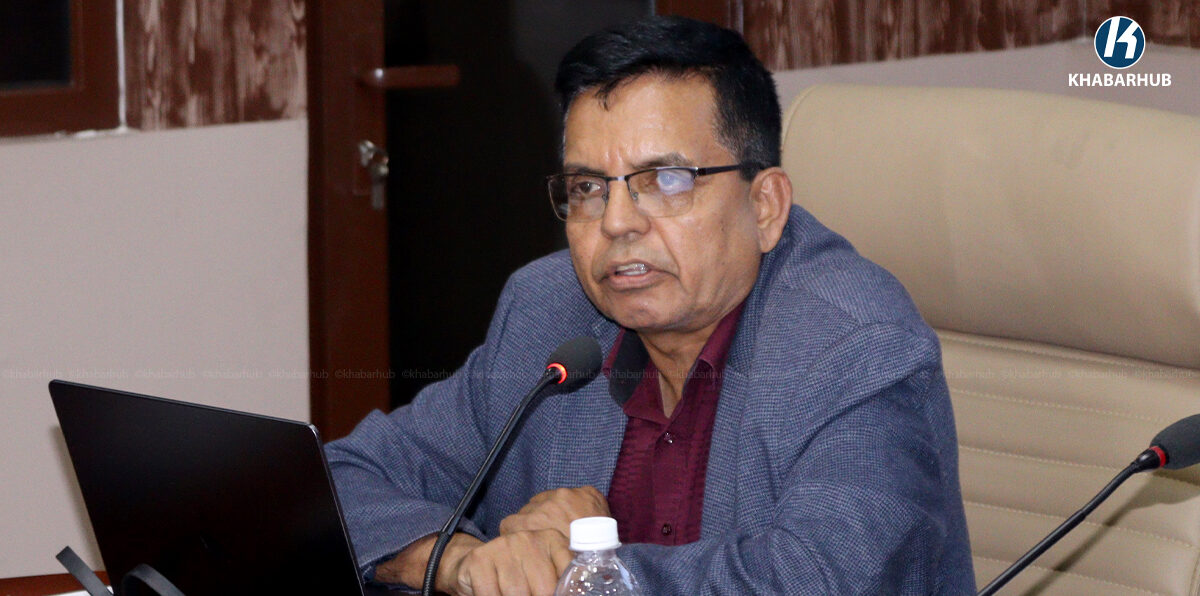
(Edited excerpts from the remarks delivered by former secretary and climate expert Dr. Pem Kandel at a symposium under the theme “Nepal After UNGA: From Climate Victims to Climate Leadership” organized by the Institute for Strategic and Socio-Economic Research (ISSR) and Khabarhub in Kathmandu on Monday.)





Comment