




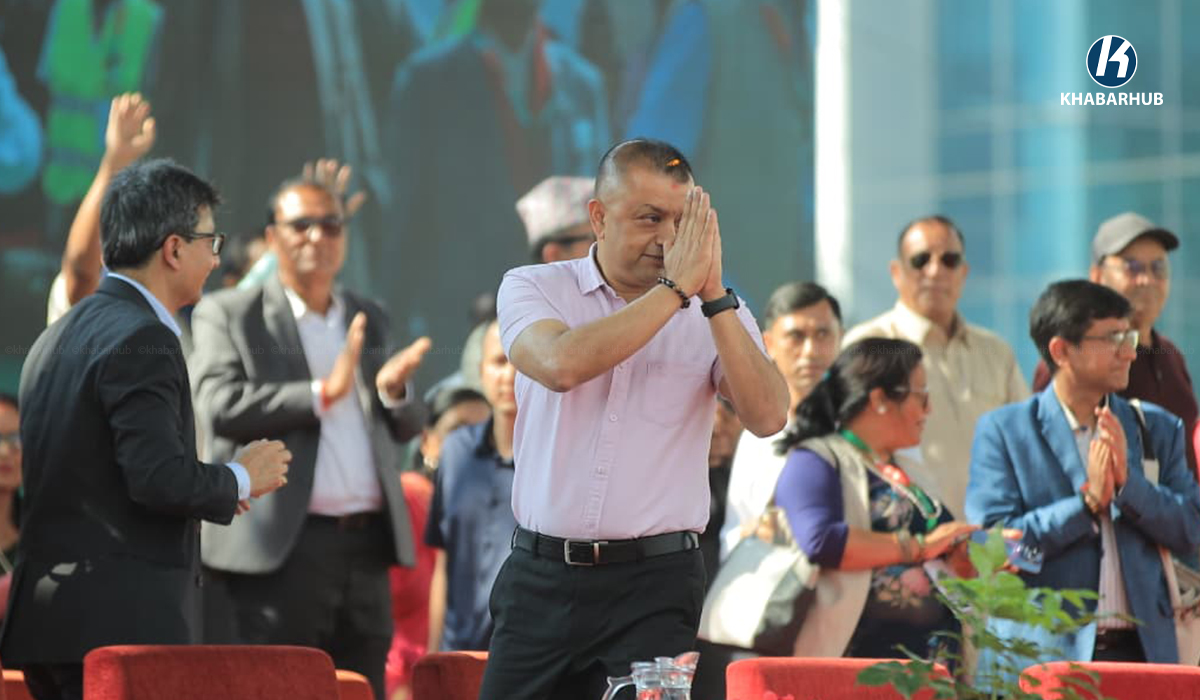
KATHMANDU: Nepali Congress President Gagan Thapa’s political report prepared for the party’s 15th General Convention outlines an economic and political-economic direction for the next four years.
The report proposes updating the party’s ideology by linking BP Koirala’s socialist vision with a modern social market economy in line with the needs of the 21st century and changing socio-economic conditions.
Rather than treating economic growth alone as a measure of prosperity, the report puts forward the concept of a “Prosperous Nepal, Respected Nepali,” with education, health, nutrition, skills and capabilities as the foundations of development. It emphasises that development should not be pursued by the government alone, but through collaboration among citizens, communities, the private sector, cooperatives, universities and experts.
On the economy and private sector, the report recognises the private sector not merely as a source of tax revenue but as a key engine of wealth creation, production, innovation and employment.
It proposes ensuring the security of private investment and policy stability, creating a business-friendly environment, and shifting the relationship between the government and private sector from regulation and tax collection towards cooperation and partnership.
The report aims to shift Nepal’s economy from a model dependent on imports and remittances towards a production-oriented economy. Agriculture, hydropower, energy, tourism, industry and digital technology have been identified as key pillars of economic growth, while remittances earned through foreign employment would be channelled into productive sectors such as agriculture, industry, tourism and technology.
It also proposes making hydropower and clean energy the main foundations for industrialisation and green energy exports.
To address economic inequality, the report introduces the concept of “predistributive justice,” proposing that opportunities should be made more equal from the outset rather than relying on taxes and subsidies only after inequality has already widened.
Under this approach, the report proposes ensuring equal access to education, healthcare, skills, finance and employment so that citizens have a fair starting point.
The report also views climate change not only as an environmental issue but as an economic and national security concern. It proposes linking green energy and sustainable use of natural resources with economic opportunities while ensuring intergenerational justice.
The report presents an economic-political approach to strengthening the economy by expanding domestic capacity in energy, food, finance and technology, treating national independence as extending beyond formal sovereignty.






Comment