




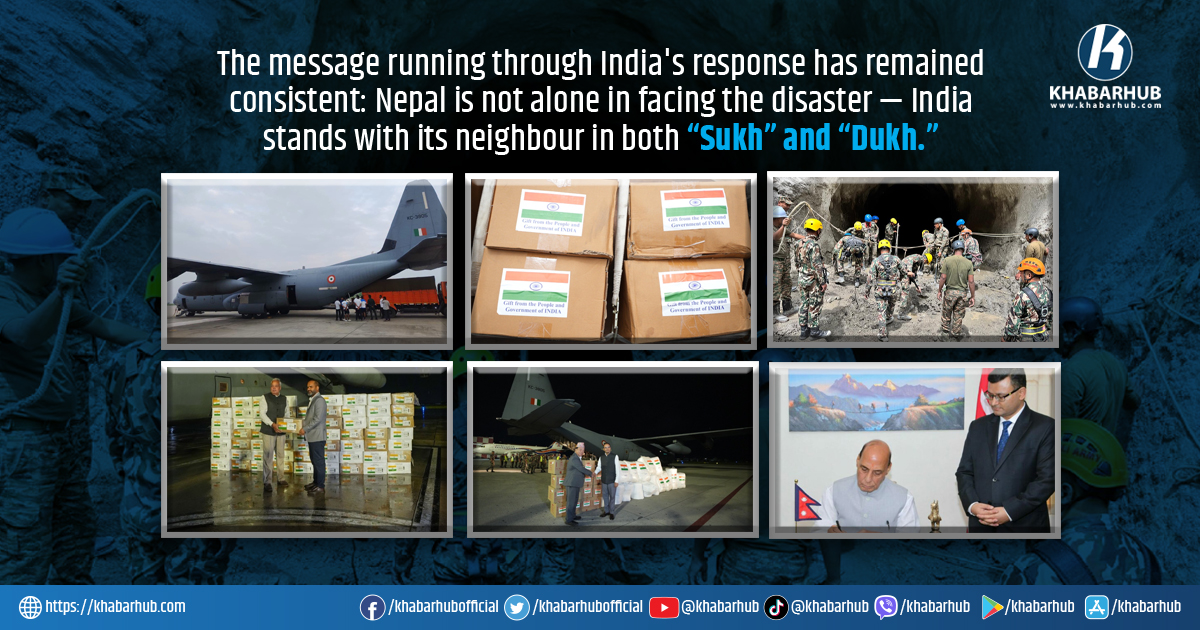
KATHMANDU: The flood came like a wall of water, mud and rock, tearing through mountain settlements with such force that roads disappeared, bridges were swept away and hydropower tunnels became potential graves.
But as Nepal confronts the devastating aftermath of the August 26 Bhotekoshi floods, India has moved swiftly to stand alongside its neighbour, delivering emergency supplies within hours and expanding its response into a broad operation involving rescue teams, doctors, forensic experts, medicines, technical specialists and infrastructure support.
Eight days after the disaster, floodwaters have receded in many areas, but Nepal’s emergency is far from over. Thousands of people have been killed or remain missing, communities have been cut off by destroyed roads and bridges, and the search continues for workers believed to be trapped inside hydropower tunnels.
Against this backdrop, India’s response has evolved rapidly. What began with a 10-tonne emergency airlift on the night of the disaster has grown into a multi-layered assistance operation involving the Indian Air Force, Indian Army, medical personnel, forensic specialists and technical teams. India has also offered the services of its National Disaster Response Force (NDRF) and is helping Nepal restore damaged road connectivity through Bailey bridges.
While India has been assisting Nepal’s broader disaster response, it has also been conducting a major operation to locate its own citizens. The situation is particularly complicated because Indian nationals were affected on both sides of the Nepal-China border.
At the same time, New Delhi has been conducting a parallel consular operation to locate and assist hundreds of Indian nationals affected by the disaster, including pilgrims returning from the Kailash Mansarovar Yatra, hydropower workers and other travellers and residents.
The scale of the catastrophe has made the response a race against time. Rescue teams are searching unstable and debris-filled areas for survivors, forensic specialists are working to identify recovered remains, helicopters are carrying essential supplies to isolated communities, and engineers are preparing temporary crossings to reconnect places cut off by the destruction.
The disaster was linked to an ice-rock avalanche near the Nepal-Tibet border that triggered a devastating flash flood through the Bhotekoshi River basin. The resulting destruction spread beyond the immediate river corridor, damaging settlements, roads, bridges, hydropower infrastructure and other public facilities.
For Nepal, the priority remains saving lives and finding the missing. For India, the response has simultaneously become an exercise in humanitarian assistance, specialised disaster response and the protection of its citizens caught in one of the country’s worst natural disasters in recent years.
Meanwhile, Indian Ambassador to Nepal Naveen Sribvastava visited the Indian technical team stationed in Syabrubesi near Chilime on Thursday. “They continue their operations in excavating Chilime power house tunnel for rescue operations,” he said on X.
The Indian technical team working alongside Nepali Army has already explored 100 metres inside the tunnel using specialized equipment. They plan to bring in heavy equipment to further advance into the tunnel.
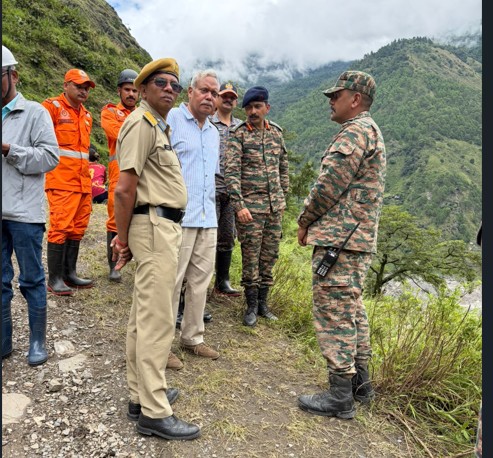
“Saw firsthand the difficult swamp like ground and challenging terrain in which our and Nepali teams are making progress. Even though the conditions are tough but both Indian and Nepali teams continue their work undettered,” he added.
Indian PM Modi assures Nepal of India’s full support
India’s response began at the highest political level on the day the disaster struck.
Indian Prime Minister Narendra Modi spoke by telephone with Nepal Prime Minister Balendra Shah (Balen), and conveyed condolences over the loss of lives and destruction caused by the floods.
Modi assured Shah that India stood with Nepal and was ready to provide all possible humanitarian assistance. The political assurance was quickly followed by practical action.
Indian diplomatic missions in Kathmandu and Beijing began coordinating with Nepali and Chinese authorities to locate Indian nationals, establish contact with people who had become uncontactable, assist those stranded and facilitate their return where necessary.
The Embassy of India in Kathmandu also remained in contact with Nepali authorities and other stakeholders as the rescue operation developed.
The response reflected the unusual movement of people between Nepal and India. Citizens of the two countries routinely cross the open border for employment, business, pilgrimage, education, family visits and tourism. Indian nationals are also present in Nepal’s hydropower and other sectors.
That close connection meant the Bhotekoshi disaster created a humanitarian crisis for Nepal as well as a major consular challenge for India.
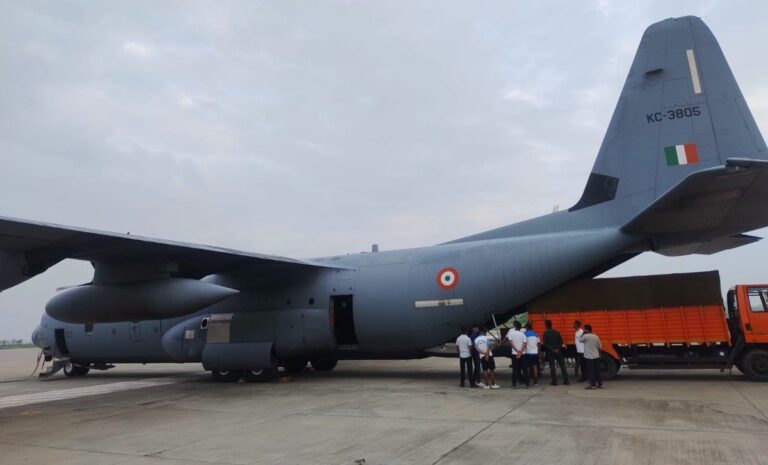
Additionally, India’s support for Nepal’s relief efforts following the Rasuwa flash floods continues with the 6th and 7th relief flights, operated by C-130J aircraft, arrived in Kathmandu last night carrying 21.5 tonnes of relief assistance, including forensic kits and medical supplies.
The materials were handed over to the Government of Nepal and will help strengthen ongoing Nepali relief and rescue efforts, while supporting communities affected by the floods.
First Indian Air Force aircraft reaches Nepal
India’s emergency response moved from diplomatic assurances to direct humanitarian assistance within hours.
On August 26, an Indian Air Force C-130J Hercules aircraft transported 10 tonnes of emergency relief material to Nepal. The consignment included temporary shelters, blankets, hygiene kits, solar lamps and medicines.
The supplies were aimed at meeting the immediate needs of people who had lost homes, electricity and access to basic services. The speed of the first airlift was particularly significant because the floods had damaged or destroyed ground transportation routes. Roads and bridges in several affected areas were either washed away or rendered unusable, making air transport one of the quickest ways to move relief material and specialist personnel.
The first flight also established the pattern of India’s subsequent assistance: emergency supplies would be followed by medical support, rescue specialists, technical personnel and forensic expertise as the nature of the crisis became clearer.
India sends a major second consignment
On August 27, India dispatched a second major consignment of humanitarian assistance. An Indian Air Force C-17 Globemaster aircraft carried 37.5 tonnes of relief supplies. The consignment included 28.5 tonnes of tents, blankets, hygiene kits, solar lamps, dewatering pumps, kitchen sets and generator sets.
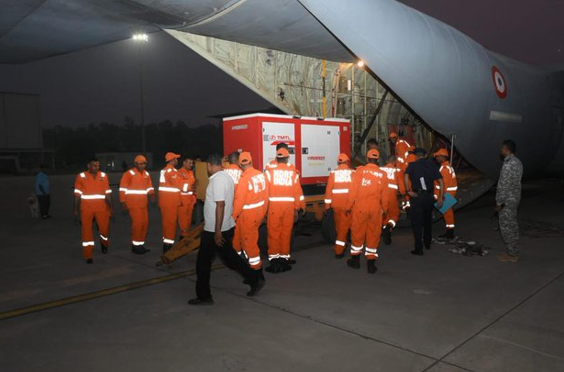
The aircraft also transported eight tonnes of medicines and one tonne of food items. The composition of the shipment reflected the changing requirements of disaster operations. Tents and blankets were needed by displaced families, while generators and solar lamps could help communities and response teams cope with damaged electricity networks. Dewatering pumps could assist emergency teams dealing with accumulated water, while medical supplies addressed injuries and other health needs.
Indian External Affairs Minister S. Jaishankar said India remained in close and continuous contact with Nepalese authorities and would continue supporting the relief operation.
The second airlift demonstrated that India’s assistance was not limited to a one-time emergency shipment. It was being adjusted according to the needs emerging from the affected areas.
Relief materials formally handed over in Kathmandu
On August 27, Indian relief materials were formally handed over in Kathmandu. Indian Ambassador to Nepal Naveen Srivastava handed over 10 tonnes of relief materials to Nepal’s Minister for Culture, Tourism and Civil Aviation Khadka Raj Poudel ‘Ganesh’ at Tribhuvan International Airport.
Jaishankar had earlier announced that humanitarian assistance, disaster-relief supplies and essential medicines were being sent to Nepal for people affected by the floods, particularly in Rasuwa.
India also expressed condolences to families who had lost relatives and reiterated its solidarity with the people of Nepal. The handover marked the beginning of a sustained flow of Indian assistance as the scale of the destruction became clearer.
Jaishankar and Khanal discuss the crisis
India’s diplomatic engagement continued alongside the logistical response. On August 28, Jaishankar spoke with Nepal’s Foreign Minister Shisir Khanal about the disaster and India’s support for rescue and relief operations.
India said its assistance would be based on Nepal’s requirements and coordinated with Nepali authorities. That coordination became increasingly important as international assistance began arriving. The challenge was not simply to send equipment and personnel but to ensure that specialist resources could be deployed where they were most useful without duplicating existing Nepali operations.
The Indian assistance was therefore integrated into a broader Nepali-led response involving the government, security agencies, the Nepali Army, police, medical institutions and other emergency-response bodies.
Medical and tunnel-rescue teams arrive
August 28 brought another important expansion of India’s assistance. An Indian Air Force C-130J Hercules transported medical personnel and a tunnel-rescue reconnaissance team to Nepal, along with another 10 tonnes of humanitarian material.
The additional supplies included portable generator sets, dignity kits, food, water-purification tablets and medicines. The deployment of tunnel-rescue specialists was particularly important because the floods had severely affected hydropower projects in the region.
Workers were believed to be trapped or unaccounted for inside some project tunnels. Unlike conventional flood rescue, such operations involve confined underground spaces, unstable structures, accumulated mud and debris, water infiltration, restricted access and potentially dangerous ventilation conditions.
The initial Indian reconnaissance team was tasked with assessing the affected sites and determining what equipment, personnel and technical expertise would be required for a larger rescue operation. The team also included medical personnel who could assess the health requirements associated with a prolonged and technically difficult rescue.
Tunnel rescue becomes one of Nepal’s biggest challenges
The search for hydropower workers has emerged as one of the most difficult parts of the disaster response. According to information from hydropower project authorities, hundreds of people were believed to be trapped or unaccounted for inside tunnels at various projects.
The flood carried huge quantities of mud, soil, rocks and other debris into project areas. In some locations, access roads and structures around the hydropower facilities were also damaged.
For rescue teams, reaching the tunnels is only the first challenge.
They must determine whether the surrounding structures are stable, identify safe access routes, remove debris and water, maintain ventilation and ensure that rescuers are not exposed to secondary collapses or other hazards.
The urgency is immense because every hour matters when people may be trapped underground. But moving too quickly without stabilising the environment could place rescuers themselves in danger.
The Indian tunnel-rescue specialists were therefore brought in to complement Nepal’s own capabilities at a time when the operation had become increasingly technical.
Larger Indian Army tunnel-rescue team deployed
Following the initial reconnaissance, India deployed a larger specialist team. A 13-member Indian Army tunnel-rescue team equipped with specialised equipment travelled to Nepal on a subsequent Indian Air Force C-130J flight.
The team began working with Nepali disaster-response personnel and the Nepali Army in search-and-rescue operations involving affected hydropower tunnels and other difficult locations.
According to the Indian Embassy, the team has been conducting search-and-rescue operations in coordination with the Nepali Army in areas where workers are suspected to be trapped. The operation has included efforts around flood-affected hydropower projects such as Chilime and Langtang.
The Indian team’s role is not limited to physically removing debris. Specialists must assess possible access points, determine the condition of tunnels, identify appropriate equipment and help develop a safe sequence for reaching areas where workers may remain trapped.
Teams from other countries, including China and South Korea, have also offered or provided specialist assistance at Nepal’s request. The international involvement has become increasingly focused on specific technical challenges rather than general relief.
‘Rat Miners’ offer additional expertise
India’s wider disaster-response community has also offered assistance. The ‘Rat Miners’ team from Delhi-NCR, which participated in the successful rescue of 41 workers trapped inside the Silkyara tunnel in Uttarakhand in 2023, has offered to contribute its expertise to Nepal’s tunnel-rescue operation.
The disaster consequently created an unusually large consular operation for India alongside the country’s humanitarian assistance to Nepal.
Anand Kansal, the team’s volunteer coordinator in Pune, has written to Indian Ambassador to Nepal Naveen Srivastava informing him that the team is ready to participate if its expertise is required. The Silkyara rescue experience is relevant because it involved working in extremely confined conditions and overcoming blocked access to reach trapped workers.
Whether additional specialists are deployed will depend on the assessment of Nepali authorities and the teams already operating at the affected hydropower sites. For now, the focus remains on creating safe access to the tunnels and determining whether people can still be reached.
India works to rescue its nationals
While India has been assisting Nepal’s broader disaster response, it has also been conducting a major operation to locate its own citizens. The situation is particularly complicated because Indian nationals were affected on both sides of the Nepal-China border.
Some were in Nepal when the floods struck, while others had been travelling from Tibet or returning from the Kailash Mansarovar Yatra.
The Embassy of India in Kathmandu said the Government of India was coordinating with both Nepal and China to facilitate rescue operations, establish contact with missing people, ensure the safety of stranded citizens and arrange their return where necessary.
According to information cited from local government sources in China, 598 Indian nationals safely crossed into Nepal from China over a two-day period, while around 900 Indian nationals remained on the Chinese side but were reported to be safe and contactable.
On the Nepal side, Indian citizens were rescued with assistance from the Nepali Army and security agencies. The Indian Ministry of External Affairs established a round-the-clock control room, while the Indian embassies in Kathmandu and Beijing activated 24-hour helplines.
The Indian Embassy remained in contact with Nepali authorities and other stakeholders, helping rescued citizens return to India where necessary. It also assisted Indian pilgrims returning from the Kailash Mansarovar Yatra, whose movements were disrupted by the disaster.
More than 163 Indian nationals rescued
As the search and rescue operation progressed, the number of Indian nationals safely brought out of affected areas increased.
The Indian Air Force has provided the airlift capacity. The Indian Army has contributed tunnel-rescue expertise. Medical personnel have supported emergency healthcare. Forensic specialists are assisting with victim identification, while technical teams are supporting infrastructure restoration.
According to Indian officials, more than 163 Indian citizens had been rescued, while more than 200 remained missing or unaccounted for in subsequent updates. The figures have changed as authorities have established contact with people who were initially listed as missing and as additional rescue operations brought people out of affected areas.
Among those rescued were Kailash Mansarovar pilgrims, workers associated with the Andritz Company at the Upper Trishuli Hydropower Project and other Indian citizens.
A group of 21 people from Tamil Nadu who had been rescued subsequently returned to India and were welcomed by Jaishankar. The presence of such a large number of Indian nationals in Nepal is partly explained by the close movement of people between the two countries.
The 1950 India-Nepal Treaty provides a framework for close reciprocal relations, including provisions facilitating the movement and economic activity of citizens. Thousands of Indians therefore live, work, travel and undertake religious journeys in Nepal. The disaster consequently created an unusually large consular operation for India alongside the country’s humanitarian assistance to Nepal.
Forensic experts join the search for answers
As the immediate rescue operation continued, another urgent challenge emerged: identifying those who had died. Bodies and human remains were being recovered from flood-affected areas, but many remains were incomplete or in poor condition. In such cases, visual identification can be difficult or impossible.
India responded by sending specialist forensic personnel trained in DNA analysis. A 19-member Indian forensic contingent arrived in Nepal to assist Nepali authorities with victim identification.
The team has been working with Nepali forensic specialists to analyse DNA samples collected from recovered remains and samples provided by relatives searching for missing family members.
Indian experts have worked at the Central Forensic Science Laboratory of the Nepal Police and the National Forensic Science Laboratory in Khumaltar. They have also coordinated with specialists at Tribhuvan University Teaching Hospital.
The forensic operation is particularly important because the distinction between a missing person and an unidentified victim has profound consequences for families. For relatives, a confirmed identification can end days or weeks of uncertainty and allow funeral and other family processes to begin.
DNA analysis can also help authorities establish accurate records of casualties when conventional identification methods are not possible. The work therefore represents an important second stage of disaster response—providing answers to families after the immediate struggle to save lives.
India offers NDRF assistance
India has also offered the services of its National Disaster Response Force to strengthen Nepal’s search-and-rescue capacity. The NDRF has extensive experience in responding to floods, collapsed structures and other major disasters.
The combination of emergency medicines, medical personnel and healthcare facilities has become another component of India’s wider assistance.
The offer provides Nepal with an additional source of specialised manpower and equipment if further assistance becomes necessary. India’s response has consequently involved several institutions, each contributing a different capability.
The Indian Air Force has provided the airlift capacity. The Indian Army has contributed tunnel-rescue expertise. Medical personnel have supported emergency healthcare. Forensic specialists are assisting with victim identification, while technical teams are supporting infrastructure restoration.
Together, these capabilities form a broader response than the delivery of relief materials alone.
Bailey bridges to reconnect isolated communities
The destruction of roads and bridges has created another major challenge. The Bhotekoshi floods washed away more than two dozen bridges and damaged numerous roads, cutting off communities and making it difficult to transport relief supplies, emergency personnel and construction equipment.
India has responded by providing Bailey bridge equipment to help restore road connectivity. Bailey bridges are prefabricated temporary structures made from modular steel components. Because the sections can be transported to a damaged location and assembled there, they can restore crossings considerably faster than the construction of conventional permanent bridges.
According to the Indian Embassy in Kathmandu, 16 trucks carrying equipment required to construct a 230-foot-long, single-lane modular steel bridge have arrived in Nepal.
The embassy has also said equipment required for seven additional Bailey bridges will be provided. India is preparing to send a technical team to assist with their installation.
The importance of the bridges extends beyond transportation. A functioning road link can determine whether an isolated community receives food, medicine and fuel on time. It can also allow ambulances, rescue vehicles and construction equipment to reach areas that would otherwise remain inaccessible. Temporary connectivity is particularly important during the transition from rescue to recovery.
Permanent roads and bridges may take months to rebuild. A Bailey bridge can provide an interim connection while engineers assess the damage and permanent reconstruction is planned.
Indian doctors support displaced flood victims
India’s medical assistance has extended beyond the medicines delivered through its relief flights. Doctors and health workers are also supporting people displaced by the disaster. Many flood victims have taken shelter at the Nepal-India Friendship Building, where a hospital operating with Indian assistance is providing healthcare and other necessary services.
The social and cultural links between Nepal and India have historically encouraged citizens, charitable organisations and civil-society groups to participate in humanitarian efforts during major disasters.
Displacement creates health risks of its own. People may lose access to regular medicines, medical records and familiar healthcare facilities. Flood conditions can also increase the risk of injuries, infections and waterborne illnesses. Medical personnel therefore have an important role not only in treating injuries but also in supporting displaced families as they remain away from their homes.
The combination of emergency medicines, medical personnel and healthcare facilities has become another component of India’s wider assistance.
Fifth Indian assistance batch arrives
India’s assistance continued to expand as the emergency entered its second week. On September 2, India sent its fifth batch of assistance to Nepal.
Jaishankar announced that an Indian Air Force aircraft was carrying an 11-member rescue team equipped with specialised search-and-rescue equipment, along with 5.5 tonnes of essential medicines.
The medicines include antibiotics, painkillers, surgical materials and other emergency supplies.
The fifth shipment underlined how the character of India’s response has changed since the first aircraft arrived on August 26.
The initial priority was to provide basic relief materials quickly. As Nepal’s needs became clearer, subsequent assistance increasingly focused on specialist rescue, medical care, forensic identification and technical support.
The latest deployment therefore represents both continuity and expansion: India continues to supply basic humanitarian material while adding specialised capabilities required for the more difficult stages of the response.
Relief assistance reaches about 74 tonnes
The scale of India’s material assistance has increased through the successive airlifts. Indian officials have said that the latest consignment brought the total relief assistance provided through the operation to approximately 74 tonnes.
Earlier, Ambassador Srivastava had said more than 67 tonnes of relief material had already been transported to Nepal through India’s relief flights. The supplies have included tents, blankets, hygiene kits, solar lamps, generators, kitchen sets, dewatering pumps, food items, medicines and other emergency equipment.
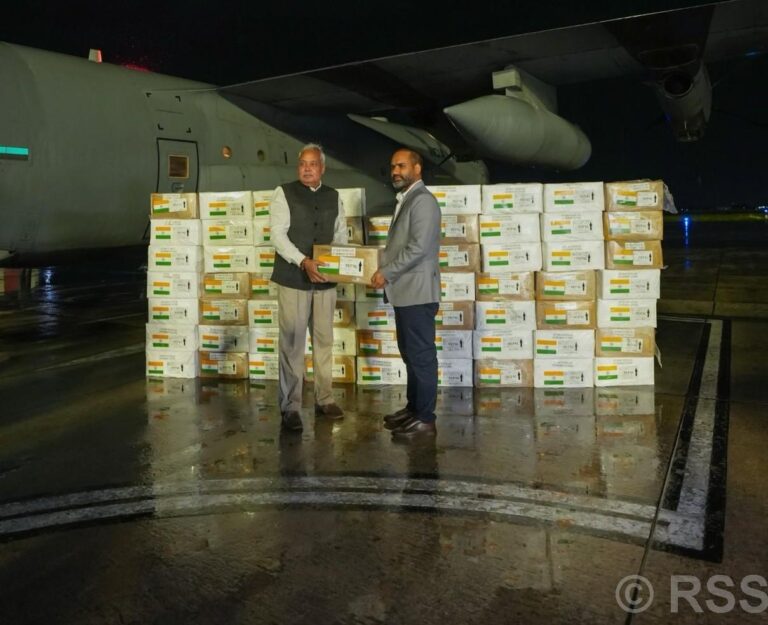
These materials serve different purposes. Some are intended directly for survivors, while others support rescue teams and emergency operations in areas where electricity, water systems and transportation networks have been damaged.
The growing volume of assistance also illustrates the continuing nature of the crisis. The need for relief did not end when the floodwaters began to recede.
Sonu Sood brings people-to-people assistance
India’s response has not been confined to government institutions. Bollywood actor and philanthropist Sonu Sood travelled to Kathmandu with his charity foundation team carrying food and blankets for flood-affected communities.
Sood said his team would meet affected people, assess their needs and determine what additional assistance could be provided. He had earlier expressed solidarity with Nepal following the disaster and pledged support ranging from emergency supplies to rebuilding assistance.
His involvement is separate from the official Indian government response, but it adds a people-to-people dimension to the wider assistance coming from India.
The scale of the disaster has become clearer with every day of search operations. Casualty figures have changed rapidly as bodies are recovered from remote locations and previously inaccessible areas.
The social and cultural links between Nepal and India have historically encouraged citizens, charitable organisations and civil-society groups to participate in humanitarian efforts during major disasters.
Fourth aircraft carries relief and technical support
On August 30, India sent its fourth aircraft carrying approximately 11 tonnes of relief supplies and a technical team for flood-affected communities. By then, the Indian response had moved well beyond the emergency airlift launched four days earlier.
The operation now involved humanitarian supplies, medical personnel, tunnel-rescue specialists, forensic experts and technical teams. The successive flights allowed India to adjust the composition of its assistance as the situation changed.
The early shipments were dominated by shelters, food, medicines and basic emergency equipment. Later deployments focused increasingly on the specialised challenges that emerged during the rescue and recovery phases.
That progression is characteristic of a major disaster response: the needs of survivors change rapidly as the immediate emergency gives way to search operations, medical care, infrastructure restoration and reconstruction.
Rajnath Singh expresses solidarity with Nepal
India’s political leadership has continued to publicly express solidarity with Nepal. On August 31, Indian Defence Minister Rajnath Singh visited the Embassy of Nepal in New Delhi and signed the condolence book in memory of those killed in the disaster.
On behalf of the Government and people of India, Singh conveyed condolences to Nepal over the loss of lives and destruction caused by the August 26 floods. He noted that the disaster had affected Nepali citizens as well as foreign nationals, including Indians.
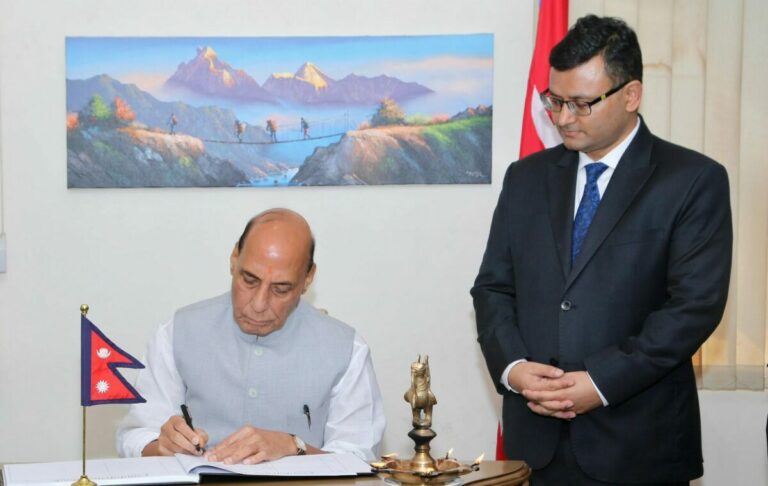
Singh expressed sympathy to families who had lost loved ones and wished those injured a speedy recovery. Describing India and Nepal as close friends and partners, he reaffirmed India’s commitment to Nepal’s search, rescue and rehabilitation efforts.
He used the phrase “Sukh Dukh Ke Saathi”—companions in good times and bad—to describe the relationship between the two countries.
The gesture came as Indian personnel were already working on the ground, linking the political message of solidarity with an operational response involving aircraft, rescue teams, medicines and technical assistance.
Nepal thanks India and China
Nepal’s leadership has also publicly acknowledged international assistance. Prime Minister Balendra Shah thanked India and China for their swift response while addressing the House of Representatives.
The Bhotekoshi disaster has also triggered a broader discussion about the risks facing Himalayan communities. Prime Minister Shah has said experts linked the flash flood in Rasuwa to an ice-rock avalanche in the Himalayas.
Shah said the government had been coordinating with the international community from the beginning and had sought to expedite procedures for receiving international assistance.
According to reports, teams from India and China expressed interest in assisting Nepal soon after the disaster. Initial aerial assessments were complicated by difficult ground conditions and access problems. As weather and operational conditions improved, foreign teams were able to reach affected locations and contribute specialised assistance.
Shah specifically highlighted India’s relief supplies and specialist support, including tunnel search-and-rescue assistance and forensic work to identify victims. The acknowledgement came as Nepal was dealing with an enormous logistical challenge: managing casualties and missing people while simultaneously attempting to restore roads, bridges, electricity and other essential infrastructure.
Death toll and missing persons remain a major concern
The scale of the disaster has become clearer with every day of search operations. Casualty figures have changed rapidly as bodies are recovered from remote locations and previously inaccessible areas.
In the latest figures cited in the supplied updates, the death toll had risen above 1,200, while thousands remained unaccounted for. Nepal Police reported that bodies had been recovered from districts including Chitwan, Nawalparasi East, Nawalparasi West, Nuwakot, Gorkha, Dhading, Rasuwa and Tanahu.
Postmortem and legal identification procedures have been completed for more than 1,100 bodies, while dozens had been handed over to relatives. Details of unidentified bodies have been made available to assist families searching for missing relatives.
Security forces have rescued thousands of people, while thousands of personnel have been deployed for search and rescue, relief distribution, debris clearance and management of recovered bodies.
Continuing rainfall has repeatedly disrupted operations, particularly in parts of Rasuwa and Nuwakot. The difficult weather, unstable terrain and destroyed infrastructure have made access to some locations exceptionally challenging.
The search inside hydropower tunnels continues
Despite the progress made in rescuing stranded people, the search for workers believed to be trapped inside hydropower tunnels remains one of the most urgent tasks.
Many hydropower projects in the affected region are situated in steep mountain terrain. Their access roads can be destroyed by landslides and floods, while project tunnels may become blocked by mud, rocks and water. Rescue teams therefore face a combination of underground and surface-level obstacles.
Before entering a damaged tunnel, specialists need to understand the structural condition of the site. A passage blocked by debris may conceal further instability, while water accumulation can create additional hazards.
The rescue operation has consequently become a highly technical undertaking requiring specialised equipment and careful coordination. Indian specialists are working alongside Nepali personnel, while teams from other countries have also contributed expertise.
Taken together, these measures cover much of the disaster-response chain: emergency relief, rescue, medical care, victim identification, restoration of access and reconstruction.
The operation remains a race against time, but it must be conducted in a way that does not create further casualties among rescuers.
Climate change raises a wider Himalayan warning
The Bhotekoshi disaster has also triggered a broader discussion about the risks facing Himalayan communities. Prime Minister Shah has said experts linked the flash flood in Rasuwa to an ice-rock avalanche in the Himalayas.
He argued that the disaster demonstrated the growing risks facing mountain communities and said Nepal must make the relationship between such disasters and climate change a stronger issue in international forums. Foreign Minister Shisir Khanal has similarly called for greater international accountability.
Khanal has argued that Nepal contributes only a negligible share of global greenhouse gas emissions while facing disproportionate consequences from climate-related hazards.
Nepal has therefore increasingly framed the issue not only in terms of emergency assistance but also in terms of loss, damage, climate justice and the responsibilities of the international community.
The Bhotekoshi disaster has brought these concerns into sharp focus because the destruction has affected communities and infrastructure located in a fragile Himalayan environment.
India supports reconstruction of damaged school
India’s assistance is also beginning to extend beyond emergency rescue and relief. New Delhi has pledged support for the reconstruction of Tribhuvan Trishuli Secondary School in Bidur, Nuwakot, which was severely damaged by the floods.
The school has a long history of Nepal-India development cooperation. Its earlier structure was associated with Indian development assistance, while its latest building was constructed with grant assistance under India’s High Impact Community Development Project.
The school was swept away by the August 26 flood, disrupting education for students in the area. India has now committed to supporting its reconstruction so that educational activities can resume.
For the affected community, rebuilding the school represents more than replacing a damaged building. It means restoring a basic public service and helping children return to an element of normal life after a traumatic disaster.
The commitment also demonstrates how the Indian response is beginning to move from emergency assistance towards recovery.
From saving lives to rebuilding communities
The different elements of India’s assistance illustrate the successive stages of disaster response. The first requirement was immediate humanitarian relief: shelters, blankets, food, medicines and basic supplies.
The next challenge was supporting emergency operations with generators, dewatering pumps, water-purification tablets and other equipment. As the scale of the disaster became clearer, specialised tunnel-rescue teams were deployed to address one of the most technically difficult aspects of the operation.
The Bhotekoshi response has also illustrated how diplomatic solidarity can be backed by practical assistance. Modi’s telephone call to Shah came on the day of the disaster. Jaishankar subsequently spoke with Foreign Minister Khanal.
Medical teams were mobilised to support survivors, while forensic specialists began the painstaking process of identifying recovered remains. At the same time, India offered NDRF assistance and began supplying Bailey bridge equipment to restore transportation links.
The commitment to rebuild the damaged school represents another stage of the process.
Taken together, these measures cover much of the disaster-response chain: emergency relief, rescue, medical care, victim identification, restoration of access and reconstruction.
Assistance extends beyond Indian nationals
India’s responsibility to protect its citizens has been a significant part of the response, but the country’s assistance has not been restricted to Indian nationals. The relief materials are intended for communities affected by the disaster. Indian medical personnel are supporting displaced people, forensic specialists are assisting Nepal with victim identification and tunnel-rescue teams are working alongside Nepali personnel.
This distinction matters because the disaster has affected entire communities. India’s personnel are therefore operating as part of a wider response coordinated with Nepali institutions rather than establishing a separate operation for Indian citizens alone.
The coordination with the Nepali Army, security agencies, government authorities and forensic institutions allows Indian assistance to complement Nepal’s own response.
Connectivity will determine the pace of recovery
The destruction of roads and bridges could become one of the biggest obstacles to Nepal’s recovery. Emergency assistance can reach a community only if people and supplies can get there.
That is why the Bailey bridge programme is significant beyond the immediate rescue phase. A temporary crossing can reopen an important route while permanent reconstruction is being designed, funded and completed.
Even a single restored bridge can shorten travel times for ambulances, rescue vehicles, food deliveries and construction teams. The 230-foot modular bridge and the planned additional Bailey bridges could therefore become important links between isolated communities and the wider transportation network.
Once the immediate search operation ends, these connections will also be needed to deliver construction materials, fuel, food and other supplies required for recovery.
India recalls its earlier earthquake response
India’s current role has also revived memories of its response to Nepal’s devastating 2015 earthquake. Following the earthquake, India was among the first countries to send relief and rescue teams to Kathmandu. The current disaster is fundamentally different.
The 2015 earthquake required urban search-and-rescue capabilities and responses to collapsed buildings. The Bhotekoshi disaster has created a combination of flash flooding, landslides, mountain access problems, hydropower tunnel rescue and mass victim identification.
India has consequently adapted its assistance to the specific nature of the present emergency. The common element between the two responses has been the speed with which India moved from political solidarity to practical assistance.
A close relationship tested by crisis
The breadth of India’s response is rooted partly in the unusually close relationship between Nepal and India. The two countries share an open border and extensive family, cultural and economic ties.
India’s role is also likely to evolve as Nepal’s requirements change—from emergency supplies and specialist rescue to infrastructure restoration and reconstruction assistance.
People cross between the two countries for work, trade, education, tourism, pilgrimage and family reasons. That movement creates strong connections in normal times but also creates complex responsibilities during disasters.
The presence of Indian nationals among those affected by the Bhotekoshi floods is therefore unsurprising. India has had to pursue two objectives simultaneously: ensuring the safety of its citizens and supporting Nepal’s broader humanitarian response.
The combination of consular assistance and disaster-response support has allowed New Delhi to address both responsibilities at the same time.
Diplomacy backed by action
The Bhotekoshi response has also illustrated how diplomatic solidarity can be backed by practical assistance. Modi’s telephone call to Shah came on the day of the disaster. Jaishankar subsequently spoke with Foreign Minister Khanal.
Rajnath Singh visited the Nepali Embassy in New Delhi and signed the condolence book. Meanwhile, Indian Air Force aircraft were transporting relief material, medicines and specialist personnel to Nepal.
Indian Army teams were preparing for tunnel rescue. Forensic specialists were working on DNA identification. Medical personnel were assisting displaced people. Technical teams were preparing infrastructure support. The diplomatic message and the operational response have therefore moved in parallel.
The road ahead: from rescue to reconstruction
The immediate priority remains the same: find people who may still be alive, recover the missing and identify those who have died. But Nepal’s challenge will not end when the rescue operation does.
Homes will have to be rebuilt. Roads and bridges will need permanent reconstruction. Hydropower projects will require structural assessment and repair. Schools and other public buildings must reopen. Communities will also need reliable access to electricity, healthcare, food, transportation and other essential services.
Some elements of India’s assistance are already addressing these longer-term requirements. Bailey bridges can provide temporary transportation links. Medical teams can support displaced populations. Forensic experts can help families determine the fate of missing relatives. School reconstruction can restore education.
The character of the response is therefore gradually shifting from emergency intervention towards recovery.
A neighbour standing with Nepal
The Bhotekoshi disaster has presented Nepal with an enormous humanitarian and logistical challenge. It has also demonstrated the practical dimension of Nepal-India relations during a crisis. India’s response began within hours, with a 10-tonne emergency shipment on August 26.
It expanded through additional consignments carrying relief materials, medicines, generators, shelters, food and emergency equipment. It then moved into specialised areas, including hydropower tunnel rescue, medical assistance and forensic identification, while Indian diplomatic missions worked to locate and assist citizens caught in the disaster.
The deployment of Bailey bridge equipment and the commitment to support the reconstruction of Tribhuvan Trishuli Secondary School indicate that the assistance is now extending beyond immediate life-saving operations towards restoring essential infrastructure and community services.
India stands with its neighbour not only in moments of celebration and prosperity, but also in the hardest hours of loss and uncertainty—a “Sukh Dukh Ke Saathi” as Nepal begins the long journey from disaster to recovery.
The fifth assistance flight on September 2, carrying an 11-member rescue team and 5.5 tonnes of essential medicines, further underscored the continuing nature of India’s commitment.
For Nepal, however, the road ahead remains difficult.
The search for missing people continues. Rescue teams are still confronting dangerous conditions inside hydropower tunnels. Forensic specialists are working to identify victims. Roads and bridges must be restored. Displaced families require medical care and basic necessities. Schools and other public facilities need to be rebuilt.
The transition from rescue to recovery will take time.
India’s role is also likely to evolve as Nepal’s requirements change—from emergency supplies and specialist rescue to infrastructure restoration and reconstruction assistance.
From the first relief flight on August 26 to the successive deployments of rescue teams, doctors, forensic experts, medicines and engineering support, India’s response has grown in step with the crisis.
The flood may have receded from many places, but the recovery has only begun. For Nepal, the immediate task is to save lives, find the missing, care for survivors and begin rebuilding devastated communities.
For India, the disaster has once again demonstrated that its relationship with Nepal is not confined to diplomacy, trade or development cooperation. It also carries a humanitarian dimension that becomes most visible when one neighbour is facing extraordinary hardship.
The message from New Delhi has remained consistent—from Modi’s immediate assurance of support to the successive relief flights and specialist deployments: Nepal is not alone.
India stands with its neighbour not only in moments of celebration and prosperity, but also in the hardest hours of loss and uncertainty—a “Sukh Dukh Ke Saathi” as Nepal begins the long journey from disaster to recovery.



Comment