




KATHMANDU: The government has announced an integrated support package for those injured during the Gen-Z movement and the families of those who lost their lives, covering financial assistance, medical treatment, employment support, and welfare services.
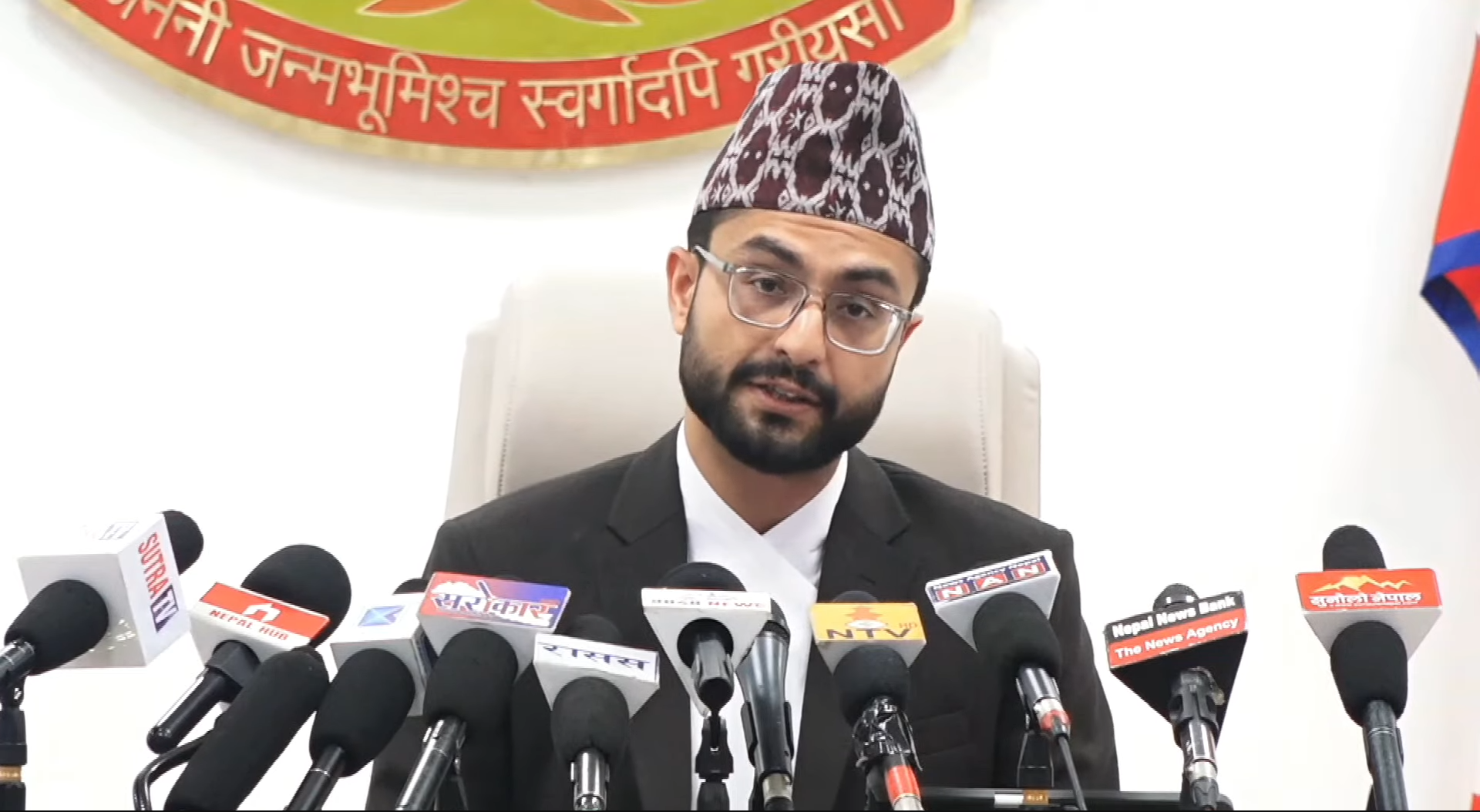
The measures were outlined in the government’s 100-day progress report released on Saturday by government spokesperson and Minister for Education and Sports Sasmit Pokharel.
According to the report, the government has prepared operational guidelines to establish a Gen-Z Welfare Council, which will serve as the focal body for coordinating welfare programmes and support for those affected by the movement.
The government said monthly allowances for 513 injured protesters have been continued based on the severity of their injuries. Those classified as critically injured receive Rs 18,000 per month, seriously injured individuals receive Rs 9,000, and those with moderate injuries receive Rs 4,000.The report also states that the government is updating its system to allow incidents to be registered at the local level where beneficiaries currently reside.
It further says national identity cards can now be issued to citizens who obtained citizenship through their mothers, while holders of dual citizenship-related records can update their national identity information through District Administration Offices.
In immigration services, the Department of Immigration has introduced an electronic time-card system to enable online tracking of service delivery.
To strengthen disaster preparedness, the government has allocated Rs 90.23 million to all District Administration Offices for the purchase of search and rescue equipment. A Disaster Command Post and Situation Room has also been established at the National Disaster Risk Reduction and Management Authority (NDRRMA).
The report says agreements have been reached with private sector institutions to support disaster response efforts under pre-arranged coordination mechanisms. Geographic mapping and updated data on helipads across the country have also been incorporated into the national disaster portal.
The government has approved standard house designs to facilitate post-earthquake reconstruction and completed preliminary and detailed landslide risk assessments in 150 vulnerable settlements and infrastructure sites, forwarding recommendations to the concerned authorities.
The Home Ministry has also introduced several new regulations, including guidelines for grants to drug treatment and rehabilitation centres, procedures for selecting outstanding rehabilitation centres for awards, and integrity monitoring standards for the National Disaster Risk Reduction and Management Authority.
Additional policies introduced during the period include guidelines for disaster simulation exercises, standards for search and rescue team mobilisation, preparedness and response plans for heatwaves and drought, the National Monsoon Preparedness and Response Plan 2083, the National Framework for Forecast-based Early Action 2083, and revised procedures for reconstruction and rehabilitation grants for disaster-affected private housing.
To accelerate land acquisition and compensation processes, the government has prepared a fast-track mechanism and circulated it to District Administration Offices for implementation.
The report further notes that citizenship information management systems have been expanded to seven newly established Area Administration Offices, enabling electronic citizenship services.
It also states that 709.42 square metres of land confiscated under a final Supreme Court ruling in a corruption case were formally transferred to the Department for Management of Proceeds of Crime.
To improve public service delivery, the Home Ministry has launched the Hello Home Call Centre for citizen complaints, while Nepal Police has established a 24-hour grievance response centre with hotline number 1113.
In addition, the government has approved the Sixth Amendment to the Military Service Regulations, 2083, introducing reforms to recruitment, training, promotion, and study opportunities within the Nepal Army, while expanding benefits for soldiers injured in the line of duty and for the families of personnel killed or permanently disabled during peacekeeping missions.




Comment