




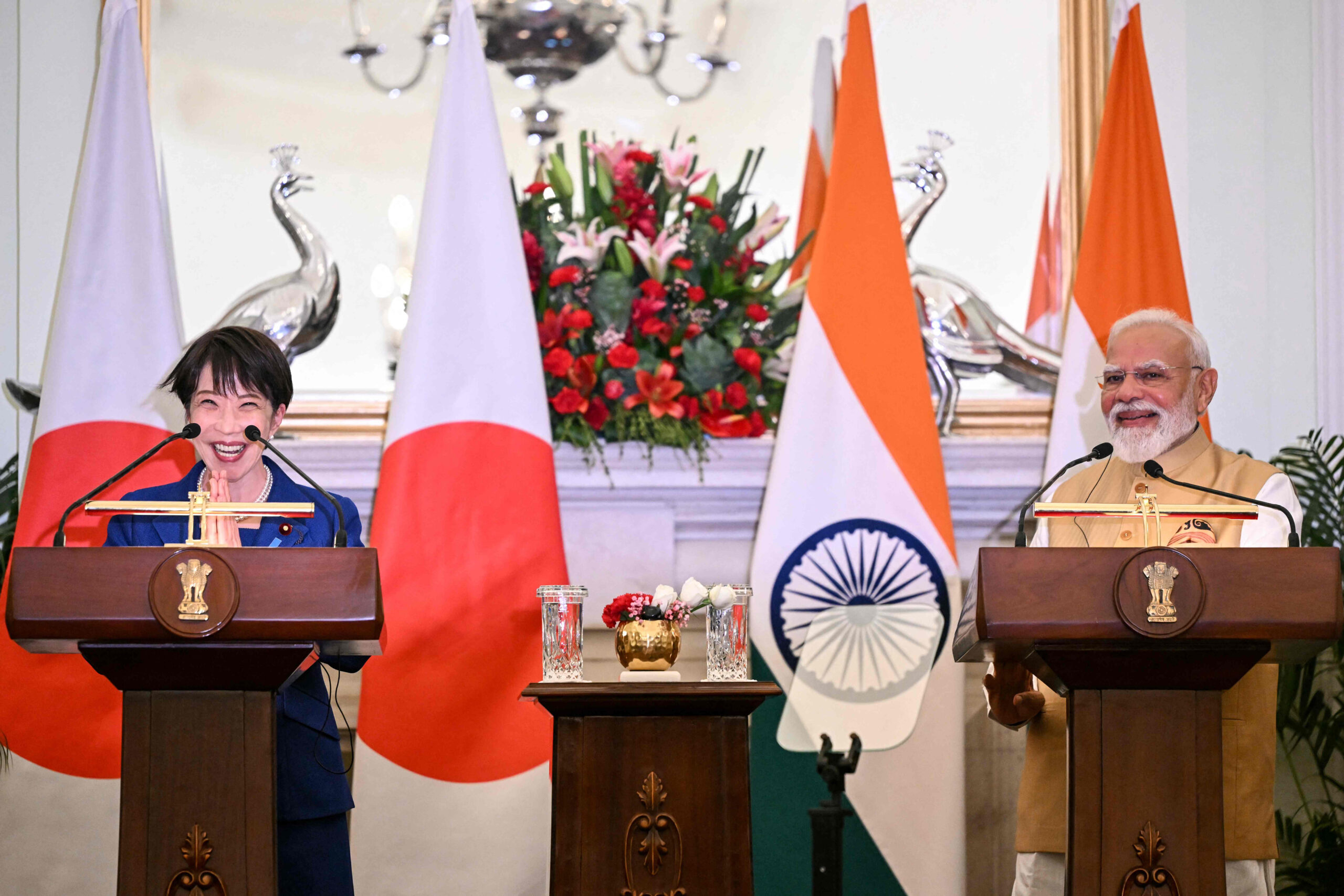
KATHMANDU: India and Japan have jointly condemned cross-border terrorism originating from Pakistan, calling for stronger international action to dismantle terrorist safe havens, financing networks, and support structures.
The position was outlined in a joint statement issued after bilateral talks between Indian Prime Minister Narendra Modi and Japanese Prime Minister Sanae Takaichi during the 16th India-Japan Annual Summit.
The two leaders strongly condemned the April 22, 2025, terrorist attack on tourists in Pahalgam, noting the findings of a United Nations Security Council monitoring report that implicated The Resistance Front (TRF).
They also denounced the November 10, 2025, car bombing near the Red Fort and called for those responsible for planning, financing, and carrying out the attacks to be brought to justice.
The joint statement urged the international community to intensify efforts against all UN-designated terrorist organisations and their affiliates, specifically naming Lashkar-e-Taiba, Jaish-e-Mohammed, Al-Qaeda, and Islamic State. The leaders called for the elimination of terrorist safe havens, disruption of terror financing linked to transnational crime, and stronger measures to prevent cross-border movement of militants.
Beyond counterterrorism, the two prime ministers expressed concern over rising tensions in the East China Sea and the South China Sea. They opposed unilateral attempts to alter the status quo through force, warned against the militarisation of disputed areas, and reaffirmed that maritime disputes should be resolved peacefully in accordance with the United Nations Convention on the Law of the Sea (UNCLOS).
The leaders also reiterated their commitment to reforming the UN Security Council, pledging to work with fellow G4 nations to expand both permanent and non-permanent membership. India and Japan reaffirmed their mutual support for each other’s bids for permanent seats on a reformed Security Council.
Addressing broader regional security issues, the two sides voiced concern over North Korea’s nuclear and missile programmes, calling for complete denuclearisation and strict enforcement of UN sanctions.
On the Middle East, they stressed the importance of maintaining freedom of navigation through the Strait of Hormuz to safeguard global energy supplies. They also called for reconstruction efforts in Gaza Strip alongside the implementation of a two-state solution, while expressing support for a lasting peace in Ukraine based on the UN Charter.
Prime Minister Takaichi was on a three-day official visit to India from July 1 to 3 at the invitation of Prime Minister Modi. During the visit, the two leaders reviewed bilateral cooperation across multiple sectors and participated in the India-Japan Business Forum.




Comment