




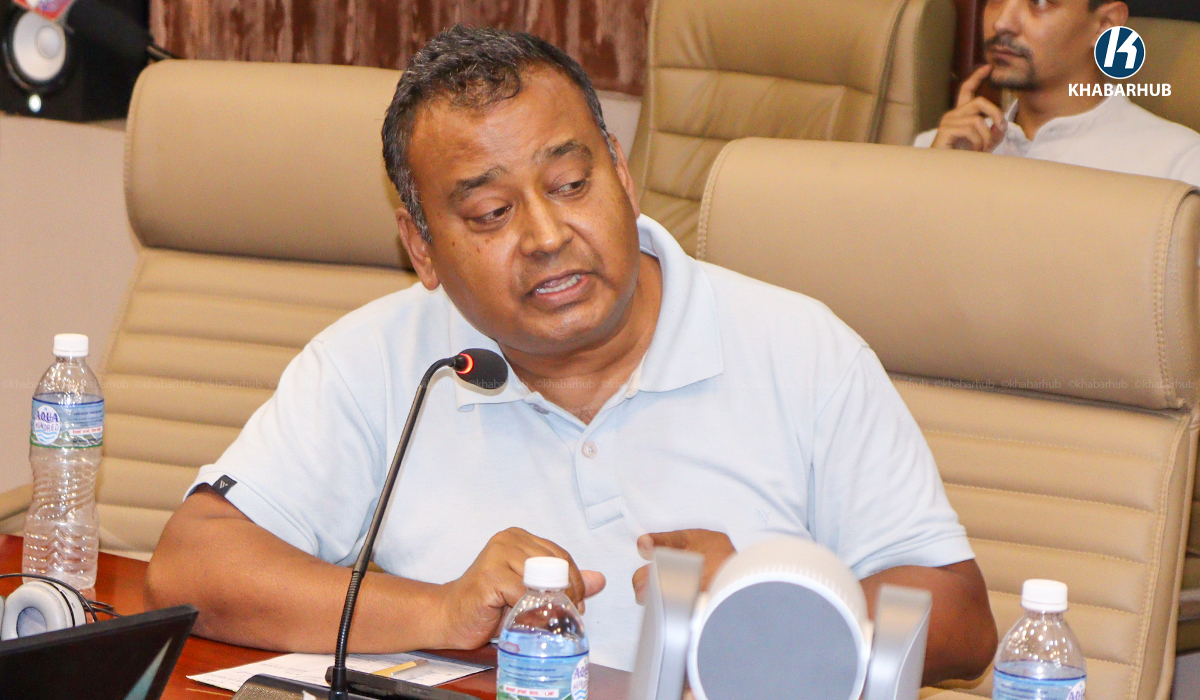
KATHMANDU: Environmentalist and technical advisor to Sajha Yatayat, Bhushan Tuladhar, has criticized the government’s budget for fiscal year 2083/84, saying it lacks a clear roadmap for the operation and expansion of public electric buses.
Speaking at a budget interaction program organized by the Institute of Strategic and Socio-Economic Research in Kathmandu on Wednesday, Tuladhar said the government has failed to address critical infrastructure challenges necessary for the successful operation of electric public transport.
He noted that while Sajha Yatayat purchased 40 electric buses along with 20 charging units, nine of those charging facilities remain unused due to the lack of designated depots.
“Although 11 charging stations have been installed, nine are still idle because the government has not provided suitable land. Unlike motorcycles or private cars, buses cannot simply be charged at home,” he said.
Tuladhar also drew attention to the absence of charging infrastructure at Kathmandu’s main bus park, despite the capital’s growing push toward electric mobility.
Referring to the recent import of 16 electric buses by Metropolitan Transport, he said operators remain uncertain about long-term charging arrangements.
“When asked about charging stations, the company chairman said the supplier would manage charging for one year and that they would think about the future later. This reflects the current state of electric public transport in the country,” Tuladhar remarked.
He recalled that Sajha Yatayat had previously kept 37 of its 40 electric buses parked at its Pulchowk premises in protest against the lack of charging and parking facilities.
Following that controversy in September 2022, the Investment Board Nepal had invited proposals from the private sector to establish 424 charging stations at an estimated cost of Rs 18 billion. However, Tuladhar said the initiative has yet to yield tangible results.
He further argued that the current government has failed to continue previous efforts aimed at allocating vacant public land for charging infrastructure.
“Had the initiatives launched by the previous government been continued, some progress could have been achieved. The current budget has not made any concrete decisions on these issues,” he said.
Tuladhar also pointed to uncertainty surrounding plans to introduce electric buses in Pokhara with support from the Asian Development Bank.
“The project remains in the pipeline. The ADB may finalize the model and the government may then make a decision, but there is still no clear plan on how it will move forward,” he said.
While presenting the budget for fiscal year 2083/84, Finance Minister Swarnim Wagle announced plans to gradually replace conventional public buses operating in the Pokhara Valley with electric buses as part of efforts to expand a green transportation system.




Comment