




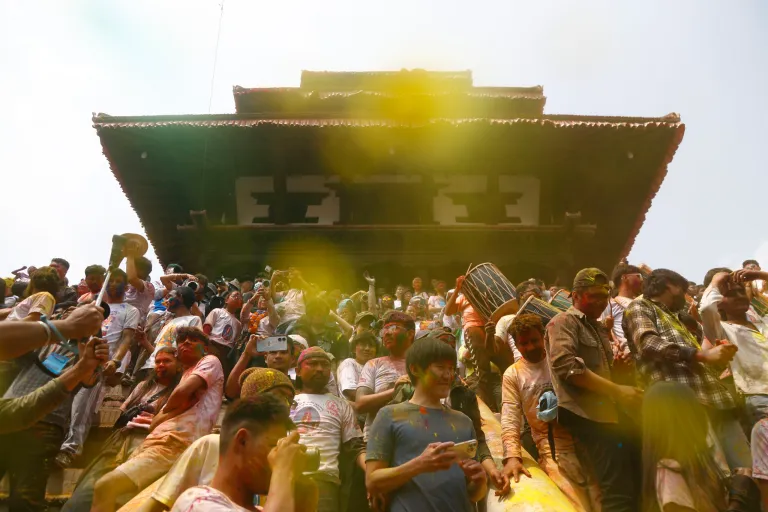
KATHMANDU: Fagu Poornima, popularly known as Holi, the festival of colors, is being celebrated with great enthusiasm in the hilly regions of Nepal, including the capital. The festival will be observed tomorrow in the Terai region.
Also known as the Spring Festival, Holi marks the arrival of spring and the harvest season. The first day of the celebration is called Chhoti Holi or Holika Dahan, while the second day is known as Dhuleti or Holi.
Holika Dahan symbolizes the triumph of good over evil and is marked by lighting a ceremonial bonfire and performing special puja rituals. The ritual commemorates the death of Holika and the victory of devotion and righteousness.
On the following day, people celebrate by smearing each other with vibrant colors, including abir (red vermilion powder), and by sharing joy and festivity.
Among the many cultural festivals observed in Nepal, Fagu Poornima holds special religious and social significance. Celebrated by people of all ages, the festival traditionally begins on the eighth day of the waxing moon and culminates with the burning of the “Chir,” a ceremonial pole installed earlier, on the full moon day.
According to Hindu mythology, demon king Hiranyakashyapu was angered by his son Prahlad’s unwavering devotion to Lord Bishnu. Determined to punish him, Hiranyakashyapu ordered his sister Holika to kill Prahlad. Holika, who had been granted a boon that fire would not harm her, sat in a blazing fire with Prahlad on her lap. However, due to divine intervention and Prahlad’s devotion to Lord Bishnu, Holika was burned to death while Prahlad remained unharmed.
Since then, Holi has been celebrated as a symbol of the victory of good over evil. It is also believed that the boon granted to Holika became ineffective because it was misused for wrongful purposes.
Elders believe that applying “tika” made from the ashes of the burned Chir on the forehead, or keeping some ashes at home, helps ward off misfortune and negative influences.




Comment