




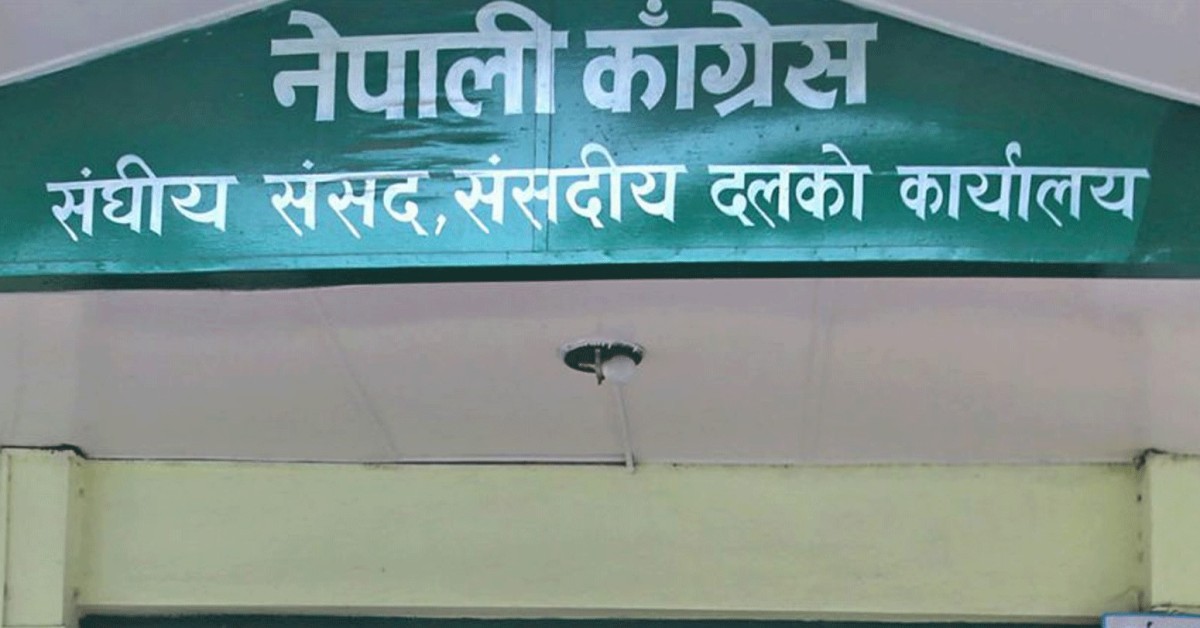
KATHMANDU: The main opposition party, the Nepali Congress, has proposed the formation of a shadow cabinet to strengthen parliamentary oversight and closely monitor the activities of the government.
Under the proposed structure, the party has designated several leaders as shadow ministers responsible for scrutinizing government policies and performance in their respective sectors.
Parliamentary Party leader Bhishmaraj Angdembe has been assigned the role of Shadow Prime Minister. He will lead the opposition’s efforts to evaluate and respond to government policies and programs.
According to the proposal, Prakash Singh Karki has been nominated as Shadow Home Minister, while Narendra Kumar Kerung will oversee the Shadow Finance Ministry.
Similarly, Sunil Bahadur Thapa has been proposed as Shadow Foreign Minister, and Mohan Acharya will head the Shadow Infrastructure Development Ministry.
The party has assigned Dr Firdosh Alam to the Shadow Education and Sports Ministry and Dr Chandra Mohan Yadav to the Shadow Health and Food Safety Ministry.
Other proposed appointments include:
- Bishnu Bahadur Khadka – Shadow Industry, Commerce and Supplies Minister
- Dr Pramila Kumari Gachhadar – Shadow Agriculture, Forests and Environment Minister
- Kham Bahadur Khati – Shadow Law, Justice and Parliamentary Affairs Minister
- Khadga Shahi – Shadow Defence Minister
- Manmaya Bishwakarma – Shadow Information and Communications Minister
- Gita Gurung – Shadow Youth, Labour and Employment Minister
- Sandip Rana – Shadow Science, Technology and Innovation Minister
- Santosh Subba – Shadow Energy, Water Resources and Irrigation Minister
- Dr Gangalakshmi Awal – Shadow Minister for Women, Children, Gender and Sexual Minorities, and Social Security
- Janak Raj Giri – Shadow Minister for Land Management, Cooperatives, Federal Affairs and General Administration
- Yogesh Gauchan – Shadow Minister for Culture, Tourism and Civil Aviation
The proposed shadow cabinet is aimed at enhancing the opposition’s role in holding the government accountable and offering alternative policy perspectives through structured parliamentary engagement.




Comment