




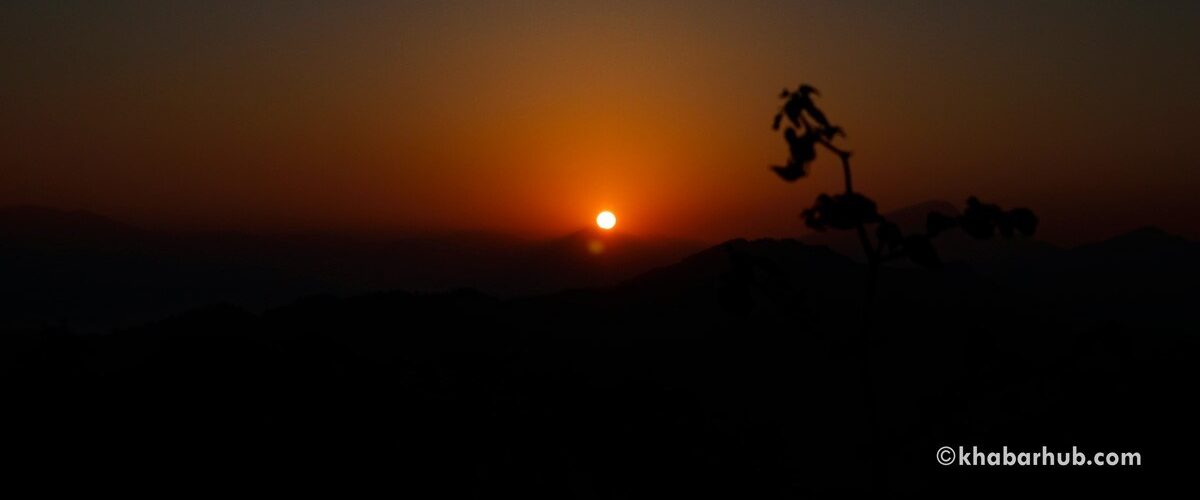
KATHMANDU: The New Year 2026 of the Christian era has begun today in accordance with the Gregorian calendar. The calendar is known as the Gregorian calendar after Pope Gregory, under whose authority it was introduced based on the year of the birth of Jesus Christ.
On the occasion of the New Year, people who follow this calendar are celebrating by exchanging greetings and well wishes.
The Christian era, which follows the Gregorian calendar, is based solely on the solar year. Critics have long argued that, for this reason, the calendar lacks scientific precision.
Calendar expert and researcher Dr. Shastradatta Pant said that while the Gregorian calendar is not as scientifically balanced as the Bikram Sambat (BS) calendar, which has been followed since the Vedic period by coordinating solar and lunar cycles, its global influence has continued to grow.
A Gregorian year consists of 365 days, six hours, 49 minutes, and six seconds, though the smaller units of time are not directly reflected in daily calculations. In the Bikram Sambat calendar, such discrepancies are managed through periodic adjustments, including the addition of an extra month.
Dr. Pant noted that although leap-year adjustments have been introduced in the Gregorian system to address time differences, there has been no complete consensus among Western countries on further refinements.
In recent years, the practice of celebrating the English New Year has also become increasingly popular in Nepal. To mark the arrival of 2026, various programs are being organized in Kathmandu’s Thamel and Bouddha areas, as well as in tourist destinations outside the Valley such as Pokhara and Sauraha, where there is a significant presence of foreign visitors.





Comment