




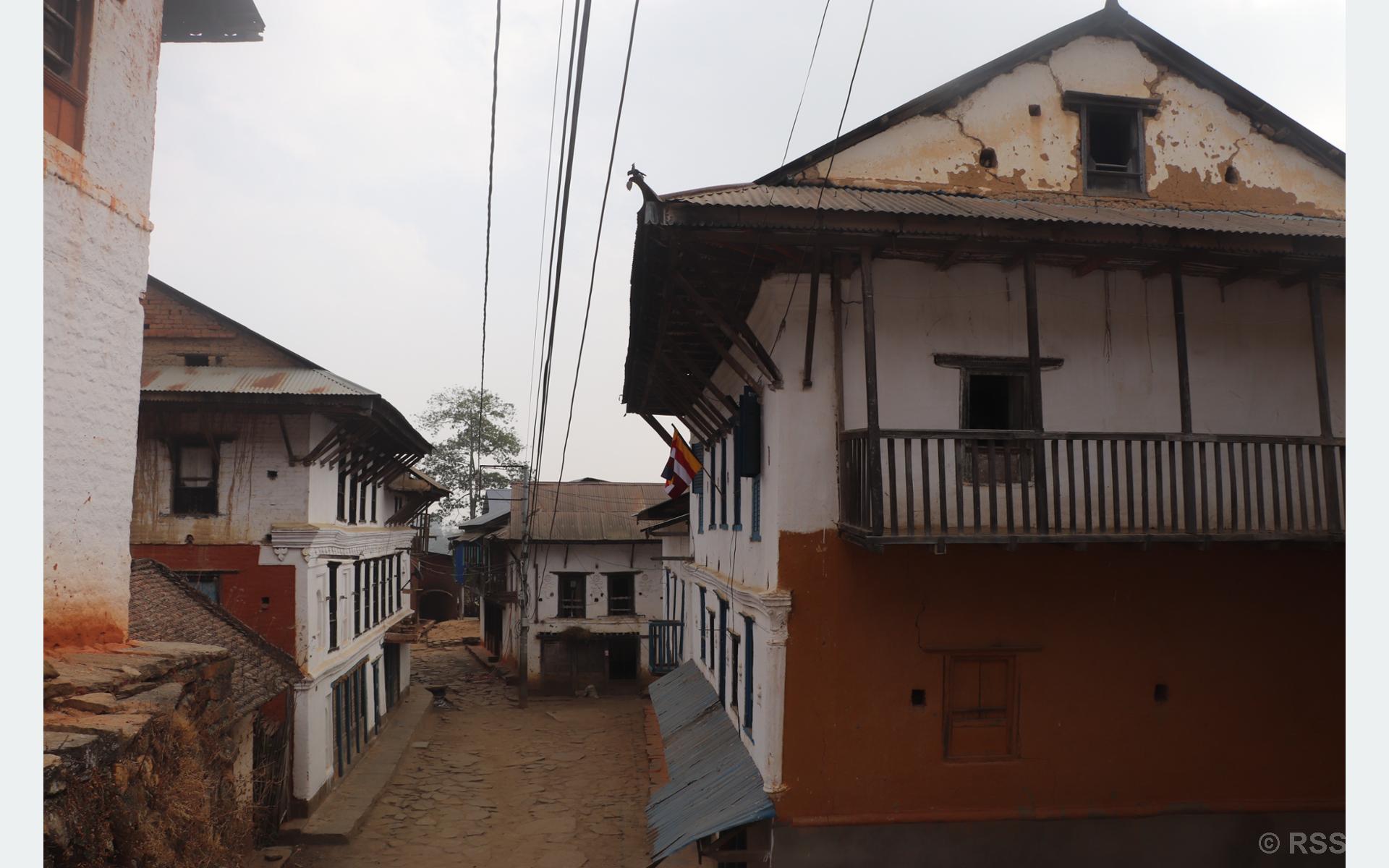
BHOJPUR: The historic Taksar Bazaar in Bhojpur, once a vibrant hub of industrial, commercial, and cultural activity, now stands in need of urgent preservation. Commonly known as ‘Sano Patan,’ the market has become largely deserted due to increasing migration.
Local resident Amrika Tamakar expressed concern over the declining state of the area, which is home to dozens of religious and cultural sites. “The historic Taksar Bazaar is a place of pride for Nepal,” she said. “But it is deteriorating year by year. This heritage site must be preserved.”
Historically, Taksar played a significant role in Nepal’s industrial development. From 1872 BS to 1887 BS, coins known as doli paisa were minted here. Following the Nepal government’s initiative to mine minerals in the eastern hill districts starting in 1870 BS, Taksar became a key operational base.
The area is home to numerous religious and cultural landmarks, including Shakyamuni Vihar, Saraswati Cave, Ajima Than, Mahendra Park, Radhakrishna Temple, Ganesh Temple, Bhimsen Than, and Three Dhara. However, these sites are also being neglected as the local population declines.
“There are dozens of religious sites in Taksar that could attract tourists,” said local resident Rajkumar Shrestha. “But with the market falling into disrepair, these places are also being forgotten.”
During the Rana era, one-tola and two-tola doli paisa minted using the takmari method were circulated from Taksar. Locals recall that Devdatta Shakya was the first artisan to mint coins in the area.
In 2013 BS, King Mahendra Shah officially declared Taksar an industrial zone. At the time, the market was home to around 200–300 families. Today, however, the population is steadily declining.
Locals believe that conserving Taksar’s historical legacy requires more than just preservation efforts—it also calls for the development of new settlements in the area to restore its vitality and identity.





Comment