




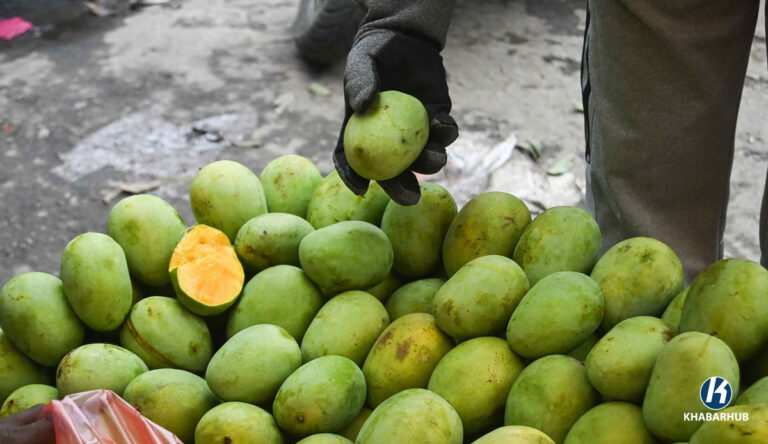
SIRAHA: Mango production in Siraha district has dropped significantly this year. According to the Agricultural Knowledge Center, Siraha, total production has declined to 59,866.5 metric tons, compared to 99,235 metric tons last year—a decrease of nearly 40 percent.
Last year, mangoes were cultivated across 9,000 hectares of land. However, this year, only 8,895 hectares remained productive. The average yield has also fallen, from 11.02 metric tons per hectare last year to just 6.63 metric tons this year.
Information Officer Kiran Bishwakarma stated that the primary reason for the decline is the natural fruiting cycle—mango trees typically yield abundantly one year and less the next. Other contributing factors include lack of irrigation, insufficient pest and disease control, and insect infestations.
As a result of the reduced yield, mango supply in local markets has decreased, leading to a moderate rise in prices. Many farmers have expressed disappointment, as returns have fallen short of their investment.
Siraha is a major mango-producing district, and the decline in output has directly impacted local markets, traders, and fruit processing centers.
Stakeholders are calling for long-term policy measures that take into account the cyclical nature of mango farming. They highlight the need for improved irrigation systems, modern disease management technologies, and enhanced farmer training to stabilize production.
Experts believe that if the government and local authorities implement supportive policies and establish moisture retention centers, it will boost farmer morale and significantly contribute to the district’s economic growth.






Comment