




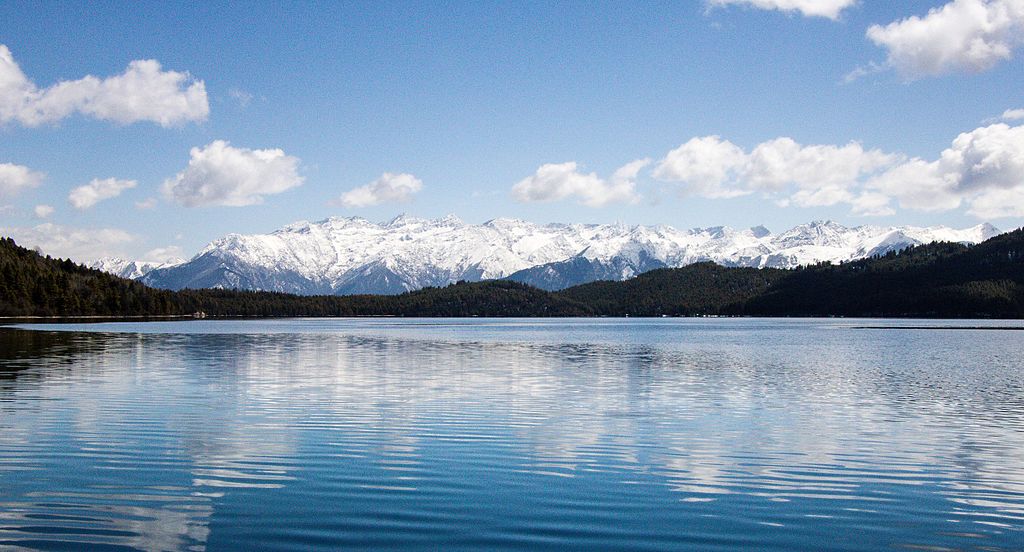
KATHMANDU: Rara Lake, one of Nepal’s most attractive domestic and international tourist destinations, welcomed more than 19,000 visitors in the past year, according to officials at Rara National Park.
Rishikesh Yadav, Officer-in-Charge of the park, reported that among the 19,104 domestic tourists, 6,171 were women and 12,933 were men. Additionally, 77 tourists from SAARC countries, 64 men and 13 women, and 276 from other foreign countries, 163 men and 113 women, visited the lake.
In the current fiscal year, 2,347 tourists have visited Rara, including 1,589 men and 758 women. The park also recorded 33 foreign visitors during this period.
The increase in tourist arrivals has been attributed to improvements in the Karnali Highway, which has made Rara more accessible by road. Yadav noted that domestic tourism surged during the Dashain and Tihar festivals this year.
Rara Lake is rapidly developing as a major tourist destination in Karnali Province, attracting visitors from Bagmati, Gandaki, and Lumbini Provinces. Tourists typically travel via Surkhet, Dailekh, Kalikot, and Jumla to reach the lake in Mugu. The area is home to 51 species of mammals, including musk deer, deer, Himalayan goral, snow leopard, and black bear, adding to its ecological significance.
Local hotel operators have highlighted the need for the Nagm–Gamgadi road and the Karnali Highway to be fully blacktopped to facilitate smoother access and further promote the region’s tourism-driven economy.
Tourists are increasingly drawn to the region to experience rural tourism, adventure travel, and the cultural heritage of the Karnali people, along with the natural beauty of the mountains and valleys.
Rara National Park, established in 2032 BS, covers 160 square kilometers, with the majority in Mugu and a smaller portion in Jumla.
Local organic produce attracts visitors
Many domestic tourists visiting Rara and Jumla are particularly interested in local organic agricultural products. Arjun Budha, owner of Rara Lihi Organic Store in Khalanga, noted that the region’s organic produce is both healthy and flavorful, making it popular among visitors.
During the Dashain–Tihar festivals alone, organic products worth Rs 300,000–500,000 were sold. Budha added that last year, Rs 1.2 million worth of local apples, Marshi rice, beans, walnuts, millet flour, chino, kaguno, and honey were traded, reflecting the growing demand for Rara’s native agricultural goods.




Comment